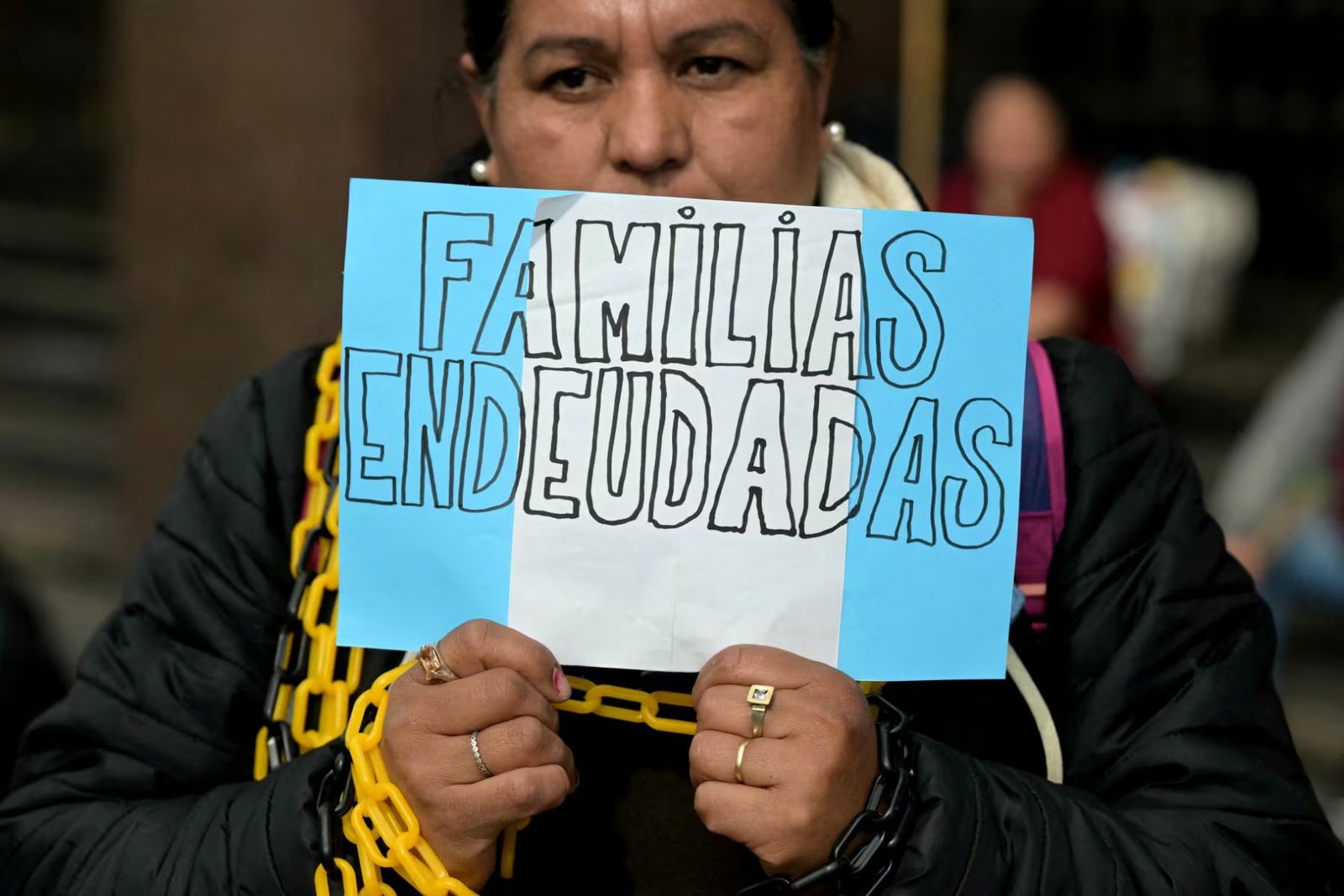
President Milei and the International Monetary Fund both played down Argentina's record household debt delinquency this month, with Milei attributing part of the surge to consumers who bought televisions for the World Cup and then chose not to pay for them, even as independent economists warned the trend is starting to weigh on growth.
The government's dismissive tone came as Argentina's overall private-sector delinquency rate hit 7.6% in June, according to Central Bank data, with the household component alone climbing to 12.8%, more than double the 5.2% recorded a year earlier. Argentina's credit-to-GDP ratio, at 14.3%, remains the lowest in Latin America, far below the regional average of 47.3%, meaning the delinquency wave is unfolding in a financial system that extends comparatively little credit to begin with.
The Official Line
Central Bank Vice President Vladimir Werning told reporters that delinquency "had peaked over the previous three months" and that improvement should be expected from the second half of the year. Milei, for his part, offered a more colloquial explanation for the surge, saying people "bought TVs to watch the World Cup and then decided whether to pay or not," a framing that cast the debt wave as a matter of consumer choice rather than a structural strain on household budgets.
The IMF echoed the government's caution against overreacting. Fund spokesperson Julie Kozack said Washington was "closely monitoring" the situation but questioned whether it "represents a significant risk to the country's financial stability," a position consistent with the Fund's earlier assessment that household debt remains small relative to the size of Argentina's economy and that local banks are well capitalized against the losses.
Where Economists Disagree
Independent consultants Juan Manuel Telechea and Claudio Caprarulo pushed back on that framing, arguing that even if delinquency does not threaten bank solvency, it is already restricting households' access to new credit and, with it, the domestic consumption that helped drive Argentina's growth in 2024 and 2025. They pointed to the construction and textile sectors, both already weakened by Milei's broader economic program, as particularly exposed to a pullback in consumer borrowing. Their proposed remedies include government-backed refinancing programs and having Argentina's state pension agency purchase distressed household debt on better repayment terms than banks currently offer.
The disagreement is as much about framing as data: both sides accept the same delinquency figures, but the government and the IMF are measuring risk against the banking system's capacity to absorb losses, while the economists are measuring it against the broader economy's dependence on credit-fueled consumption to keep growing. That distinction matters heading into the IMF's third review mission for Argentina's program, which arrives this week and will need to reconcile the Fund's public reassurance with a debt trend that, on the government's own numbers, has yet to actually turn the corner Werning is promising.