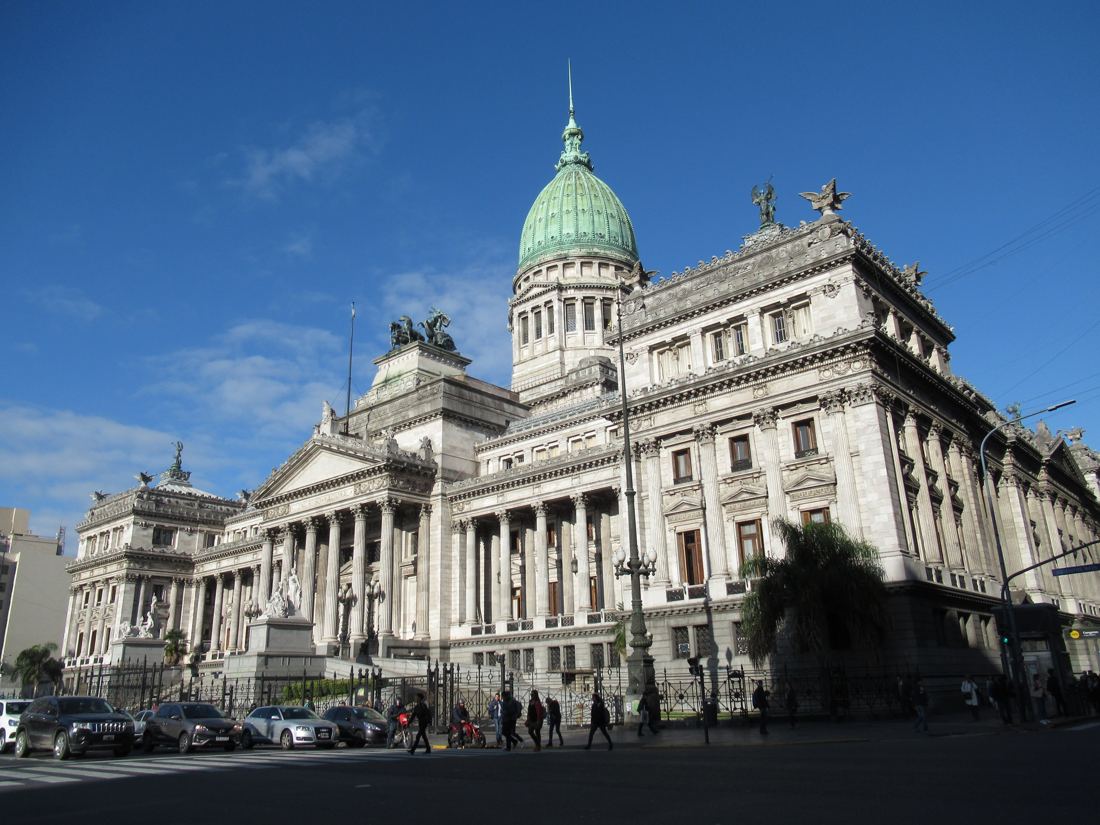
Argentina's government sent its 2027 budget bill to Congress on Tuesday, meeting the constitutional deadline for the year's spending plan, but President Milei broke with his own two-year practice by skipping a televised national address or an appearance before the Chamber of Deputies to unveil it. In each of the two prior years, Milei used the budget submission as a set-piece moment, delivering a lengthy address to the nation. This year the bill arrived with no announced explanation for the change, and analysts in Buenos Aires read the silence as a calculated distance from a document whose numbers the government may struggle to defend on the campaign trail.
The submission lands in the middle of an already crowded legislative week. The Senate is debating a separate bill to eliminate Argentina's PASO primary elections the same day the budget arrived in Congress, and the two pieces of legislation have become linked in practice: provincial governors, whose votes Milei's minority bloc needs for both measures, are pressing for public works funding and other transfers in exchange for backing the PASO repeal, giving the budget talks an added layer of horse-trading before October's midterm elections.
Economy Minister Luis Caputo, who also stayed away from a formal presentation of the bill's text, took the government's pitch to a public appearance instead. He said the 2027 numbers would mark "a financial surplus for the fourth consecutive year -- it will be the first time in our history that, without being in default, there have been four consecutive years of financial surplus." He framed the achievement as evidence the government's approach is working: "There's no doubt we're on the right track, but I want to stress that we did this for the first time while respecting private property and the sanctity of contracts."
On the pressure to loosen spending ahead of the vote, Caputo was direct about the government's intention to hold the line: "You don't fight populism with more populism. You fight it with more orthodoxy." He added that the private sector, not the state, should be doing the investing needed to sustain growth, and pointed to lower taxes, lower interest rates and improved infrastructure as the government's remaining priorities.
The bill itself was unusually closely guarded before its release, with none of its specific figures leaking in advance -- a contrast with past years, when budget assumptions typically circulated informally for days beforehand. In the absence of official detail, market watchers have been left comparing the government's private briefings to independent forecasts. Caputo has told legislators and reporters in informal settings to expect roughly 16% inflation and about 4% economic growth for 2027, figures notably more optimistic than the consensus among private economists.
The Central Bank's own Market Expectations Survey puts the median forecast for 2027 inflation at 20.5%, down from an estimated 30% for 2026 but well above the government's internal planning number. Growth forecasts show a similar gap: the survey's median projects 2.9% GDP growth for 2027, against the government's roughly 4% assumption. Private consultancies are split within that range -- C&T Asesores projects inflation below 20% and growth of 3.4%, while Invecq estimates 22% inflation and 2.5% growth -- but none matches the government's own figures, underscoring how much of the budget's credibility rests on assumptions that outside forecasters consider aggressive.
The stakes go beyond a single year's arithmetic. Argentina has operated under extensions of previous budgets for two consecutive years, a workaround that has given the executive broad discretionary power over spending without a fresh congressional mandate. Passing an actual budget for 2027 would trade away some of that flexibility, but it would also send a signal of legislative cooperation to the bondholders and ratings analysts who track Argentina's country-risk spread as a proxy for political stability. The government has separately acknowledged it lacks the votes to pass the companion bill eliminating the PASO primaries in its current form, a sign that the horse-trading over the budget may run past this week.
Whether Congress passes the budget largely intact, waters it down, or leaves the government to govern by decree for a third straight year will say as much about Milei's political capital heading into the midterms as any of the budget's economic assumptions. Investors and provincial governors alike will be watching the same test: whether a government that has staked its identity on fiscal orthodoxy can now convert that record into the votes it needs in an election year.