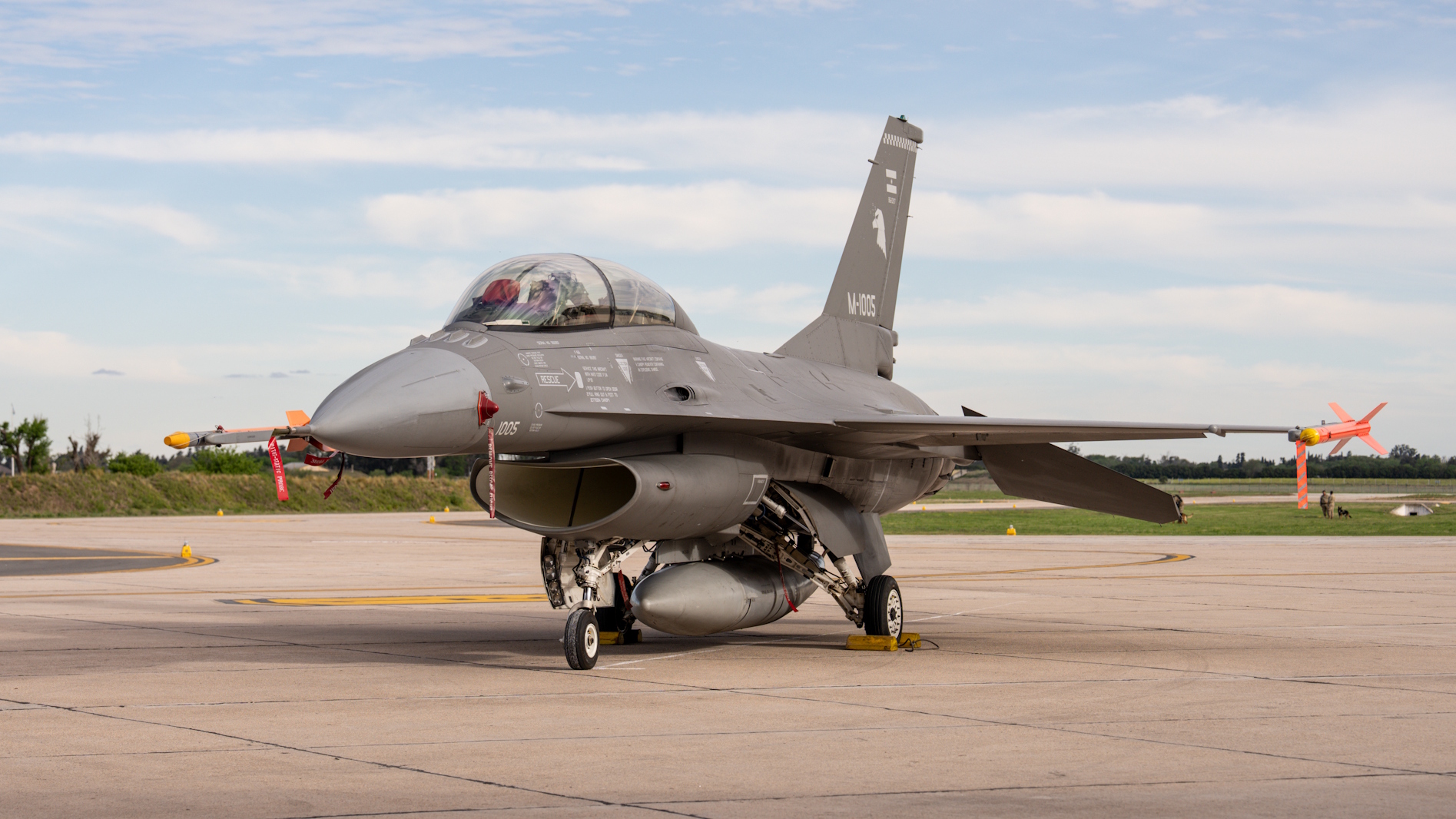
Argentina’s government extended its airspace protection rules to Buenos Aires and Córdoba for Pope Leo XIV’s visit, authorizing the military to shoot down aircraft declared hostile from Nov. 8 to 11.
President Milei set the rule in Decree 1334/2026, published Wednesday in the Boletín Oficial, the official gazette. Cabinet Chief Diego Santilli, the president’s top minister, and Defense Minister Carlos Presti also signed it. The decree says the pope’s events in Buenos Aires, Luján and Córdoba will draw national and foreign authorities and large crowds, which calls for special measures to protect people and strategic sites.
It is a last resort, with conditions. Before any weapon is used, the armed forces must try to identify the aircraft, intercept it, warn it and order it to land, and confirm a hostile act. The decree defines that as an armed attack, or the use or imminent use of an aircraft as a weapon against people or strategic targets. It asks for objective signs, such as firing weapons or keeping a course, altitude and speed that fit an attack after warnings. Ignoring the instructions of air traffic controllers is not enough.
The joint aerospace commander declares an aircraft hostile and tells the defense minister, who must then approve the use of force himself and cannot hand that power to anyone else. For civilian aircraft the bar is higher: force only against an armed attack or a clear, imminent threat to life that nothing else can stop. A civilian plane that merely disobeys is to be intercepted and ordered to land.
The power covers aircraft that come from outside the country. Aircraft of domestic origin fall under the Internal Security Law, which allows the armed forces to use combat means only in exceptional cases and after a state of siege, a constitutional emergency, is declared.
The joint command will work with ANAC, the civil aviation authority, on restrictions in the two zones. Depending on the situation, it can divert civilian flights, keep air traffic services under its direct orders, or clear the airspace of civilian aircraft. The Defense Ministry will pay for the operation from its army, air force and joint-staff budgets.
The shoot-down rule is one layer of a larger security operation. The Security Ministry says it is coordinating with the city of Buenos Aires and the provinces of Buenos Aires and Córdoba on three rings of protection around the pope, with federal police closest to him.
The measure takes effect on Sunday, Nov. 8, when the pope is due to land at Aeroparque Jorge Newbery, Buenos Aires’ domestic and regional airport.