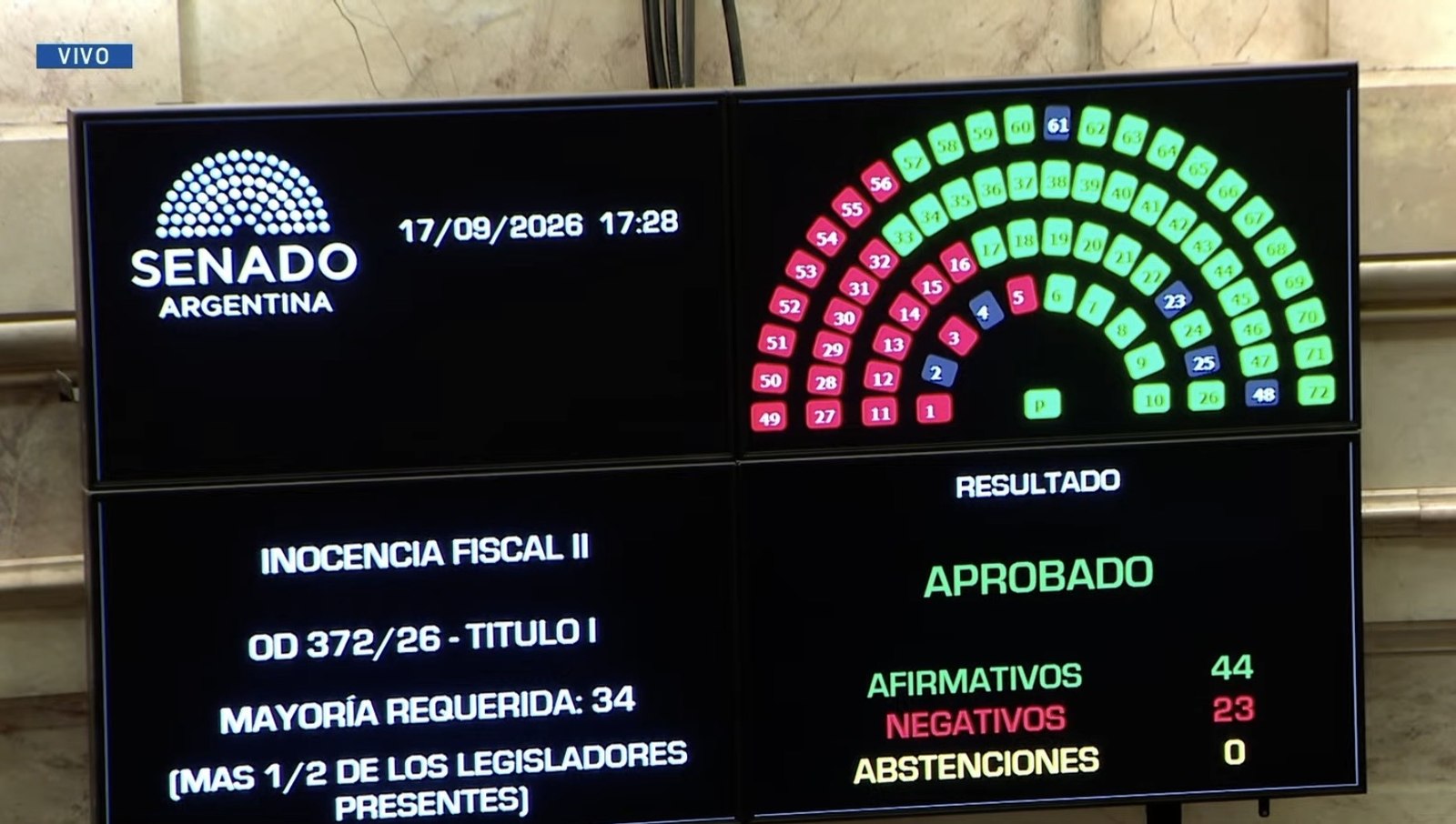
Argentina's Senate approved a revised version of the government's "Fiscal Innocence" law on Thursday, easing scrutiny of undeclared assets in a renewed attempt to draw dollars held outside the banking system into the formal economy. The vote was 44 in favor to 23 against; the Chamber of Deputies had already passed the bill in late August.
The measure updates a law Congress passed in December 2025 that let Argentines deposit undeclared savings without explaining their origin. That first version fell short of the government's expectations for how much money it would pull out of hiding, prompting the revisions.
Under the new law, the tax authority ARCA must presume asset declarations filed for 2025 are valid and accept 2023 and 2024 declarations without challenge unless it can prove evasion. Taxpayers who enroll will no longer have to file annual asset statements, and a new 15% threshold must now be crossed before a discrepancy between reported and actual income triggers an investigation. The law also raises the income ceiling for entry into Argentina's Simplified Income Tax Regime, a favorable bracket for smaller earners.
Larger taxpayers — those earning more than 1 billion pesos (about $650,000) annually, or with a net worth above 10 billion pesos (about $6.5 million) — may now also enroll, though they lose the presumption-of-innocence protections available to smaller filers. In a change from the original law, current government officials and anyone who has held public office in the preceding five years are now barred from the simplified regime's benefits altogether, a provision that appears aimed at blunting earlier criticism that the scheme could shield politically connected beneficiaries.
The government estimates roughly $170 billion in Argentine wealth currently sits outside the formal financial system. Enrollment under the revised law is open through December 31, 2027.
The law is the latest piece of Milei's push to swell Central Bank reserves and formalize an economy where, according to labor-force data released this week, an increasing share of workers already operate off the books. Whether looser rules succeed where the first law fell short of expectations will be one more marker the IMF is watching as it opens its third review of Argentina's program on Monday.