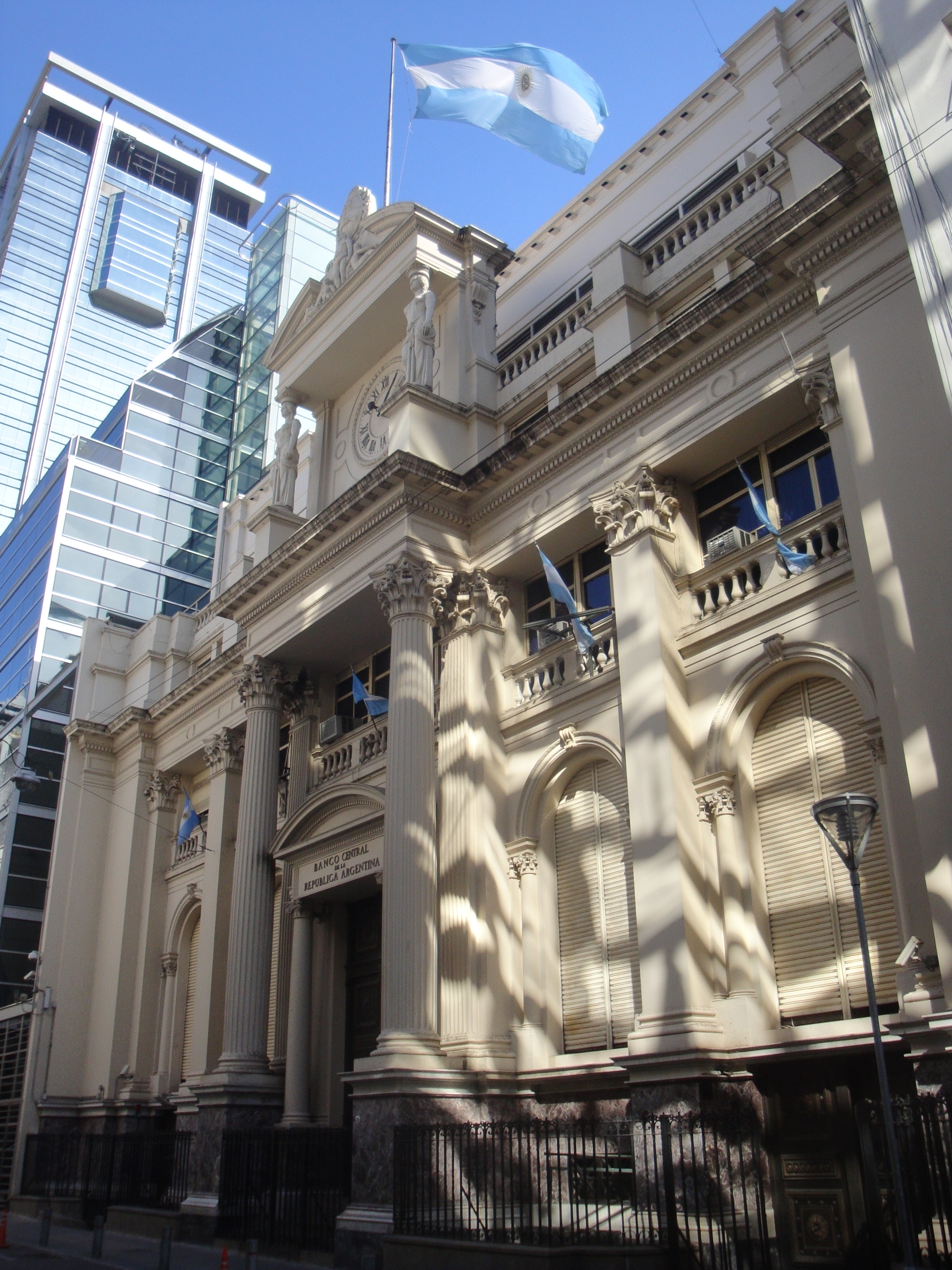
Argentina's federal audit office has contradicted Central Bank president Santiago Bausili's account of the country's gold reserves, days after he told the Senate the reserves were fully documented, held in Switzerland, and covered by clean outside audits going back three years.
Bausili appeared before a joint Senate committee on September 9 as part of a broader hearing on proposed changes to the Central Bank's charter. Asked about the whereabouts of Argentina's gold, he said a portion of the reserves is deposited with the Bank for International Settlements in Basel, Switzerland, and defended the arrangement as a way to earn a return on an asset that otherwise sits idle. He went further on the oversight question, telling senators that the Auditoría General de la Nación, the AGN, had reviewed the 2023, 2024 and 2025 fiscal years and closed each one without observations, and that its 2025 report was already available.
That account did not hold up. A report from the AGN itself, examined by La Nación and Perfil this week, states that the information the Central Bank submitted is still under analysis and that the office has not concluded its review of the gold's traceability abroad, citing delays of more than a year in receiving full documentation. In plain terms, the audit Bausili described as finished is, according to the auditor, still open.
The gap between the two accounts quickly became a political flashpoint. Peronist senator Juliana Di Tullio accused Bausili of lying to the chamber, arguing that the gold is actually held in London rather than Switzerland, and opposition lawmakers have since pressed the government to repatriate the reserves outright. Bausili has pushed back on the transparency criticism on separate grounds, arguing that publishing real-time detail on reserve positions would let financial market participants trade against the Central Bank's own interests, and that annual financial statements are posted on the bank's website for anyone to review.
The dispute lands on a subject with a long and sensitive history in Argentine politics. Governments of both major coalitions have periodically clashed over where the country's gold should sit and who gets to verify it, with past efforts to physically repatriate reserves treated as matters of economic sovereignty rather than routine asset management. Other countries have run into the same politics for the same reason: gold held abroad is only as good as a government's ability to prove it is there and get it back, a point underscored in recent years by disputes such as Venezuela's frozen gold holdings in the Bank of England.
The timing compounds the political cost for the government. Bausili's testimony came the same day the Senate advanced, with a formal committee dictamen, a bill to rewrite the Central Bank's charter, one of several deregulation measures the Milei administration is pushing through the chamber. A dispute over whether the bank's own president gave accurate testimony under oath undercuts the credibility the government needs to sell that broader legislative push.
It also arrives as the administration has been leaning heavily on data and institutional credibility to make its economic case: a 1.7% August inflation print it has celebrated as validation of its program, a bond rollover it has cited as proof of market confidence, and now a live disagreement between its own central bank chief and the constitutional body charged with checking his numbers.
What happens next depends largely on the AGN itself. If its completed audit confirms Bausili's account, the episode fades into another partisan skirmish over a subject Peronism and Milei's coalition have sparred over for years. If it does not, or if it takes months to resolve the traceability questions it has already flagged, the government will have a harder time treating gold reserves as a settled, apolitical line item at exactly the moment it is asking Congress and international investors to take its institutional numbers on faith.