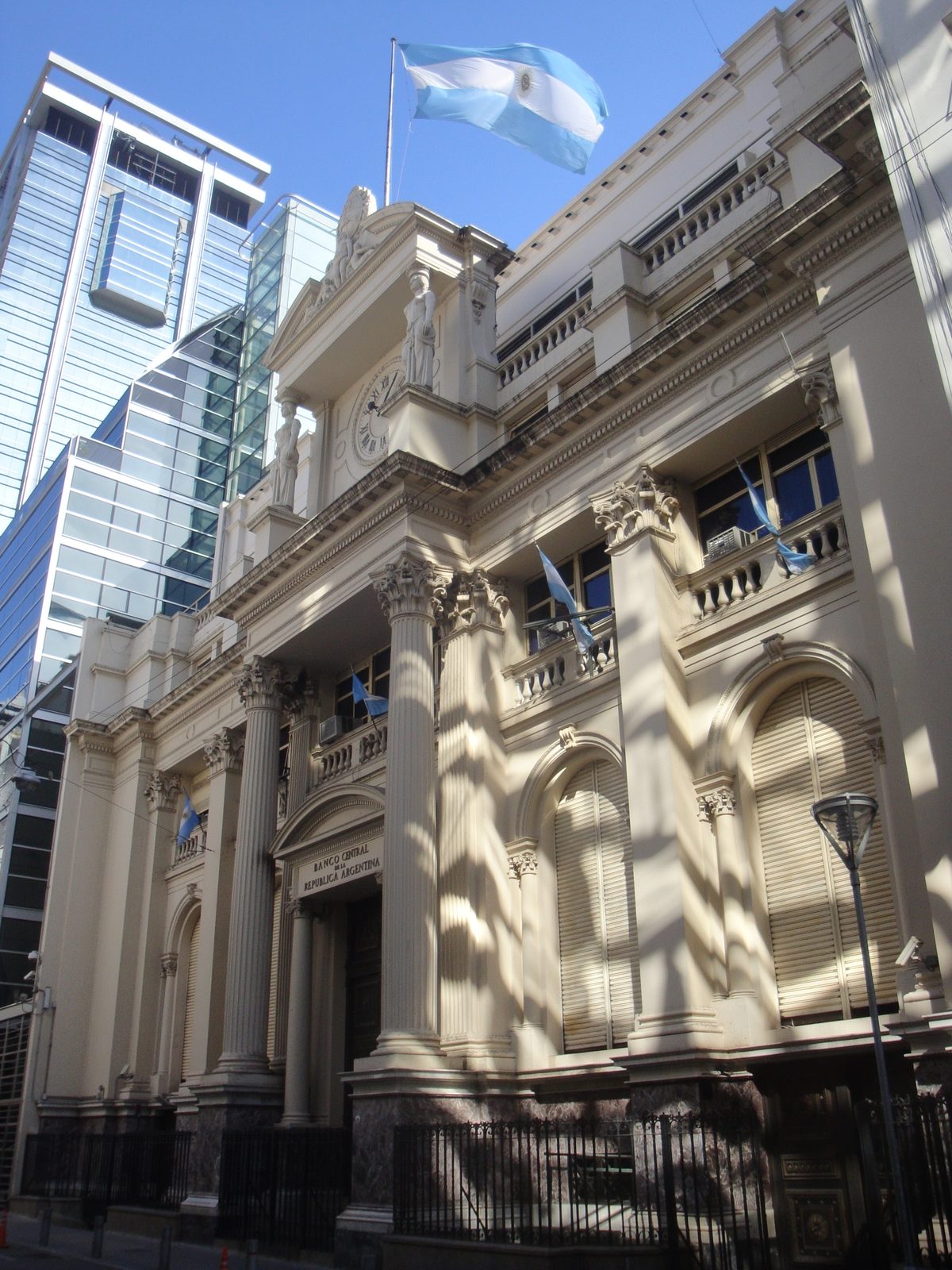
Argentina's federal audit office says the central bank lost US$1.023 billion in 2025 on derivatives backed by its gold, a loss its president described as a calculation error.
The Auditoría General de la Nación (AGN), the body that audits public agencies, made the finding on Thursday, October 8, when it approved the central bank's financial statements for 2025 as reasonable in their technical aspects. The report singles out contracts, known as options, that the bank signed during the year using part of its gold as the underlying asset. According to the AGN, they cost about 1.5 trillion pesos (US$1.023 billion), made up of US$960 million in losses on the options and US$62.8 million in premiums, the upfront price of the options. The bank paid the sum in dollars from its reserves, and no such positions remained open at year-end.
AGN president Juan Manuel Olmos said the office had never recorded a loss that size on the bank's accounts, nor the use of physical gold reserves in transactions of that kind. "In short, during 2025 the central bank carried out financial operations speculating on a certain trajectory for the international price of gold, erred in the calculation and lost US$1.023 billion," he said. The report itself describes the contracts as hedges; the word "speculating" is Olmos's.
The central bank answered the same day with a communiqué. It said its gold position produced a net gain of US$2.505 billion in 2025 once the rise in the metal's price and the hedges are counted together, since a hedge pays out in a falling market and costs money in a rising one. The bank said it hedges 100% of its gold and has done so since 2007, and that "a financial operation cannot be a hedge and speculative at the same time." It accused the AGN's leadership of working "to discredit the central bank's leadership, for purely political purposes."
Olmos repeated his position on Friday in an interview with Radio Mitre, calling the report "a technical exposition, not a political opinion." He said the gold was bought under earlier administrations, so the bank's US$2.505 billion reflects the price rise on metal it already held, and that without the contracts it would have gained a little over US$3.5 billion.
The statements were signed by all seven of the AGN's auditors, but three dissented on the paragraph about the gold loss. One of them, Mónica Almada, the governing party's nominee on the board, told Radio Mitre the paragraph was added the night before the vote and called the episode a wear-down operation against central bank president Santiago Bausili.
A separate AGN audit of how the bank managed its physical gold, including why it was moved abroad, where it went and who benefited, is now with the bank for its reply. The office had said in September that its review of the gold's overseas traceability was unfinished, contradicting Bausili's account to the Senate.