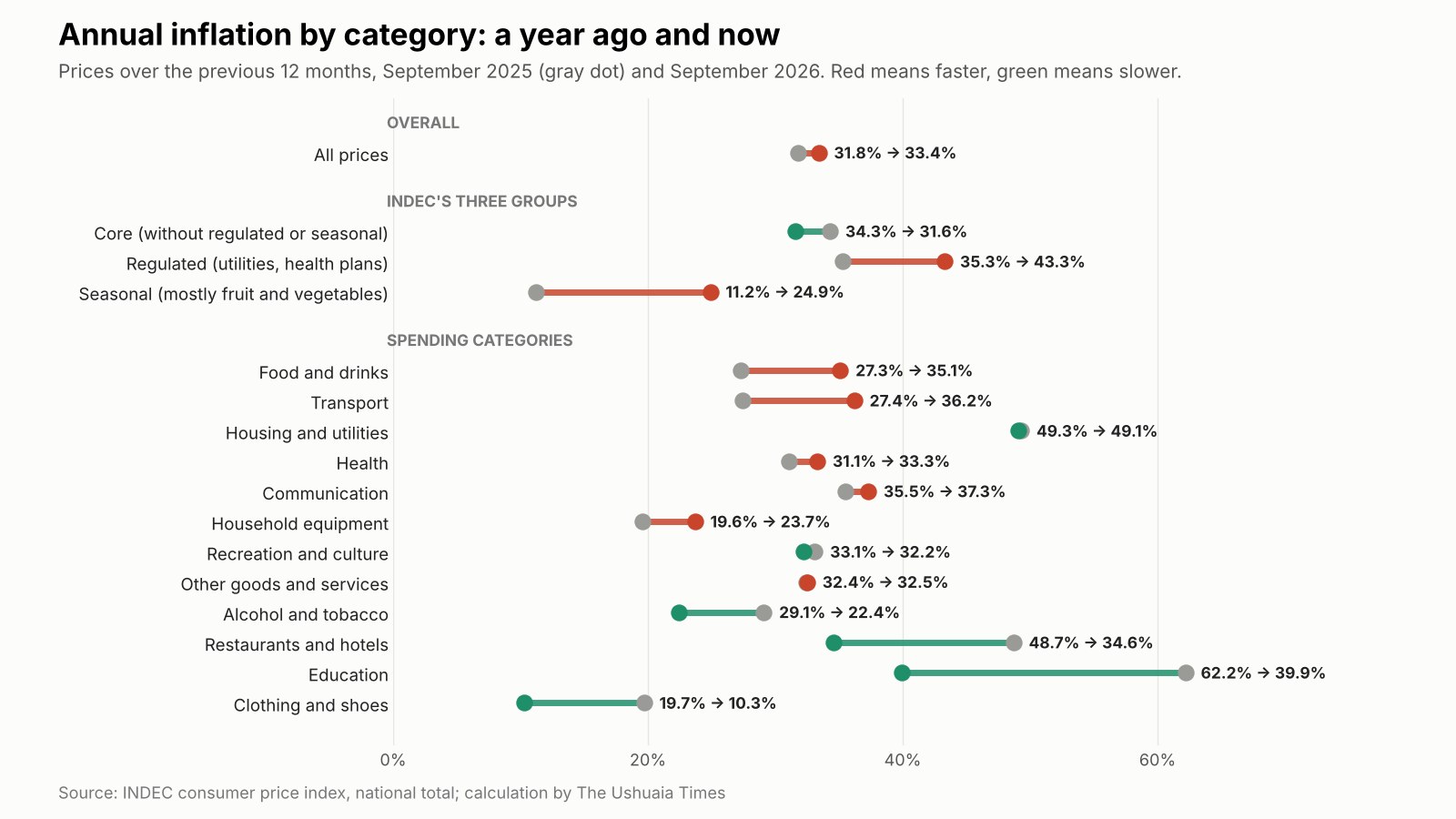
Argentina’s annual inflation was 33.4% in September, 1.6 percentage points higher than a year earlier, and the increase came from food, transport and government-set prices, not from prices across the board, according to The Ushuaia Times’ analysis of INDEC’s consumer price data. Core inflation, which leaves out regulated and seasonal prices, fell over the same year to 31.6% from 34.3%.
INDEC, the national statistics agency, reported 1.9% inflation for September, up from 1.7% in August. The annual rate hit a low of 31.3% in October 2025 and has stayed between 32.4% and 33.8% since January.
What pushed it up
Regulated prices, which the government sets or approves, such as electricity, gas and private health plans, rose 43.3% over twelve months, up from 35.3% a year earlier. Seasonal prices, mostly fruit and vegetables, rose 24.9% after 11.2%.
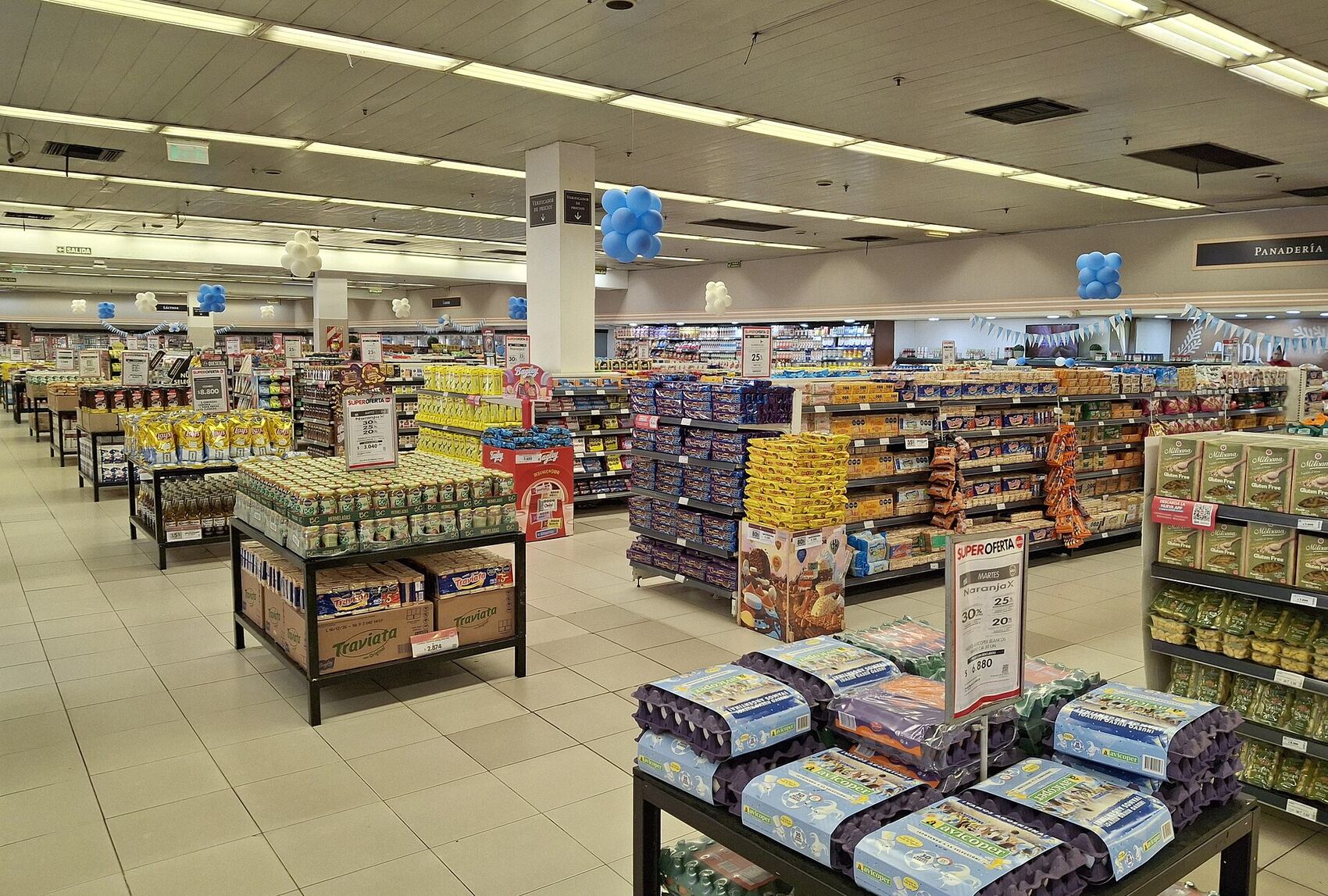
Among spending categories, food and non-alcoholic drinks sped up from 27.3% to 35.1% and transport from 27.4% to 36.2%. Food is the largest category in the index, so its acceleration weighs on the headline more than any other. Household equipment rose 23.7%, up from 19.6%.
What slowed down
Services rose 41.9% over twelve months, down from 49.2% a year earlier, while goods rose 29.2%, up from 24.6%. Education slowed the most, to 39.9% from 62.2%, followed by restaurants and hotels (to 34.6% from 48.7%) and clothing and footwear (to 10.3% from 19.7%). Housing and utilities, the fastest-rising category at 49.1%, was essentially unchanged.
Why the difference matters
Core inflation is the measure economists use for the underlying trend, because it leaves out prices that move on government decisions or on the harvest. By that measure, price growth has eased over the past year. The headline rate has not, because the prices that rose faster, food above all, take a large share of household spending.
INDEC publishes October’s figure on November 12.
How we did this
We compared the twelve-month change in each category of INDEC’s national consumer price index for September 2025 and September 2026, using the agency’s published series by division and by group. INDEC’s regulated and seasonal groups overlap with its spending categories, so the groups and categories are not added together.