Britain's minister for overseas territories called Argentina's legal campaign against companies operating near the Malvinas (Falkland Islands) "unacceptable" on September 18, sharpening a diplomatic standoff that has run alongside Argentina's monthslong push to choke off international investment in the islands' oil and fishing industries.
"These charges against companies and individuals are unacceptable, with no legal justification," said Uma Kumaran, the UK's Parliamentary Under-Secretary of State for Overseas Territories, in a Foreign Office statement. "The United Kingdom is clear: the Falkland Islands are British and they have the right to develop their natural resources as they see fit." She added that the UK government and its diplomatic network "stands fully behind those businesses and individuals," and pledged London would "work tirelessly with the Falkland Islands Government" to protect islanders' interests.
Argentina's Enforcement Push
Kumaran's statement was a direct response to the scale of Argentina's campaign, which by mid-September had produced three criminal complaints covering ten companies and their directors, 60 administrative case files opened against firms and individuals, and roughly 180 formal warning notices sent to companies and people across 30 countries. None of the administrative files has yet resulted in a penalty, and no criminal complaint has been proven in court, underscoring that Argentina's approach so far has relied more on the deterrent effect of legal exposure than on completed prosecutions.
The dispute over legal authority came to a head in mid-September. Britain's Foreign, Commonwealth and Development Office published guidance on September 15 advising companies that received Argentine warning letters to seek independent legal advice, while asserting that Argentine courts cannot legitimately claim jurisdiction over commercial activity in the islands' waters. Argentina's Foreign Ministry rejected that guidance the following day, maintaining that companies operating without Buenos Aires' authorization are violating Argentine law regardless of what British courts say about the islands' status.
Foreign Minister Pablo Quirno responded to Kumaran's comments the same day in a television interview, saying British backing for the oil firms "demuestra la posición del Reino Unido de no querer sentarse a negociar" (shows the UK's position of not wanting to sit down and negotiate). He said Argentina harbored "ninguna intención belicosa" (no warlike intention) in pursuing the legal campaign.
Part of a Broader Escalation
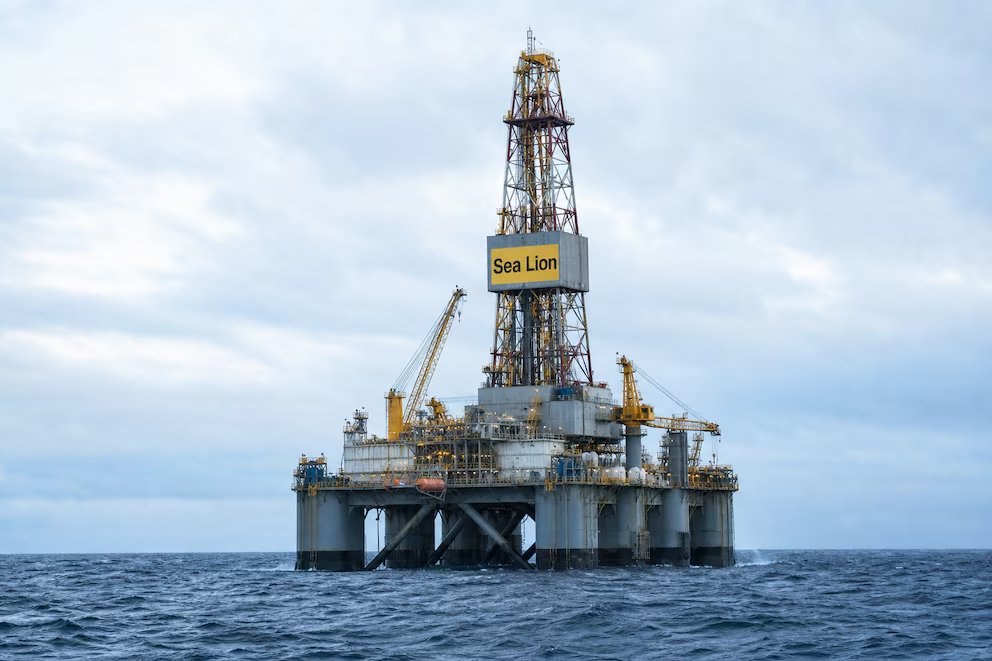
The exchange is the latest turn in a standoff that has intensified through September, as Argentina's government has expanded its sanctions list against companies working near the islands, sent Congress a bill that would add criminal penalties and in-absentia trials for violators, and pursued a separate court order halting the Sea Lion oil project. Britain, for its part, has paired its legal defense of the companies with a broader diplomatic posture: Prime Minister Andy Burnham has vowed to be "relentless" in defending the islands after Milei argued that the roughly 3,500 Falkland Islanders do not have a legitimate claim to self-determination, a position London has firmly rejected.
Neither side's legal theory has been tested in a forum both recognize as binding, which is why the fight is playing out simultaneously in courts, warning letters and government statements rather than in a single venue. That pattern is likely to continue into this week, when the dispute will get another airing on a bigger stage: Milei is due to raise the Malvinas claim in his address to the United Nations General Assembly on September 23, with Argentine officials expecting continued friction with London regardless of what, if anything, comes of separate conversations with Washington.