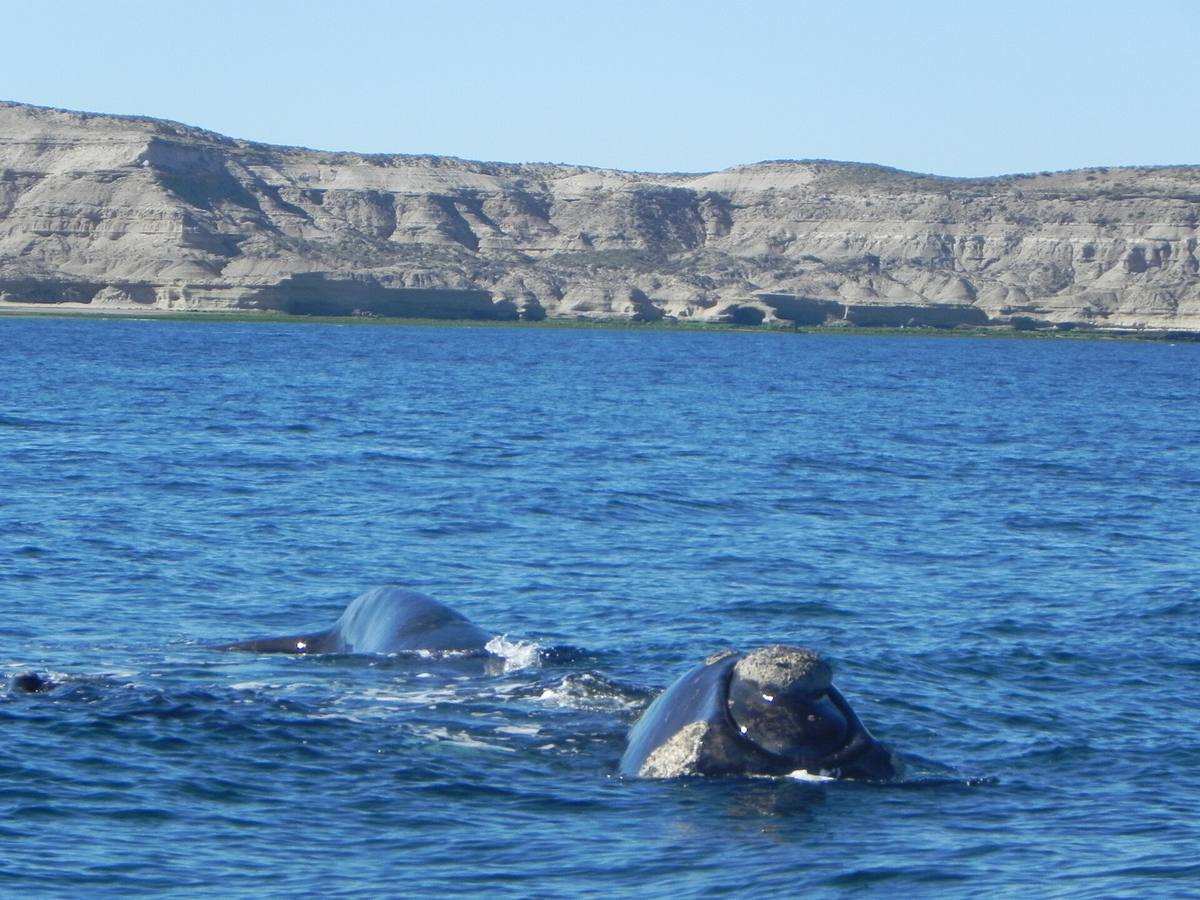
An unusually high number of southern right whale calves have died along the coast of Chubut province this season, and preliminary records suggest the toll could exceed the 113 calves recorded in 2012, according to Argentina's Whale Conservation Institute (ICB).
The deaths, recorded since June, are concentrated around Puerto Madryn and Península Valdés, a UNESCO World Heritage site and the species' main breeding ground off Argentina. Dozens of calves have washed up dead on beaches in recent days, AFP reported.
Scientists are focusing on erysipelas, an infection caused by the bacterium Erysipelothrix rhusiopathiae, which is commonly found on the skin of marine mammals and can cause severe disease in cetaceans. The ICB said the bacterium could enter through wounds left by kelp gulls, which peck at the backs of whales at the surface. The Chubut provincial government said it "would seem to be a bacteria common in the sea which can cause systemic infection in baby whales," and that there is so far no evidence linking the deaths to human activity.
"The death rate among calves is quite high this season in particular," said Mariano Coscarella, a researcher at the marine mammals laboratory of CONICET, the national science council. He said the findings so far point toward a natural cause, though necropsies and laboratory tests on samples are still under way.
This year's census counted 1,375 whales in the area, including nearly 400 calves, compared with 2,110 whales and more than 800 calves in 2025, according to figures reported by AFP. Researchers said the losses do not threaten the population over the medium term, citing the species' average lifespan of about 60 years and its steady recovery since Argentina moved to protect it in the 1980s.