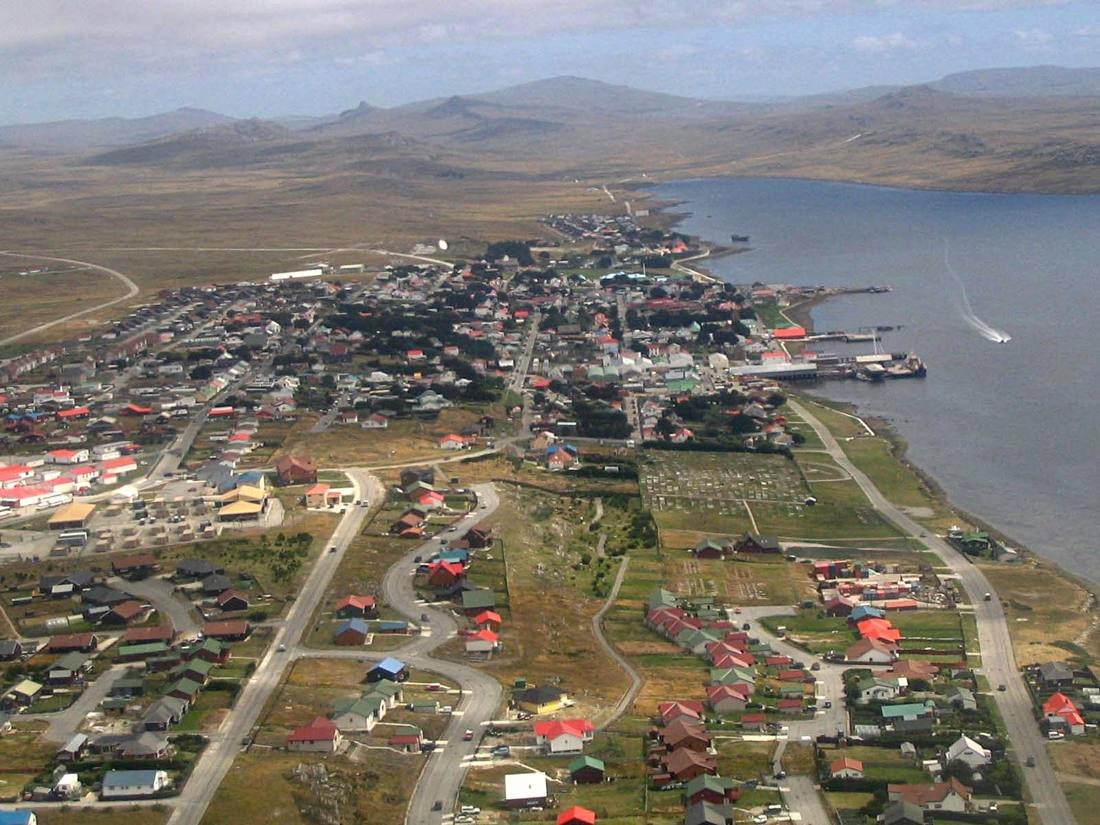
A federal judge in Tierra del Fuego has ordered Rockhopper Exploration and Navitas Petroleum to halt all physical work on the Sea Lion oil project near the Malvinas (Falkland Islands) until Argentina completes an environmental impact assessment. It is the most concrete legal setback yet to the $2.1 billion development, a flashpoint in Argentina's escalating dispute with Britain.
Federal Judge Mariel Borruto, sitting in Río Grande, issued the injunction on September 16. It bars seabed drilling, the installation of subsea infrastructure and pipelines, deployment of floating production and storage units, and onshore or port support work until Argentina's national environmental authorities complete the assessment. The companies have 10 days to report on the project's current status.
The suit was brought by CECIM La Plata, an association of Argentine veterans of the 1982 Malvinas war, together with the Civil Association of Environmental Lawyers and Professionals. They argue the companies never carried out the environmental impact assessment required under Argentina's General Environmental Law before starting work capable of causing ecological damage, citing risks from chemical pollution, underwater noise, ship traffic and potential spills. The claim also invokes a 1976 United Nations resolution urging both countries to avoid unilateral changes while the sovereignty dispute remains unresolved.
Rockhopper and Navitas said in a joint statement that the ruling was "not expected to have a material effect on the project or its timetable." They maintain that their licenses, issued by the Falkland Islands government, are lawful and that Argentine courts have no jurisdiction over activity there. Both said drilling remains on track to begin in early 2027, targeting first oil in 2028. Judge Borruto acknowledged in the ruling that enforcement would depend on "international cooperation and the conduct of the companies involved," language that echoes a similar 2015 Argentine seizure order against oil companies operating near the islands, which was never enforced because the firms held no meaningful assets inside Argentina.
The ruling landed a day after Britain's Foreign, Commonwealth and Development Office published guidance for businesses titled "Doing business with the Falkland Islands," reasserting UK sovereignty, stating that Argentina exercises no jurisdiction over the islands, and offering support to companies that receive legal correspondence from Argentine authorities. Argentina's foreign ministry issued its "strongest rejection" of the guidance on September 16, arguing the islands are Argentine territory "illegitimately occupied" by Britain and that the UK document itself violates the 1976 UN resolution. Foreign Minister Pablo Quirno summoned the British and Israeli ambassadors in Buenos Aires to deliver formal protest notes over Rockhopper and Navitas's decision to proceed.
The Sea Lion field, discovered in 2010 and located roughly 220 kilometers north of the islands, received a final investment decision in December 2025 with a first-phase cost of about $1.8 billion, rising to $2.1 billion through completion. President Milei's government has targeted hydrocarbon activity around the islands since early September, when it opened criminal complaints against Navitas and other firms and expanded a sanctions list to roughly 60 companies and individuals tied to oil exploration there.