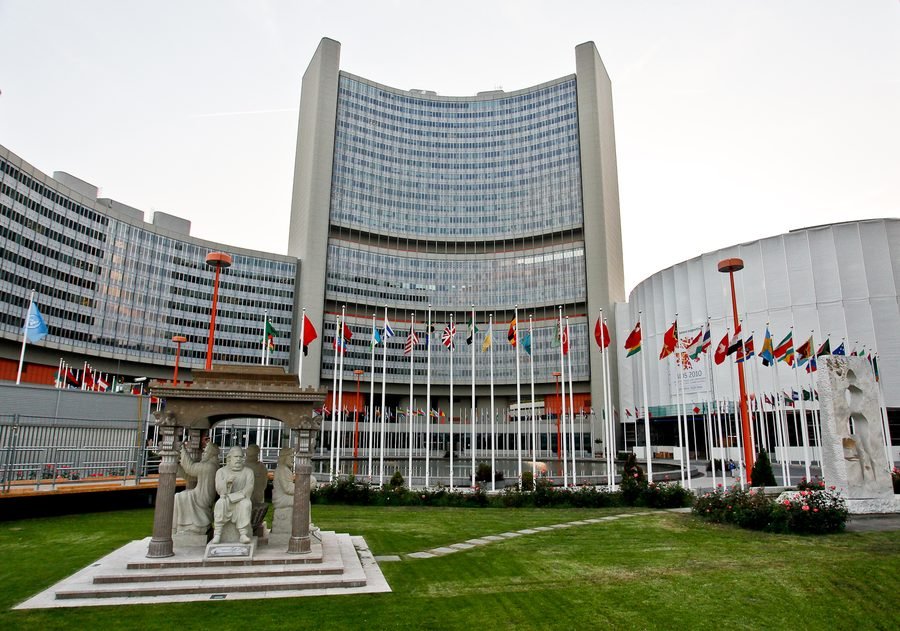
Argentina used the International Atomic Energy Agency's 70th General Conference in Vienna this week to make a pitch that got a fraction of the attention devoted to its fight with Britain over the Malvinas (Falkland Islands): that the country's four-decade-old nuclear engineering industry is an underused source of export revenue, and the government wants to scale it up.
Federico Ramos Napoli, Argentina's 32-year-old Secretary of Nuclear Affairs, presented the strategy to the conference on September 14, framing it around exports of technology and services rather than new domestic power generation. The plan calls for expanding sales of research reactors, the specialized facilities used for scientific research and for producing medical isotopes such as molybdenum-99, a key ingredient in diagnostic cancer and cardiac scans worldwide.
The pitch rests on a track record most Argentines are only vaguely aware of. INVAP, the state-owned engineering firm based in Bariloche, has spent roughly forty years designing and building research reactors for other countries, including Australia's OPAL reactor, along with projects in Egypt, Algeria, Peru and the Netherlands. Ramos Napoli's argument in Vienna was that this niche expertise, built up quietly over decades, could generate far more foreign currency than it currently does if Argentina treated it as a deliberate export strategy rather than a series of one-off contracts.
To do that, the government wants to restructure how the sector is financed. Ramos Napoli described plans for a mixed-capital company that would combine Argentina's National Atomic Energy Commission, CNEA, with private investors, following a model used by France's state-linked nuclear group EDF and Framatome. Under the proposal, CNEA would retain a golden share with veto power over strategic decisions while private capital, on the order of $200 million, would fund the commercial buildout needed to compete for international contracts.
The strategy is explicitly separate from Argentina's domestic nuclear buildout. The RA-10, a multipurpose research reactor under construction outside Buenos Aires, has quietly gone from roughly half-built to about 96% complete in under two years, after a project timeline that had slipped from an original 2019 target to as late as 2029 or 2030 under the previous administration. Once operational, the RA-10 is expected to raise Argentina's output of molybdenum-99 sixfold, from 400-500 curies a week to roughly 3,000, along with other medical isotopes such as lutetium-177 and iridium-192. But officials were careful in Vienna to frame the RA-10 as a domestic capability project, distinct from the commercial exports strategy built around INVAP's existing reactor-building business.
The timing is not incidental. Global interest in nuclear technology has picked up as data centers drive new electricity demand and countries pursue decarbonization targets, creating a market for exactly the kind of small-scale, specialized nuclear infrastructure Argentina has built its expertise around, including small modular reactors that officials in Vienna pitched as solutions for remote or hard-to-finance power needs. Argentina's own limited access to international credit markets makes export revenue from a sector where it already has genuine technical credibility more attractive than it might otherwise be.
The obstacles are real. Nuclear technology exports require years-long international safeguards agreements and regulatory approvals before a single reactor can be shipped, and Argentina's constrained credit profile makes financing new export contracts harder than it would be for a country with easier market access. Nothing announced in Vienna converts into signed contracts in the near term.
What the Vienna pitch signals is less a specific deal than a shift in how the government wants Argentina's economy to be understood abroad: not solely as a commodity exporter of soybeans, beef and shale energy, but as a country with an engineering niche it has under-marketed for decades. Whether that translates into actual export contracts, and how quickly, will depend on financing arrangements and safeguards approvals that are measured in years, not months, but it is one of the few economic diplomacy efforts this month in Vienna, rather than London or Washington, that Argentine officials have been eager to publicize.