

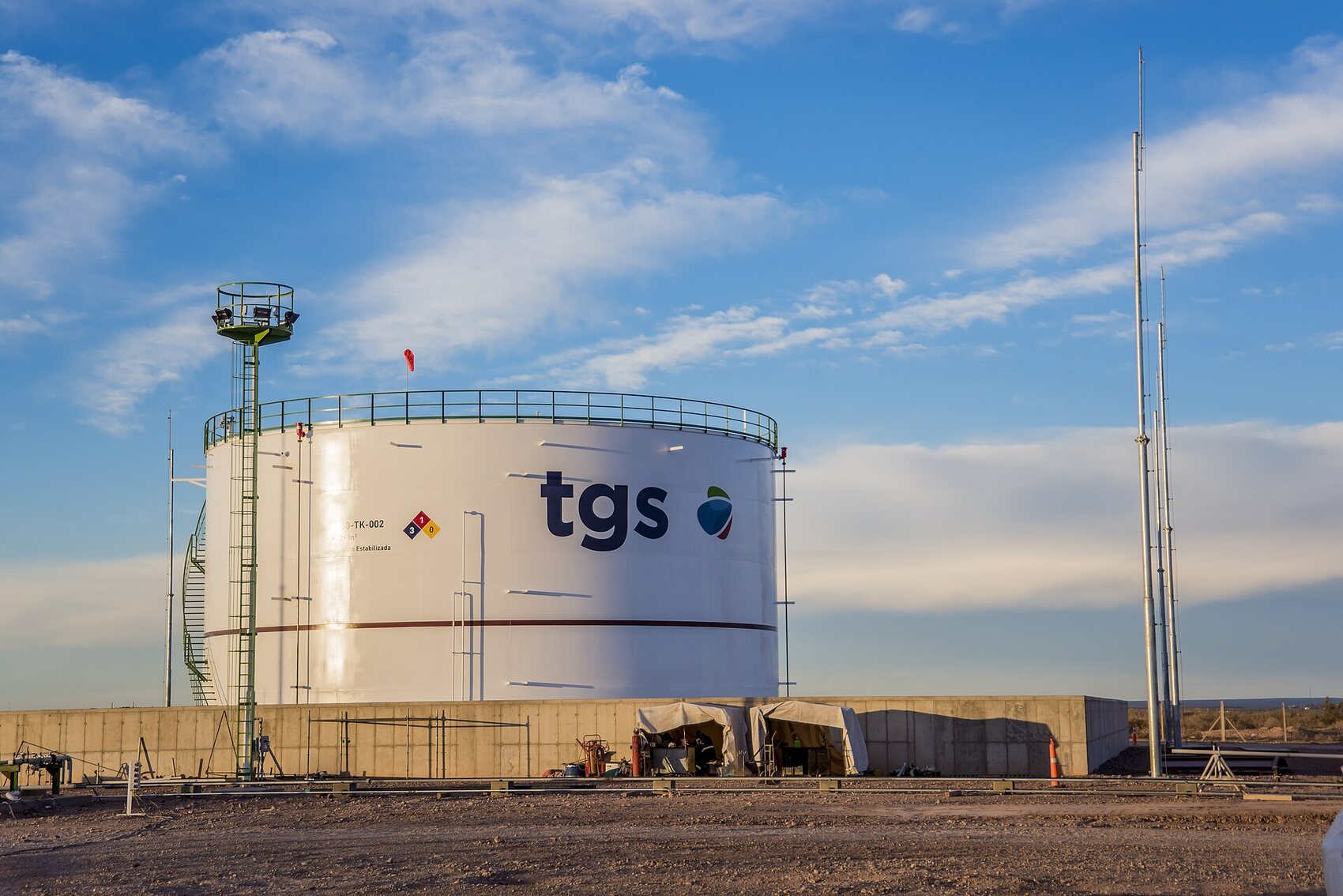
Argentina’s government approved tax and currency incentives on Monday for two projects by gas pipeline operator TGS, worth more than US$3.2 billion, to process and export gas liquids from the Vaca Muerta shale field in Patagonia from 2030.
Economy Minister Luis Caputo announced the approval on X. He said the projects will create 19,000 jobs during construction and, once running in 2030, bring in US$1.1 billion a year in exports. Those are government estimates, not company results.
The incentives come from the RIGI, the regime for investments of more than US$200 million created by the 2024 Bases Law, Milei’s reform package. Approved projects get 30 years of fixed tax, customs and currency rules.
The first TGS project is a plant at Tratayén, in Neuquén province, that separates the liquids (known as NGLs, such as propane and butane) from natural gas. The second is a 577-kilometer pipeline carrying them to Bahía Blanca, on the Atlantic coast, plus a plant there that splits them into products for export. Caputo said both add capacity to move more output out of the Neuquén basin.
TGS is co-controlled by Pampa Energía, the energy group led by Marcelo Mindlin. The company presented the plan in March at Argentina Week in New York and called it the largest natural gas liquids investment in Argentine history.
Also on Monday, the Official Gazette published the formal admission of the Pluspetrol and GyP (Neuquén’s provincial energy company) shale oil project Bajo del Choique-La Invernada, which the government had announced on October 2. Economy Ministry Resolution 1808 puts it at about US$12.2 billion in two stages. Together with the TGS projects, the approvals add up to more than US$15.4 billion.
Tecpetrol’s US$6.4 billion project took seven weeks to go from Caputo’s announcement on August 19 to the gazette on October 9.