Britain has formally protested to Argentina's ambassador in London over Argentina's arbitration case against the Sea Lion oil project north of the Malvinas (Falkland Islands), and on Wednesday, September 30, publicly rejected it as the latest attempt to undermine the islanders' rights, saying it "raises questions about Argentina's reliability as a partner." On Thursday, October 1, Argentina's Foreign Ministry replied, saying that if London is sure of its legal position it has "nothing to fear from a tribunal."
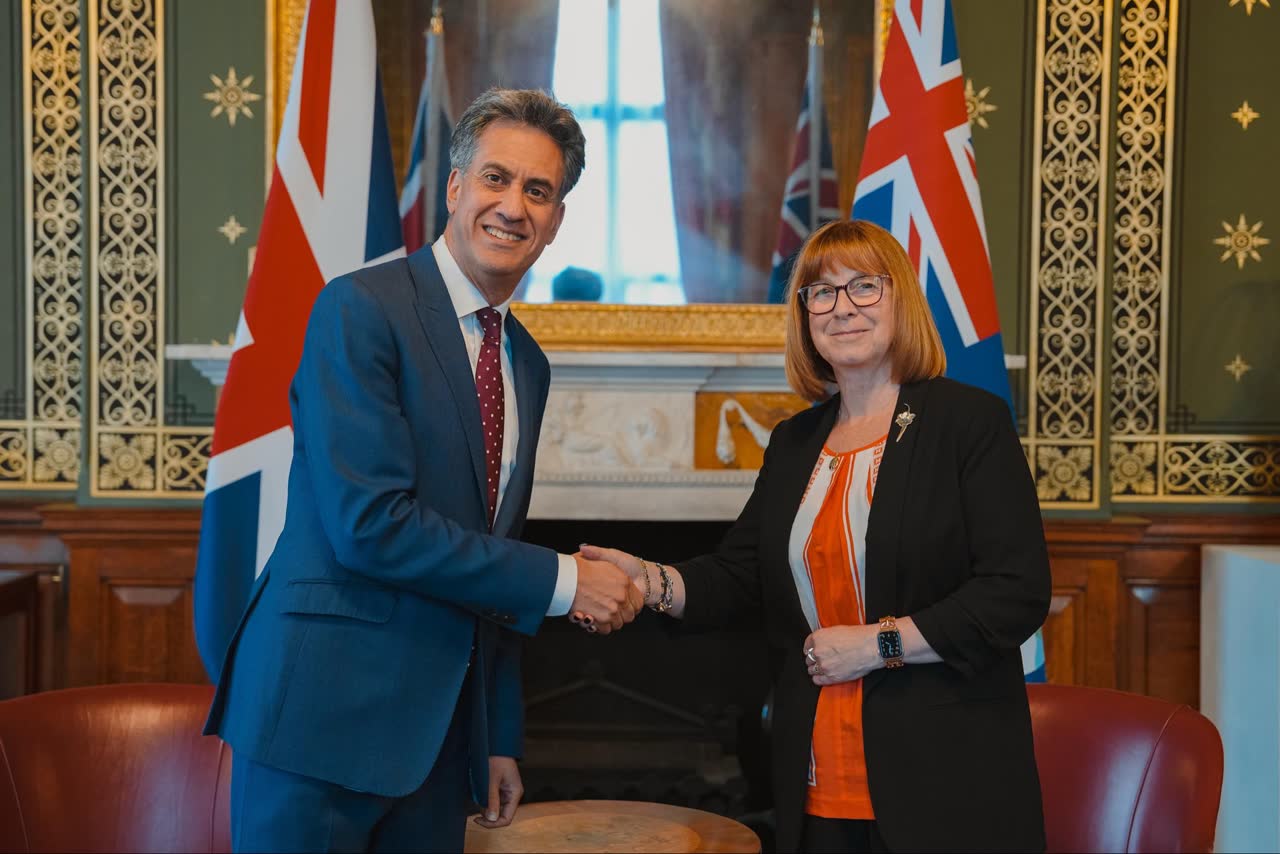
The UK government's position came in a statement dated September 30 from Uma Kumaran, the parliamentary under-secretary of state whose brief covers the overseas territories. "This week we made clear to Argentina's ambassador to the United Kingdom that efforts to obstruct lawful economic activity in the Falkland Islands are not acts of responsible international engagement," it said, adding that Britain "will robustly defend their wishes, their economy and their right to determine their own future." The statement does not say how the message was delivered; La Nación, Clarín, Ámbito and El País reported that the government in London summoned the ambassador, Mariana Plaza, and La Nación's diplomatic sources said she was given the formal protest on Tuesday. It was London's first public response to the arbitration Milei launched on September 28 under the UN Convention on the Law of the Sea.
The Falkland Islands are British. We will always defend the Falkland Islanders' right to self-determination. Read the United Kingdom's response to Argentina's latest attempt to undermine the rights of Falkland Islanders below.
Argentina's reply, a Foreign Ministry statement that Foreign Minister Pablo Quirno posted on X from Paris on Thursday, rejected the claim that the arbitration undermines anyone's rights. "Submitting a dispute to an impartial international tribunal is the most responsible act a state can take," it said. On reliability, it said that "reliability is measured by faithfulness to the commitments one has made," and that Argentina was acting in line with a treaty both countries have ratified.
The ministry also rejected what it called Britain's "manipulation" of the principle of self-determination, which it said the United Nations has not applied to the islands' current inhabitants. It cited UN General Assembly resolutions urging both sides to negotiate and to avoid unilateral changes while the dispute is open, argued that unilateral oil exploration is exactly such a change, and said Argentina remains ready to resume bilateral talks.
France and the United States also weighed in. On Wednesday, an adviser to French President Emmanuel Macron said Macron would tell Milei that territorial disputes should be settled by established procedures, such as jointly referring them to the International Court of Justice, and that "calm and restraint are needed," according to AFP and EFE. Argentine officials' accounts of Thursday's Élysée meeting did not mention the islands. In remarks reported on Thursday, US Ambassador to the United Nations Mike Waltz told British broadcaster GB News that any military support for Britain in a conflict would be a decision for President Trump, that Washington would seek to de-escalate first, and that Argentina is a close friend of the United States, according to Clarín, Ámbito and La Nación.
The companies are pressing ahead. Rockhopper Exploration, which holds 35% of Sea Lion alongside operator Navitas Petroleum's 65%, used its first-half results on Wednesday to call Argentina's measures "illegitimate" and reaffirm first oil in the first quarter of 2028, saying Navitas expects no material impact on the schedule. Rockhopper's London-listed shares closed at 59.1 pence on September 30, the day of its results, about 26% below their close of 80 pence on September 2, the day before Milei's national address on the Malvinas, while Navitas' Tel Aviv shares fell about 13% over the same period, according to Yahoo Finance market data.
Milei's deadline for Britain to halt Sea Lion runs out around October 12, after which Argentina says it will ask the International Tribunal for the Law of the Sea for provisional measures. Neither government signaled any retreat this week: London rejected the case outright, and Buenos Aires said it will leave the merits to the arbitrators.