Paraguay’s Senate removed President Santiago Peña on Friday over the collapse of a bank he had ties to, and on Saturday prosecutors charged him and asked a judge to jail him before trial.
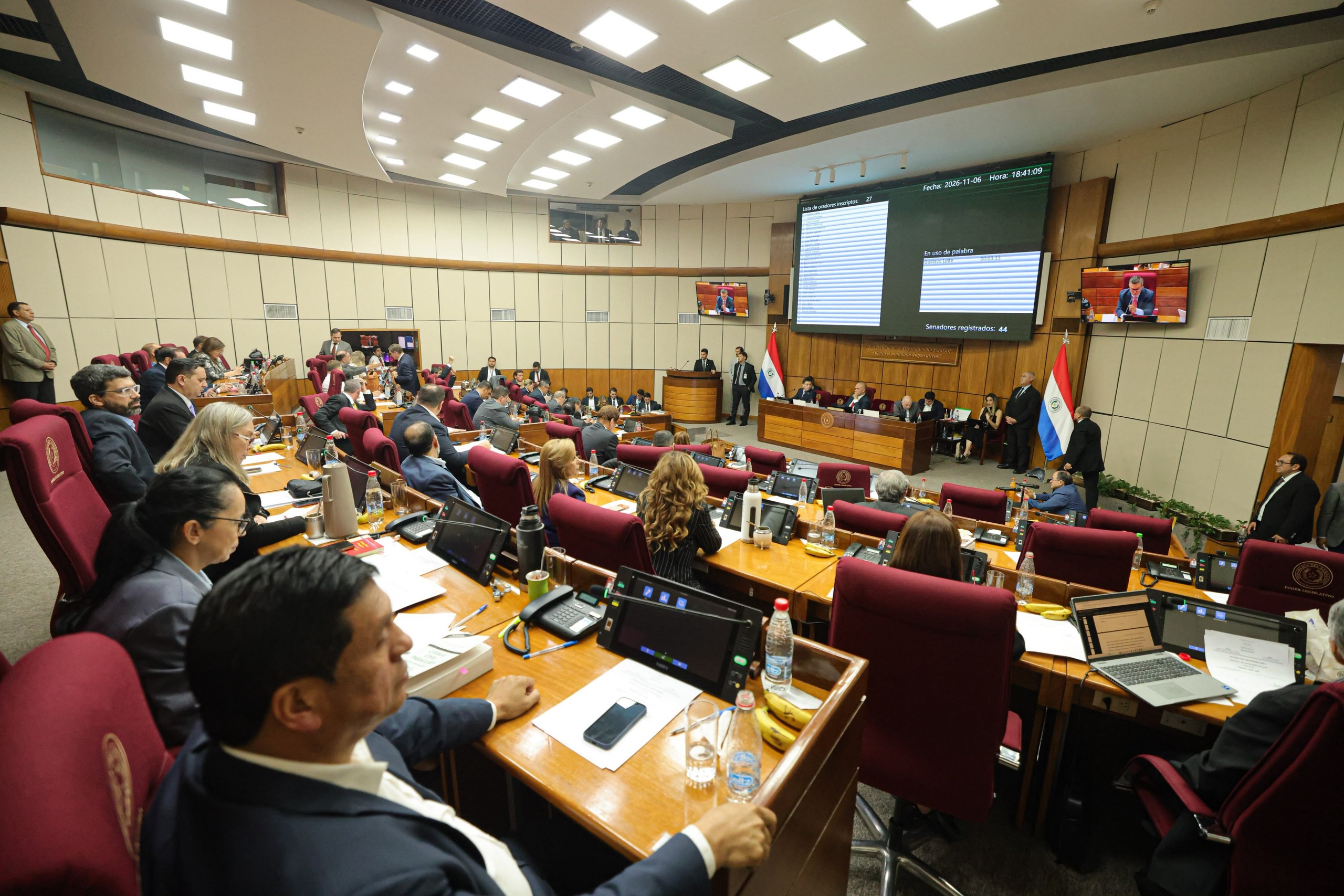
Peña had offered to resign on Thursday, but lawmakers never accepted the offer and pressed on with his impeachment, a process in which the lower house brings charges and the Senate sits as the court. On Friday evening the Senate voted unanimously, 44 senators in a chamber of 45, to find him guilty of poor performance of his duties and remove him. Vice President Pedro Alliana was sworn in as president that evening and will serve until the term ends in August 2028.
Presenté mi renuncia para evitar más daño al país y contribuir a devolverle la tranquilidad al Paraguay. No quiero que mi presencia sea motivo de mayor división o inestabilidad. Mi responsabilidad es poner al país por encima de mi destino personal. Hoy nos toca unirnos como paraguayos para reconstruir la institucionalidad y recuperar la confianza. Me despido con gratitud, sin desconocer la angustia de quienes hoy esperan respuestas. Es momento de unir esfuerzos para reconstruir la institucionalidad y atender, con hechos y responsabilidad, a quienes están siendo afectados. Que Dios bendiga al Paraguay.
Translation: "I submitted my resignation to avoid further harm to the country and to help bring calm back to Paraguay. I do not want my presence to be a cause of more division or instability. My responsibility is to put the country above my personal fate. Today we must come together as Paraguayans to rebuild our institutions and restore trust. I take my leave with gratitude, without ignoring the anguish of those who are waiting for answers today. It is time to join forces to rebuild our institutions and to address, with action and responsibility, those who are being affected. May God bless Paraguay."
Ueno Bank began as a small digital lender and grew into one of Paraguay’s largest banks, with almost 3 million customers. It held state pension money and the accounts of state bodies. The central bank took it over on November 3, saying its solvency ratio, a measure of its cushion against losses, had fallen below half the legal minimum, and customers lost access to their accounts. Peña held shares in Ueno’s parent group until last year and in 2023 named Ueno’s former head, Carlos Carvallo, to run the central bank that supervised it. Opposition lawmakers called those ties a conflict of interest, which Peña denied.
Peña did not attend the trial, and the Senate refused his request for more time to prepare. His lawyers argued that the case lost its purpose once he resigned and that the accusation blames the central bank and the state social security institute, which he did not control. They reserved the right to challenge the trial before Paraguay’s Supreme Court and international human rights bodies.
Alliana, a veteran of the ruling Colorado Party who ran with Peña in 2023, promised in his inaugural speech that savers hit by the collapse would be fully compensated. The central bank said it had paid almost 1.2 million customers from the state deposit-guarantee fund by Saturday morning. The United States, Brazil and Chile were among the governments that welcomed Alliana, and Paraguay’s Foreign Ministry told other governments its foreign policy would continue.
The fall removes one of Argentine President Milei’s closest partners in South America. Peña was the first Latin American president to visit Milei in Buenos Aires after he took office, and at a conservative conference in Asunción in September 2025 Milei called Paraguay’s economic policy an example to follow. Argentina’s Foreign Ministry said it had no comment for now, and Milei, who is usually active on social media, had said nothing publicly as of Friday. Argentine officials also denied claims by Paraguayan lawmakers on Thursday that Peña had fled to Argentina; he was at his home in Asunción when prosecutors arrived on Friday night.
The collapse has reached Buenos Aires. Kaitel, the Argentine arm of ITTI, the technology company in Ueno’s parent group, employs hundreds of people in the city and has suspended some of them without pay from November 5 to December 4, saying it lacks the money to pay October wages. Economists told the Buenos Aires Herald they do not expect the failure to spread to Argentina’s banks, because the Argentine system is less concentrated and local banks are solid. South America’s football confederation, CONMEBOL, which is based in Paraguay, had millions of dollars deposited in Ueno. It said the finals of South America’s two main club tournaments, in which Argentina’s Estudiantes de La Plata and Boca Juniors play, and their prize money are not at risk.
Removal also opens Peña to prosecution. A president elected by popular vote who resigns normally becomes a senator for life, with immunity, but one convicted in an impeachment trial does not. Prosecutors ordered him held at his home within minutes of the vote, and near midnight, with crowds gathering outside, police moved him to a presidential guard military base for his safety.
On Saturday Peña appeared at the Attorney General’s office, declined to speak and was taken back to the guard base. Prosecutors charged him with breach of trust and administration for personal gain, alleging that as president he took part in placing public money, including pension funds, in Ueno, and asked a judge to order pretrial detention and to freeze his assets. They made the same requests for Carvallo, the former central bank chief, who surrendered on Friday night. Peña’s lawyer, Ricardo Preda, said jailing a suspect before trial should be exceptional and that Peña will cooperate. A judge will now decide whether Peña stays in custody.