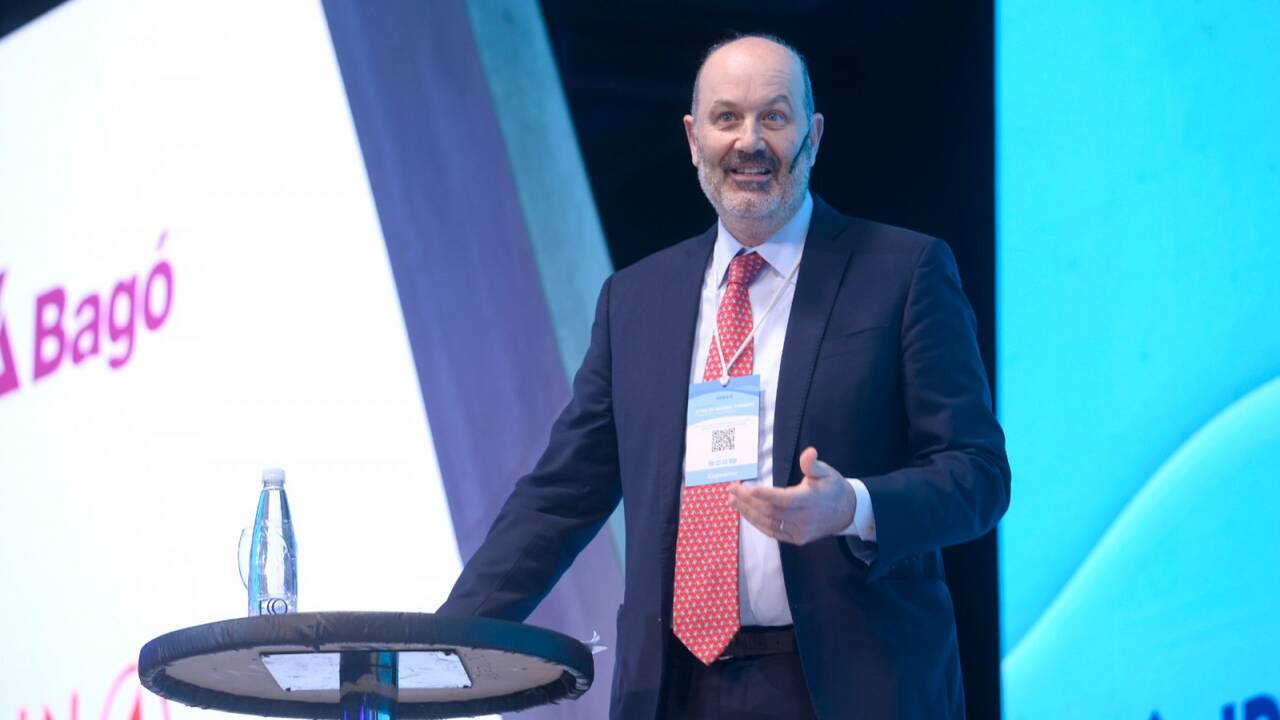
The government will send Congress a bill to overhaul Argentina's capital markets rules, Deregulation Minister Federico Sturzenegger said on Monday, with changes meant to make it cheaper for companies, farmers and shops to borrow against what they own.
The bill has not yet been filed. Sturzenegger, who called it the "crowning touch" of the deregulation of the market, announced its main lines at the opening of World Investor Week, an event organized by the CNV. He said it was drafted with the CNV and the central bank (BCRA).
For ordinary borrowers, the most direct change is on collateral. A company or a person could pledge a wider range of assets, including a crop not yet harvested, and pledge the same asset a second or third time without the first lender's approval. A new federal registry run by the BCRA would let anyone check whether an asset is already pledged. The registry would also let companies, carmakers such as Toyota or Volkswagen among them, set up pledges without going through the Justice Ministry, he said.
Banks would lose the exclusive right they now hold to enforce certain pledges in court, which the government says will speed up recovery of assets and lower the cost of credit. Warrants, the documents that let a producer borrow against stored goods, would no longer be limited in practice to farm products, and mandatory insurance and public-auction requirements would go. The minister compared the planned crop pledge to Brazil's rural product note, which he said accounts for 38% of farm credit there.
Small and mid-sized companies (pymes) would get changes to the electronic credit invoice, with fewer intermediaries between the firm and the market. Shops could sell credit-card receivables as tradable securities rather than depend on a bank. Car-savings plans, the instalment schemes carmakers use, would drop their special regime and fall under the Civil and Commercial Code and consumer-protection law. The bill would also end the separate crowdfunding regime, which Sturzenegger said has lost its function, allow inflation-linked (UVA) corporate bonds, and write into law the automatic issuance approvals the CNV already grants.
CNV president Roberto Silva was more measured. "I wouldn't dare say they are big changes, except for a few exceptions," he said, adding that the bill brings many improvements to financial instruments and guarantees. He said he hopes it reaches Congress soon.
Sturzenegger also said Argentines hold about US$300 billion abroad that could flow into the local market, and that the country has already resolved its fiscal and external constraints. Lawmakers have already approved a second fiscal innocence law aimed at undeclared savings. Silva said the CNV expects the country's first local ETF, tracking the Merval stock index, to launch next month, and the labor assistance fund (FAL) to start operating in November.