Passengers who are owed refunds by Flybondi now stand in line with the airline’s other creditors, after its operator filed on October 2 for a court-supervised restructuring. Getting money depends on a card issuer, a travel agency or the court’s trustee, and which door is open depends on how the ticket was paid for.
The filing, called a concurso preventivo, works like Chapter 11 in the United States: the company keeps operating on paper while a judge freezes its pre-filing debts and sets a process for creditors to claim them. Flybondi has not flown a scheduled route since about August 6, so the people affected include travelers whose flights were cancelled and who never got their money back. Judge Guillermo Pesaresi has to decide whether to open the case.
Flybondi’s pattern of delays and cancellations
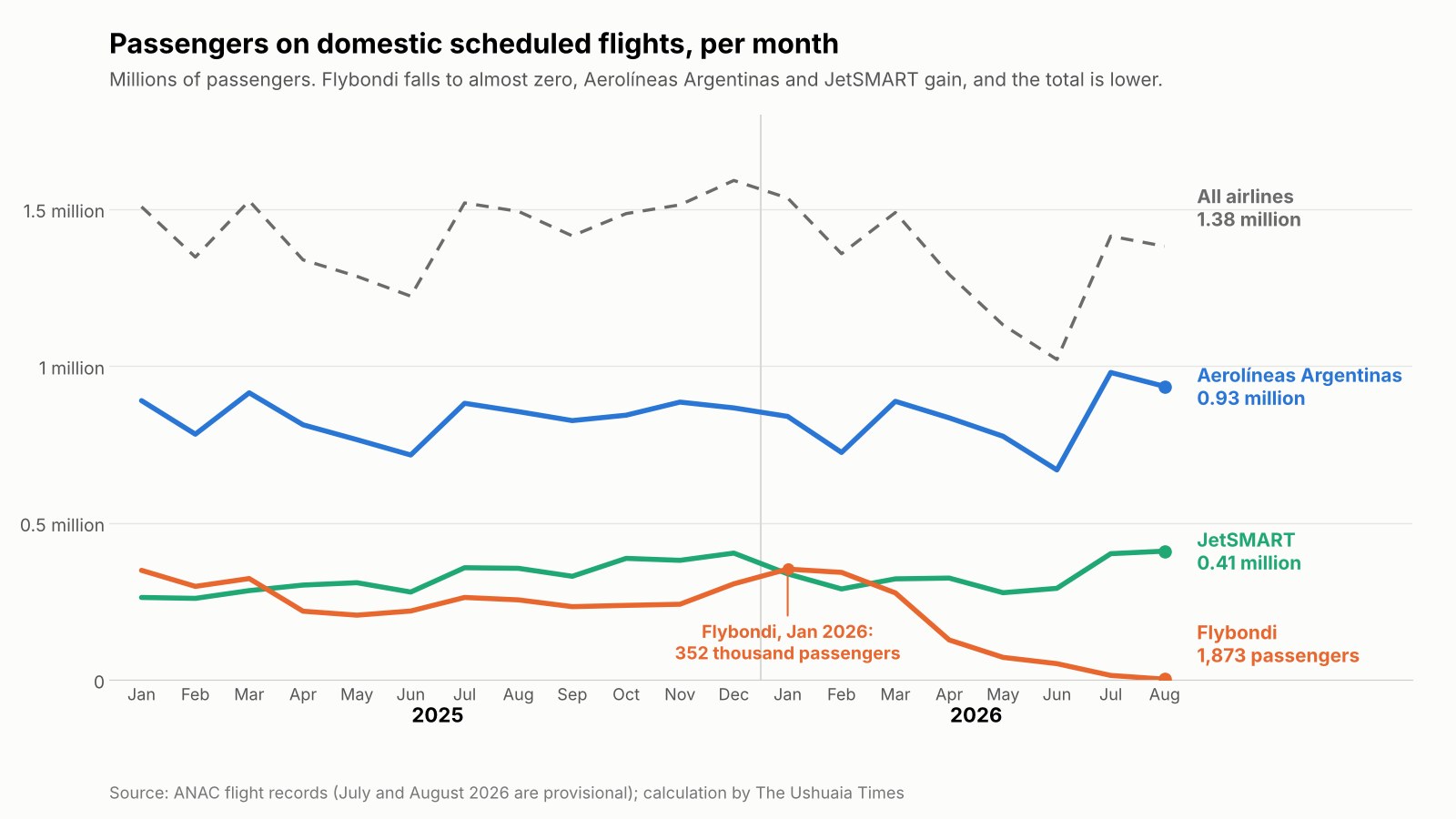
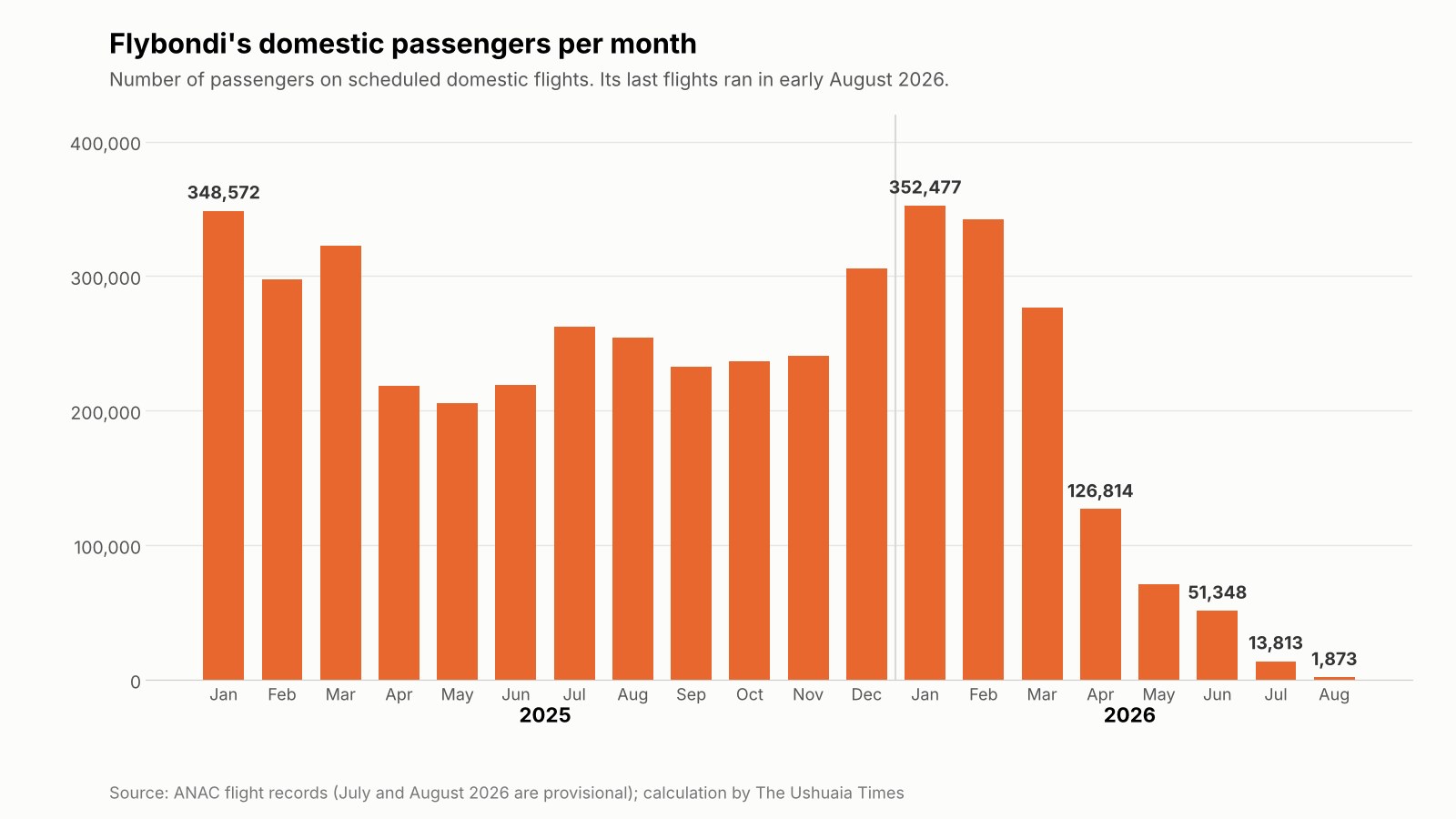
The airline’s fleet shrank from 13 aircraft to 3, all grounded. Flybondi carried 352,000 domestic passengers in January 2026; that number shrank to just 1,873 in August, when its last flights ran, according to analysis of ANAC flight records. Flybondi also kept selling tickets while it was cancelling most of its flights - In July the Argentine government demanded a recovery plan after the airline cancelled more than 74% of its scheduled July flights while still selling seats, and ANAC, the civil aviation regulator, then allowed it to keep selling once the plan was delivered. Córdoba Province’s consumer office had told the public in mid-July not to buy new Flybondi tickets until the airline confirmed its operations were back to normal. In August ANAC said it has no tool for a preventive suspension, and Flybondi’s website went down after its last flights on August 6.
The Ushuaia Times interviewed previous Flybondi passengers, asking about their experiences with the airline. Stephen, an American tourist, purchased tickets several times earlier this year, choosing the airline for “cheaper tickets and at one time reliable service,” he says. Delays became routine, and then one flight was “cancelled the day of with no prior notification”. Flybondi offered him rebooking, a voucher or a refund, all via automated e-mail responses, but “No refunds were ever issued even though I requested them,” he says. “They did not have reliable customer service and no one would contact me.”
Speaking about the previous delays, he said, “Consumers and travelers are ignorant to these types of things; how are they supposed to know that the flight they’re buying may or may not actually happen?”, he continued, “Airlines should be expected to fly and fulfill their obligation to travelers who purchase tickets, not cancel or change flights at the last minute without giving them a refund,” he says. “I didn’t know anything about the company at the time I flew or purchased tickets, I just thought it was another airline.”
Where Flybondi stands
Sector estimates put its debts near US$120 million. The tax agency and ANAC claim more than 3,000 million pesos (about US$2 million) between them, and more than 900 workers were dismissed.
The dismissal of those employees left many workers without health coverage as well as pay. Johanna Belén Abba, a Flybondi employee who was hit by a baggage tractor on the job in April 2025, said in a public Instagram post in August that she had gone three months without a salary and without health insurance while still in treatment. “Today I have to do something I never imagined: ask for help publicly,” she wrote, and she asked for donations to pay for her care. Former workers say about 500 people still technically employed by the company are also without coverage, and others have posted similar complaints on Instagram, including through an account called Exempleados Flybondi.
Who took over its passengers
JetSMART has announced it will take over Flybondi’s routes to Posadas, San Juan and Santiago del Estero, and Aerolíneas Argentinas is now the only airline on 17 of the 33 routes Flybondi flew in July 2025, according to our analysis of ANAC data. On Wednesday, Argentina also cleared the Chilean arm of JetSMART to fly domestic routes inside the country, the widest air-traffic rights it grants.
Across the whole market, Aerolíneas Argentinas and JetSMART carried 97.4% of domestic passengers in August, up from 81.0% a year earlier. They recaptured 56% of the passengers Flybondi lost, so total traffic fell 7.5% to 1.38 million passengers.
What past passengers can do
Lawyer Julieta Rojas says passengers with a cancelled, unrefunded flight are now unsecured creditors of the company and that debts from before the October 2 filing cannot be paid to individuals outside the court process, in comments to iProfesional. What a passenger can do depends on how the ticket was paid for.
If you paid by card, Argentina’s credit card law (Law 25,065) lets a cardholder dispute a charge within 30 days of the statement and ask the issuer to reverse a service that was not provided. Rojas says to contact the issuer even after that window, since some issuers have their own procedures.
One passenger interviewed at Aeroparque took this route: “My banks issued refunds to me for services not provided,” he says, describing the “normal process” for filing a dispute on his credit cards. He now flies Aerolíneas Argentinas, which he calls “much more reliable and timely” but more expensive, and says he would not fly Flybondi again “even if it restarts.”
If you booked through a travel agency, a claim can go to the agency as well as to the airline.
If you paid another way, the claim goes to the court-appointed trustee, called the síndico, once the judge opens the case and sets a deadline. Filing late is allowed but slower and costlier. Lawyer Martín Petasne says passengers rank behind essential suppliers, that creditors may be offered a reduced payout in installments, and that recovery chances are very low if the case ends in bankruptcy.
Keep the proof of purchase, the booking and cancellation emails and any complaint already filed. Complaints to consumer-protection offices and ANAC put the failure on record and can lead to sanctions on the airline, but they do not replace the court process, the lawyers say.
Stephen, whose flight was cancelled the same day with no prior notification, says he was “beyond angry.” “Not sure how this is legal here in Argentina and why nothing is being done about it,” he says.