

Two off-roaders who drove a Toyota Hilux into the protected Pampa del Leoncito in San Juan were fined more than 9.2 million pesos (about US$6,000); the damage may take 50 to 80 years to heal.
The episode began on August 8. The men drove roughly 1.5 kilometers onto the muddy surface before the truck became trapped. They tried reversing and placed a metal ladder beneath the rear wheels, but the Hilux would not move. They eventually removed a motorcycle and left the truck behind. It stayed nearly a month.
Authorities considered waiting for conditions to improve, then decided the vehicle could be removed earlier without creating additional damage. The extraction, a controlled operation involving Gendarmeria, provincial police and environmental officials, was completed on September 4. The truck is gone now. The tracks are expected to remain for decades.
A court in Calingasta fined Pablo Abraham and Agustín Añó more than 9.2 million pesos, approximately US$6,000, after finding them responsible for damage to the surface of the area.
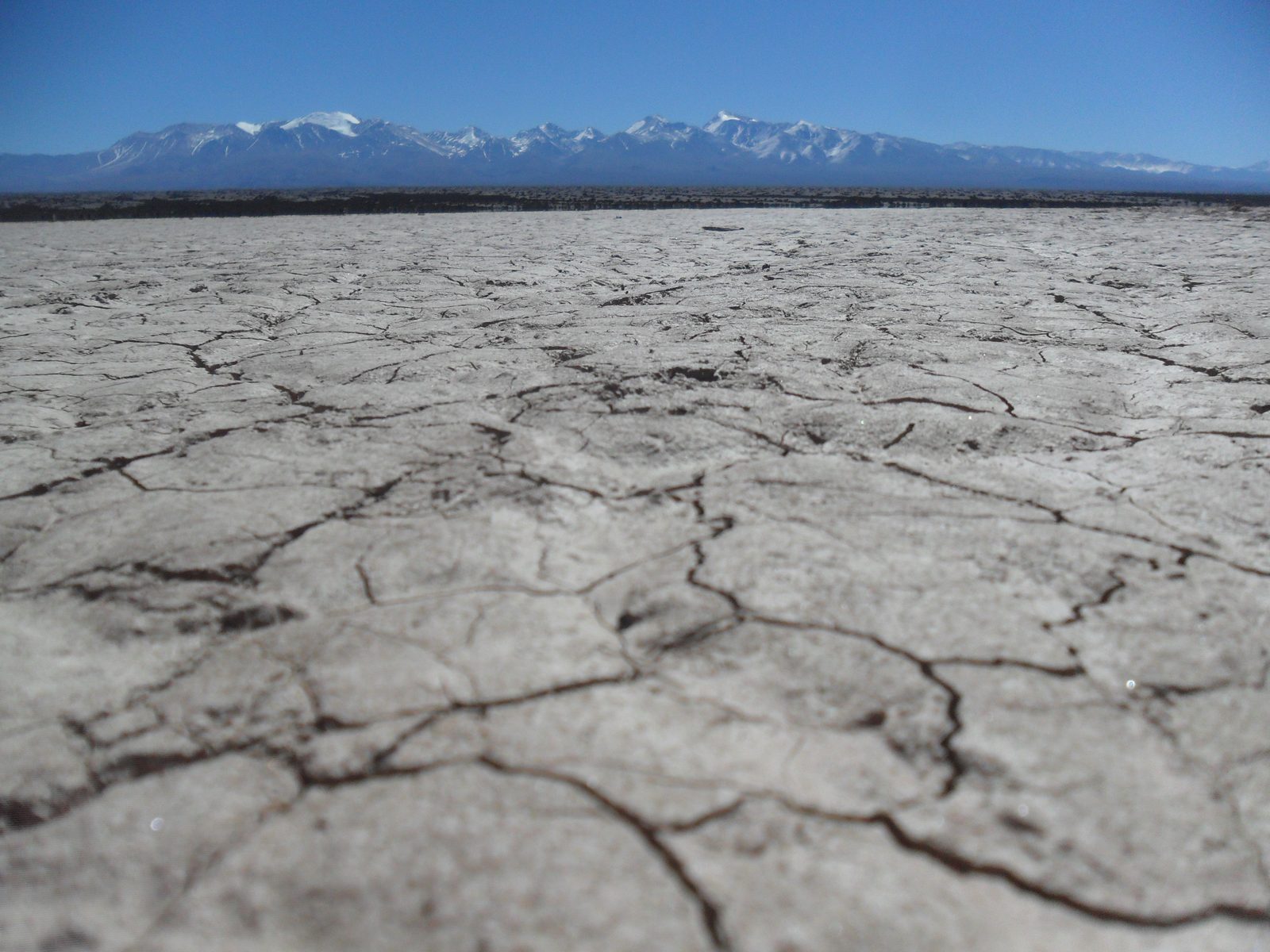
A technical report found that the vehicle altered the surface crust and displaced sediment across roughly 280 square meters. About 35 square meters was classified as severely damaged. The deepest tracks reached 8 centimeters, with an average depth of 6.5 centimeters in the measured area. Natural recovery of the most affected sections could take between 50 and 80 years.
The men said they followed an existing track across the plain. The court rejected that argument, noting that a visible track is not the same thing as an authorized road through a protected area.
Pampa del Leoncito sits in the Calingasta Valley at roughly 1,500 meters above sea level. The broad pale plain was once a lake, and its dry surface developed under extremely limited rainfall, evaporation and wind. The crust is fragile, making vehicle traffic particularly disruptive.
The landscape is also protected because of what happens above it. The area forms part of the landscape around El Leoncito National Park and hosts major astronomical facilities, including CASLEO and the Carlos Ulrico Cesco station.