Pope Leo XIV left Argentina on Nov. 11 after four days of Masses and meetings in Buenos Aires, Córdoba and the pilgrimage town of Luján that drew more than 6 million people, the government said.
It was the first papal visit to Argentina since John Paul II’s in 1987, and Francis, the Argentine pope, never came home during his papacy. It also put the pope’s calls on work, poverty and disability in front of President Milei’s government, which defends its spending cuts as part of its strategy to bring down inflation.
The pope landed in Buenos Aires at 4:33 p.m. on Nov. 8 and was received by Milei, who hosted him at the Casa Rosada, the presidential palace. That evening he asked the country’s leaders to listen to those who disagree. On Nov. 9 he visited a care home for people with disabilities in Claypole, south of the capital, then celebrated Mass in Buenos Aires’ Palermo district before about 2.5 million people, according to the Vatican, which cited local authorities. The Buenos Aires City government said more than 2 million.
That afternoon he met five survivors of abuse by clergy for more than an hour, then workers, union members, business owners and social movements at the Catholic University of Argentina, followed by leaders of other faiths and the country’s bishops. At the university he said that treating profit as the only measure of success turns a business into “a structure of sin that generates exclusion,” called entrepreneurship a noble task when guided by the social function of property and capital, and told unions to look to informal and excluded workers.
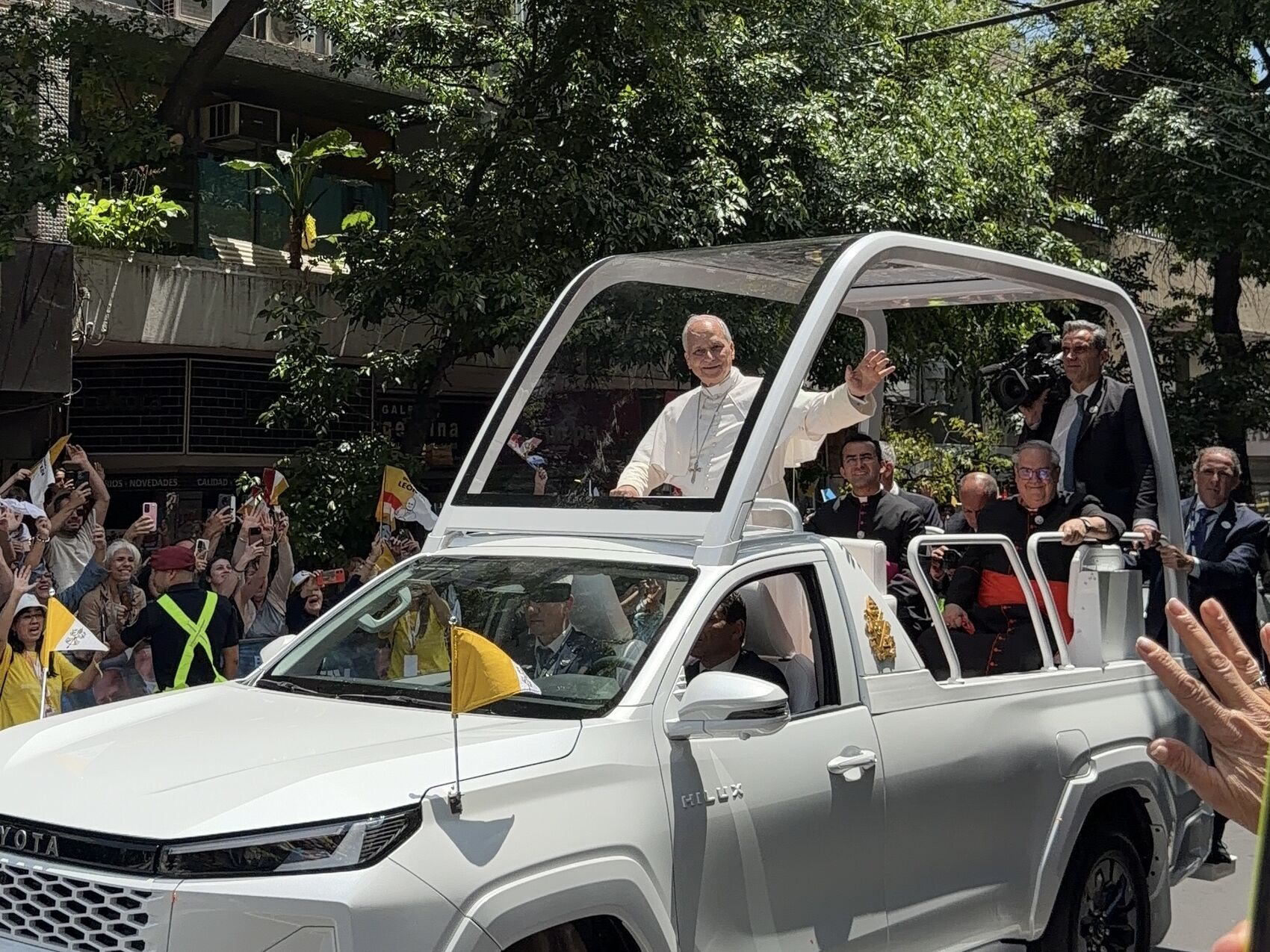
On Nov. 10 he flew to Córdoba, Argentina’s second-largest city, for a Mass on the grounds of the Military Aviation School before about 650,000 people, the Vatican said, again citing local authorities; the Córdoba provincial government and Mayor Daniel Passerini later said about 800,000. He rode the popemobile through the city center, spoke off the cuff from the balcony of the Archbishop’s Residence in the Nueva Córdoba district and met clergy at the cathedral. That night about 1 million people joined him at a vigil for young people in Palermo, the Vatican said.
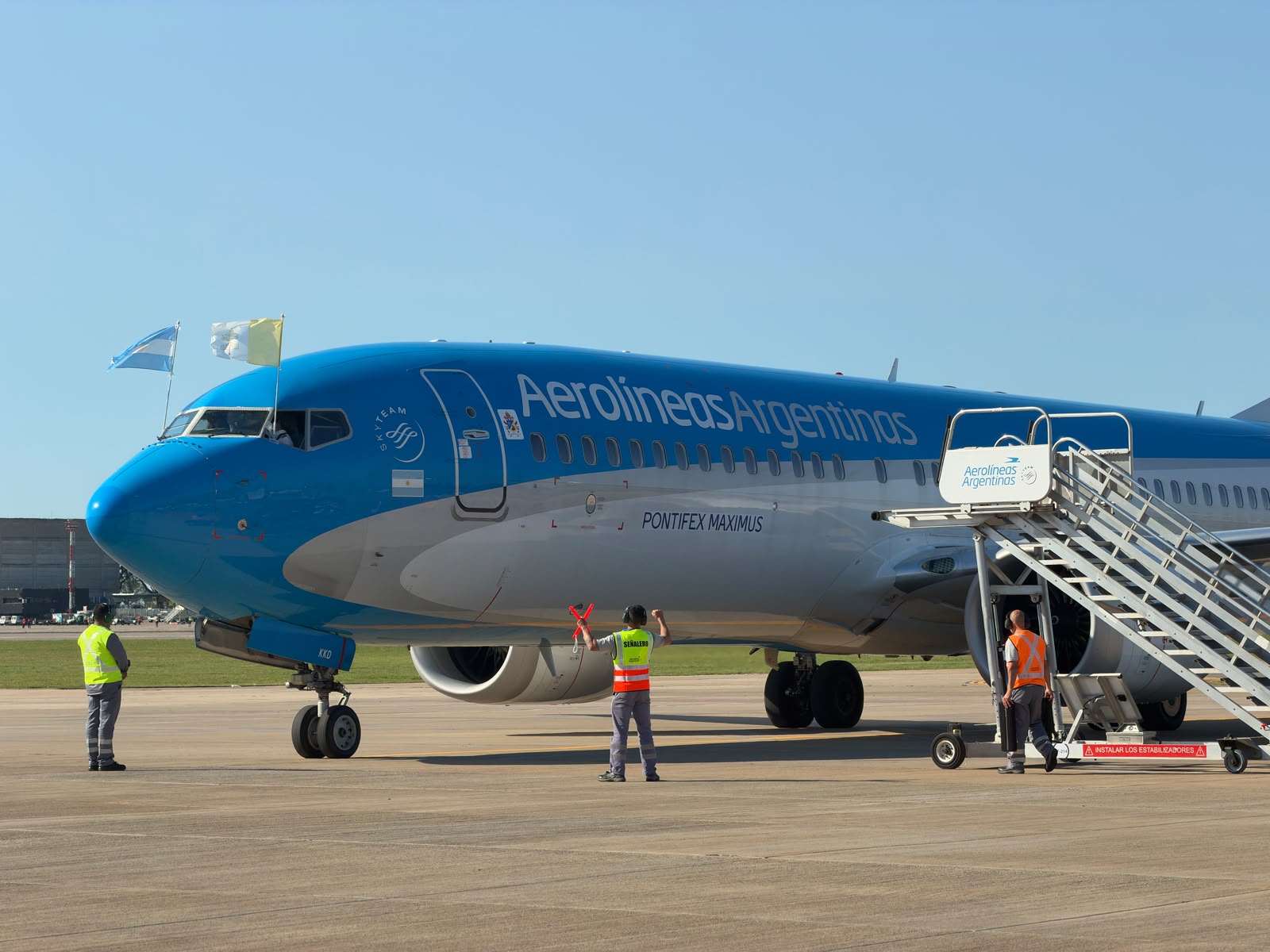
On Nov. 11 he visited a federal prison in Buenos Aires, then celebrated Mass at the basilica in Luján, telling the country to “rise up and walk.” The Vatican, again citing local authorities, put the crowd at more than 2 million; the Buenos Aires Province security ministry said 3.5 million. Milei saw him off at Ezeiza, Buenos Aires’ international airport, and the papal plane took off for Lima at 2:38 p.m., the Vatican said.
Pope Leo XIV departed from Argentina for Peru, the third and final leg of his Apostolic Journey to Latin America. The papal plane departed from Buenos Aires International Airport at 2:38 PM local time and is expected to land in Lima, Peru, at around 5:30 PM local time. Ahead of his departure, the Pope met briefly with volunteers who helped organize his four-day visit, thanking them for their efforts.
The government had prepared for up to 7 million people over the four days, in an operation Security Minister Alejandra Monteoliva called unprecedented. On Nov. 11 presidential spokesman Adrián Ravier said the events passed “in a climate of peace, order and concord.” On Nov. 7 the State Intelligence Secretariat, the national intelligence agency, reported arresting a suspect accused of threatening the pope’s life, and the Buenos Aires Province health ministry reported more than 8,000 medical consultations at Luján, none involving a serious case.
The civil aviation agency ordered takeoffs and landings suspended for 14 hours in all, in two-hour windows around the pope’s movements at the Aeroparque, Ezeiza and Córdoba airports. After the Luján Mass, A24 television reported queues of about ten blocks at the town’s train station, while the state rail operator, Trenes Argentinos, said on X that service was running normally. CAME, a federation of small and medium-sized businesses, estimated the economic impact of visitors to Buenos Aires City from Nov. 6 to Nov. 10 at more than US$88 million.
A reserved tent with air conditioning and catering at the Palermo Mass drew criticism from lawmakers and on social media. Jorge Macri, who heads the Buenos Aires City government, said the pastries were excessive but the tent was not an outsized luxury; Ravier said the national government had invited only Cabinet members, other officials, the vice president, governors, lawmakers and military authorities.
Ravier said the government received the pope’s words “with respect and gratitude” and asked that they not be used in local political disputes. Governor Axel Kicillof of Buenos Aires Province, a leading opposition figure, said before the Luján Mass that the pope “listened, listened and listened” while he had been unable to meet the national government in three years, and hoped those who “smiled and applauded from the front row” had listened. Archbishop Jorge García Cuerva of Buenos Aires said on Nov. 12 that Argentines should listen to the speeches again and called the one to the country’s leaders very strong.
Asked whether the pope’s remarks on disability and education would change policy, Ravier said it was too early to judge and pointed to the 2027 budget.
Update, November 19: The Senate gave final approval, 71 to 0, to the permanent disability-benefits law the lower house passed in October, replacing the emergency law that expires on Dec. 31. Opposition lawmakers said the government changed course because of polls and the pressure after the pope’s visit to a home for people with disabilities.