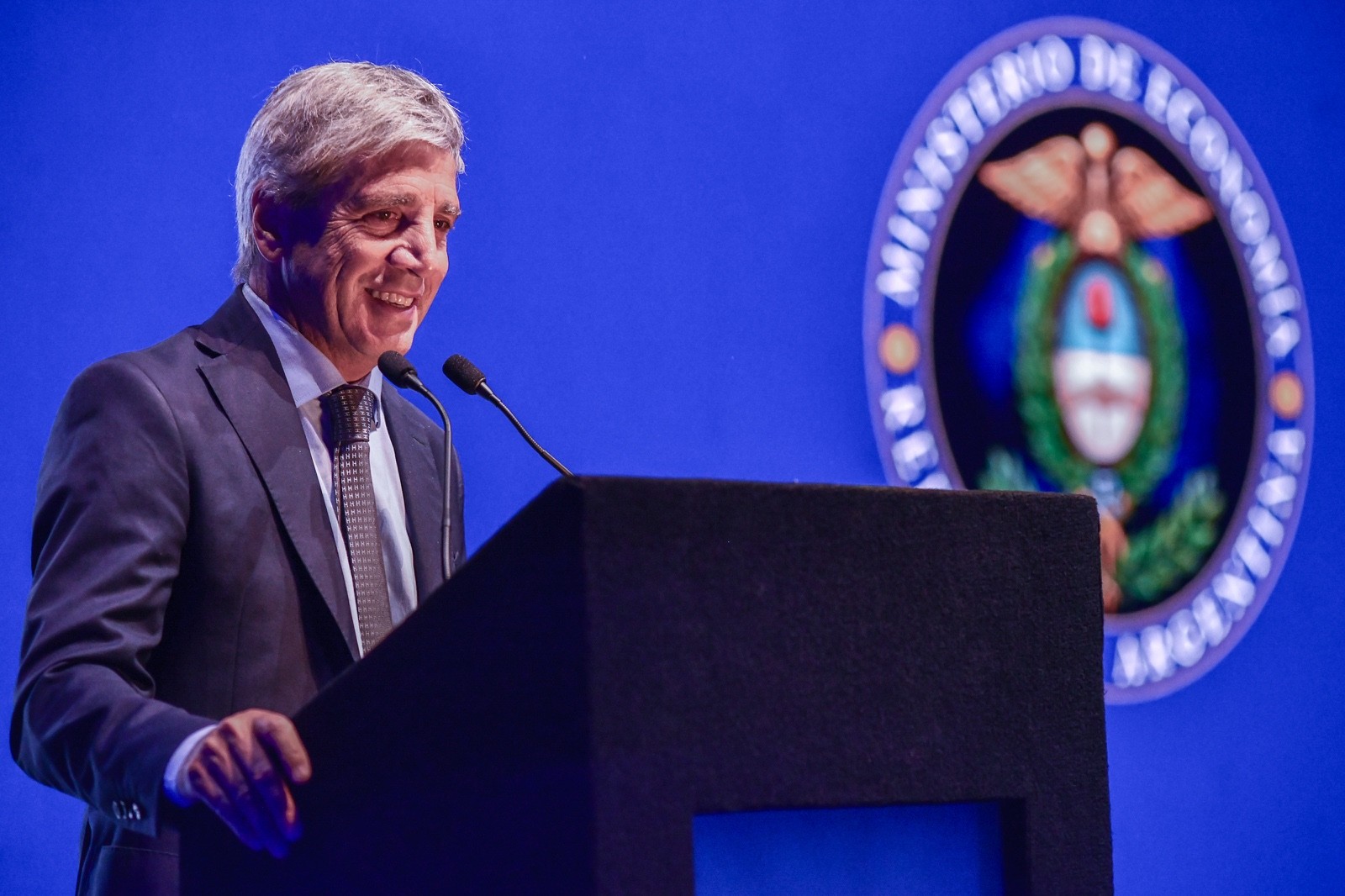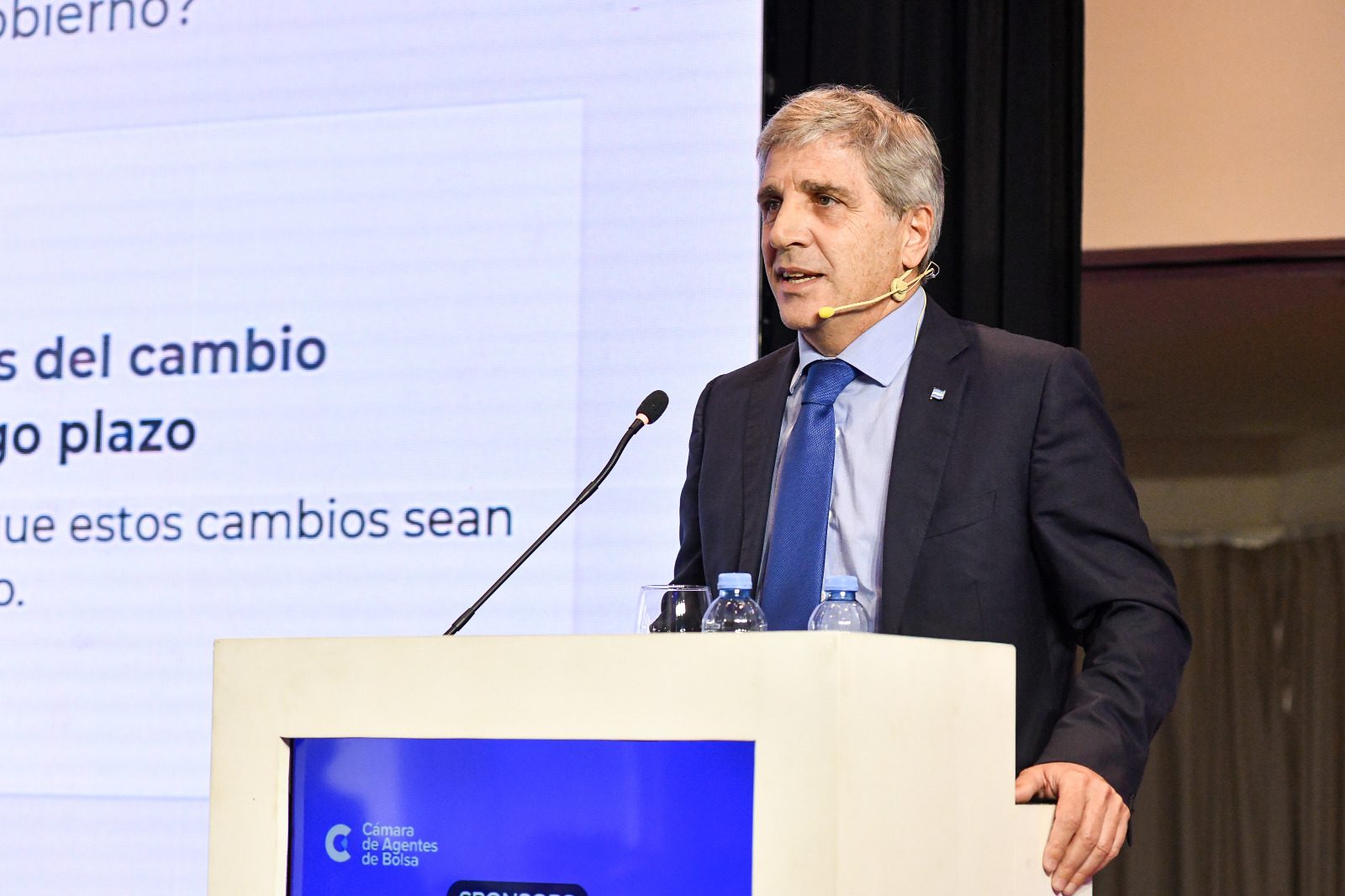
Economy Minister Luis Caputo on Wednesday called the standard test for a recession “almost arbitrary” and said the dollar’s rise will not push up prices, as the wholesale dollar reached a record 1,609 pesos.
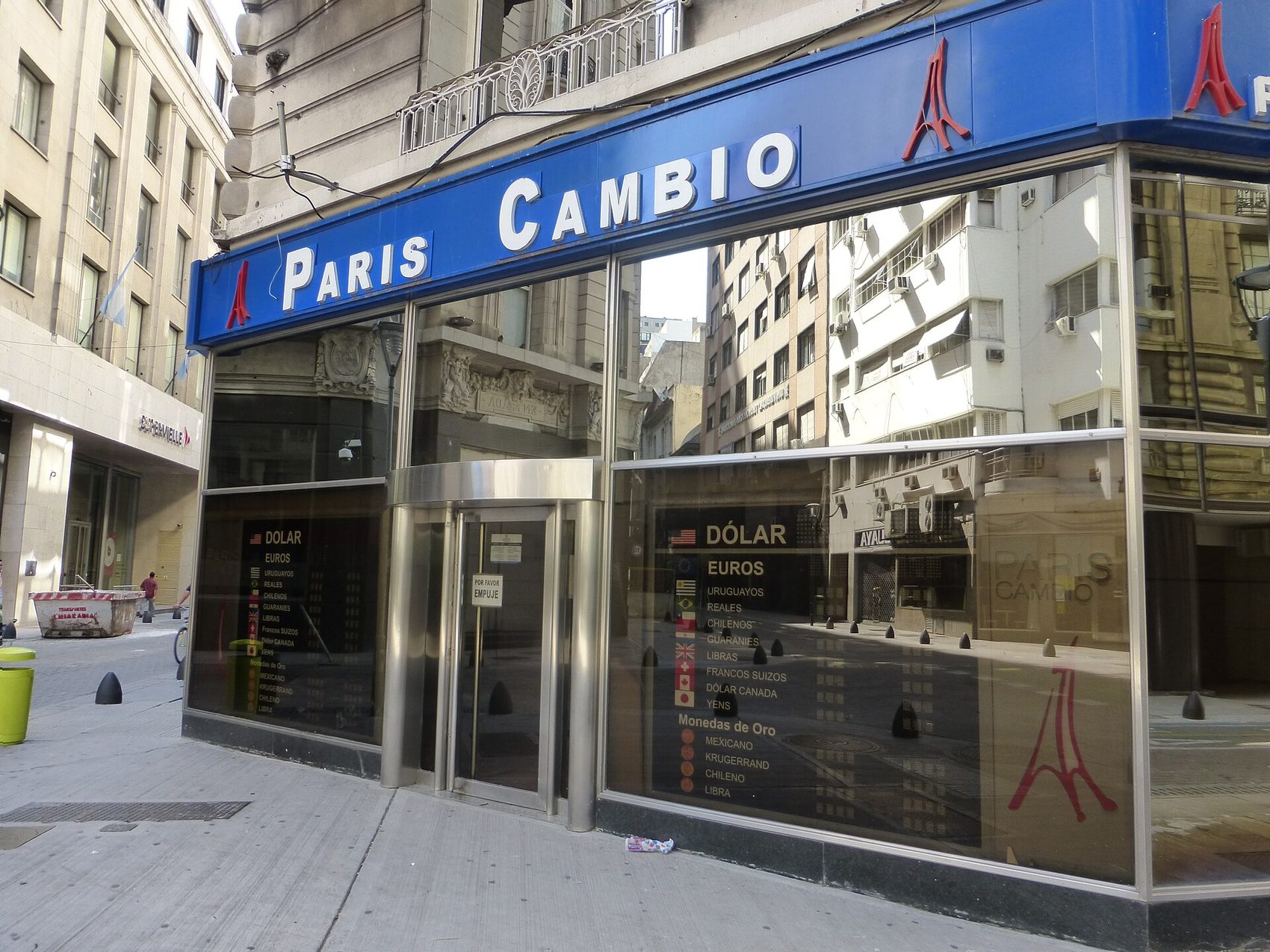
The wholesale dollar, the rate at which banks and companies trade, rose for an eighth straight session, up from 1,552 pesos on Nov. 17, central bank data show. It is a record in nominal terms, before adjusting for inflation. The informal blue dollar closed at a record 1,730 pesos, according to Ámbito’s survey of street dealers.
Whether the rise reaches prices matters because INDEC, the national statistics agency, puts annual inflation at 33.1% in October.
Caputo spoke a day after INDEC’s activity data showed output falling two quarters in a row, the usual test for a technical recession. In a television interview on A24, he said the US National Bureau of Economic Research instead weighs a downturn’s depth, duration and spread across sectors. He attributed July’s fall to gas, rain and the World Cup, calling it an outlier, and said August and September together recovered 1.5%.
On the dollar, Caputo said the rise came in a week of global market turmoil and that the peso fell about as much as most emerging-market currencies, citing a 4.1% drop for Mexico’s peso. “I am not afraid of the dollar’s rise passing through to prices,” he said, because as long as the government keeps its budget balanced and does not print money to accommodate the rise, less of it reaches prices. He said core inflation, which leaves out the most volatile prices, is running at about 20% a year.
Economists read the moves differently. Gustavo Araujo, head of research at the investment firm Criteria, said the surge in country risk (the extra yield investors demand on Argentine dollar bonds) and in the dollar rates traded through the stock market shows returning doubt about the program’s sustainability. Country risk went from 402 points in July to 1,067 at Wednesday’s close, after reaching 1,094 on Tuesday, its highest close since October 2025. Araujo said the trigger was external, a tech-stock sell-off on Wall Street and rising US interest rates, but that Argentine assets fell far more than regional peers because reserves are too small to absorb such shocks.
Pressure also came from inside the governing coalition. Patricia Bullrich, who leads the governing party’s senators, said in an interview that promising improvement in 2028 will not be enough with an election in between, and called for lower taxes and lower interest rates. She also credited the stabilization plan with cutting inflation and ending the deficit.
The Treasury had to fix the exchange rate for a dollar-linked bill, a peso security whose payout follows the wholesale dollar. At Wednesday’s rate it owes holders about 3.0 trillion pesos (US$1.9 billion) on Nov. 30, by our calculation. On Thursday it auctions new debt to refinance 25.4 trillion pesos coming due this month, most of it held by private investors.