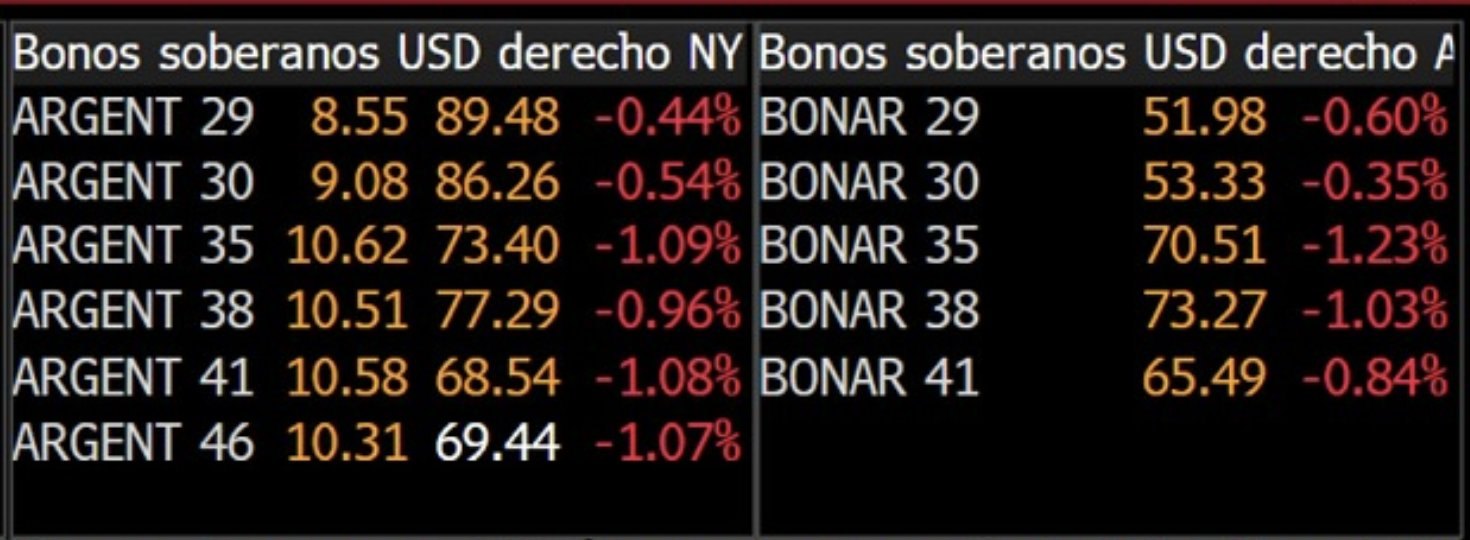
The extra yield investors demand to hold Argentine dollar bonds rather than US Treasuries, known as country risk, passed 1,000 points in Friday trading for the first time in 13 months. JPMorgan’s index stood near 1,065 late in the day.
The official dollar also hit records in nominal terms, before adjusting for inflation. The wholesale rate at which banks and companies trade reached 1,580 pesos, and banks sold retail dollars at an average of about 1,601 pesos, the central bank reported. The stock-market dollar, known as the contado con liquidación rate and a legal way to move money abroad, traded about 13% above the wholesale rate, the widest gap since April 2025.
Argentina’s longest-dated dollar bond, the 2046 Global, fell as much as 5.4%, La Nación reported, while an exchange-traded fund of emerging-market bonds fell 0.3%. Investors were selling risky assets worldwide, with Wall Street falling sharply and US interest rates rising.
Analysts say a premium that high keeps the Treasury out of international bond markets in practice and raises borrowing costs for provinces and companies. The index closed Thursday at 931, up from 402 in July, the lowest of President Milei’s term, and the gap over Treasuries now exceeds 10 percentage points.
Local factors also weigh. Emilio Botto, head of strategy at the brokerage Mills Capital, said the central bank’s net dollar purchases slowed to an average of US$32 million a day in November through the 13th, from US$66 million in October. Analysts also point to uncertainty ahead of next year’s presidential election.
Economy Minister Luis Caputo said earlier this week that there is no “Milei risk”: country risk rises, he said, on fear that Milei will not be in office after the election. He added that the central bank was still buying dollars.
The Treasury has about US$4.5 billion to pay private bondholders in January, which Botto called demanding but manageable.