Argentina’s country risk, the extra yield investors demand on its dollar bonds over US Treasuries, rose above 820 points in Tuesday trading, its highest since October 24, 2025, JP Morgan’s index showed.
The index first crossed 800 on Monday, for the first time since the October 2025 legislative elections, after closing October at 790, a 2026 high. It measures the yield gap in basis points, hundredths of a percentage point, and a wider gap makes borrowing costlier for the Treasury and for Argentine companies.
Alan Versalli, a strategist at the brokerage Cocos, said investors were hedging on Tuesday, before the results of the US midterm elections: a heavy defeat for President Trump’s party could leave the US Treasury less room to keep backing Argentina. He added oil swings from the conflict with Iran, a correction in technology stocks and jitters in Brazil after Lula’s win.
At home, Versalli said, third-quarter data show activity not recovering, private-sector real wages remain below their level when the government took office and the central bank has slowed its dollar purchases, so investors demand a growing election premium. GMA Capital, a brokerage, pointed to the 2027 presidential vote.
Economist Fernando Marull said that of the roughly 400-point climb in four months, about half reflects lower odds of President Milei’s reelection, which bondholders now put near 50% against about 90% then. He disputed the government’s argument that the rise comes from election-year uncertainty, saying the two are linked because a stagnant economy raises the chance of a change of policy.
Central bank president Santiago Bausili said at a press conference last week that it is hard to believe a new event would have the consequences of past episodes given the strength of the fundamentals, as he dismissed concern about exchange-rate volatility during the election period.
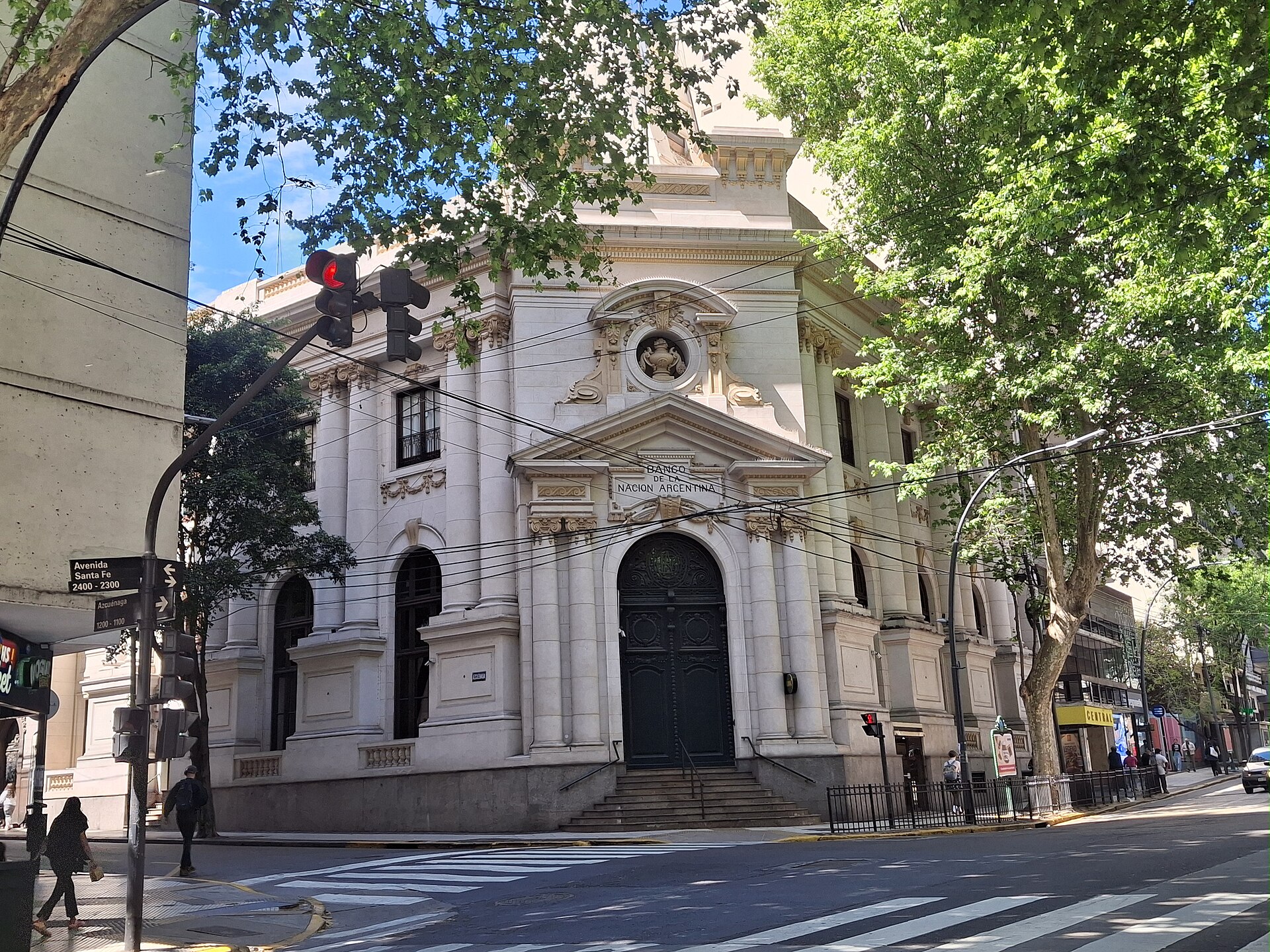
The official dollar also set a record in nominal terms, not adjusted for inflation. The wholesale rate, the one banks and companies trade at, closed at 1,551 pesos on Tuesday, above the 1,542 record of October 28, the central bank’s reference rate shows. Banco Nación, the state bank, sold dollars to the public at 1,570 pesos, also a record.
The wholesale rate rose 1.1% in the first two days of November, as much as in all of October, according to the currency broker PR Corredores de Cambio. The ceiling of the central bank’s floating band for the rate is 1,955.71 pesos. Economy Minister Luis Caputo told an industry conference on Tuesday that record exports mean dollars are plentiful, and rejected a devaluation as a way to make industry more competitive.
The Treasury’s dollar financing plan for 2027’s foreign-currency debt payments leans on local dollar bond sales and central bank dollar purchases, two sources that the consultancy C-P said struggled in the last election year. In a hypothetical stress scenario for 2027, C-P estimated a shortfall of about US$10 billion in private-sector dollar flows.