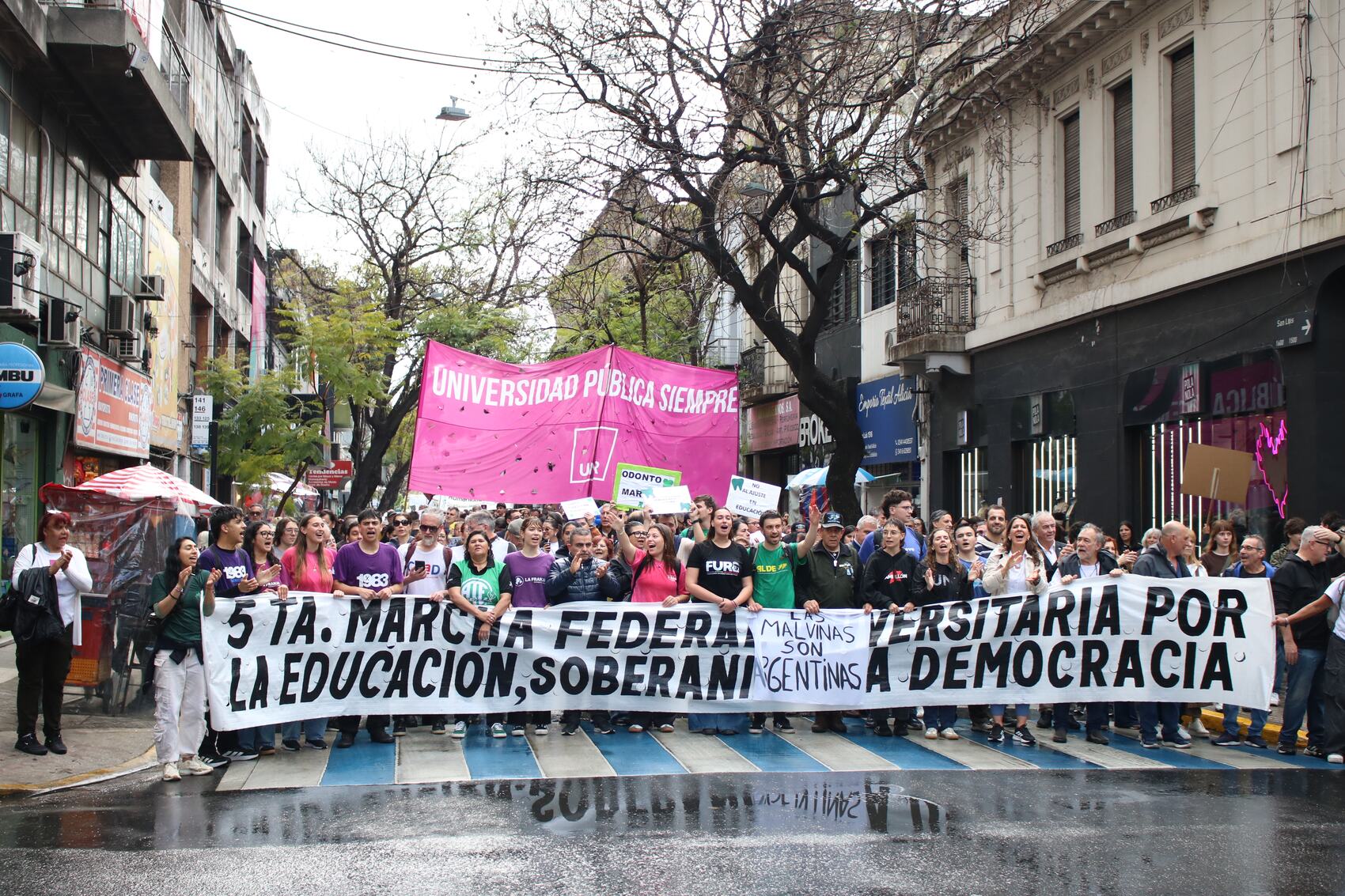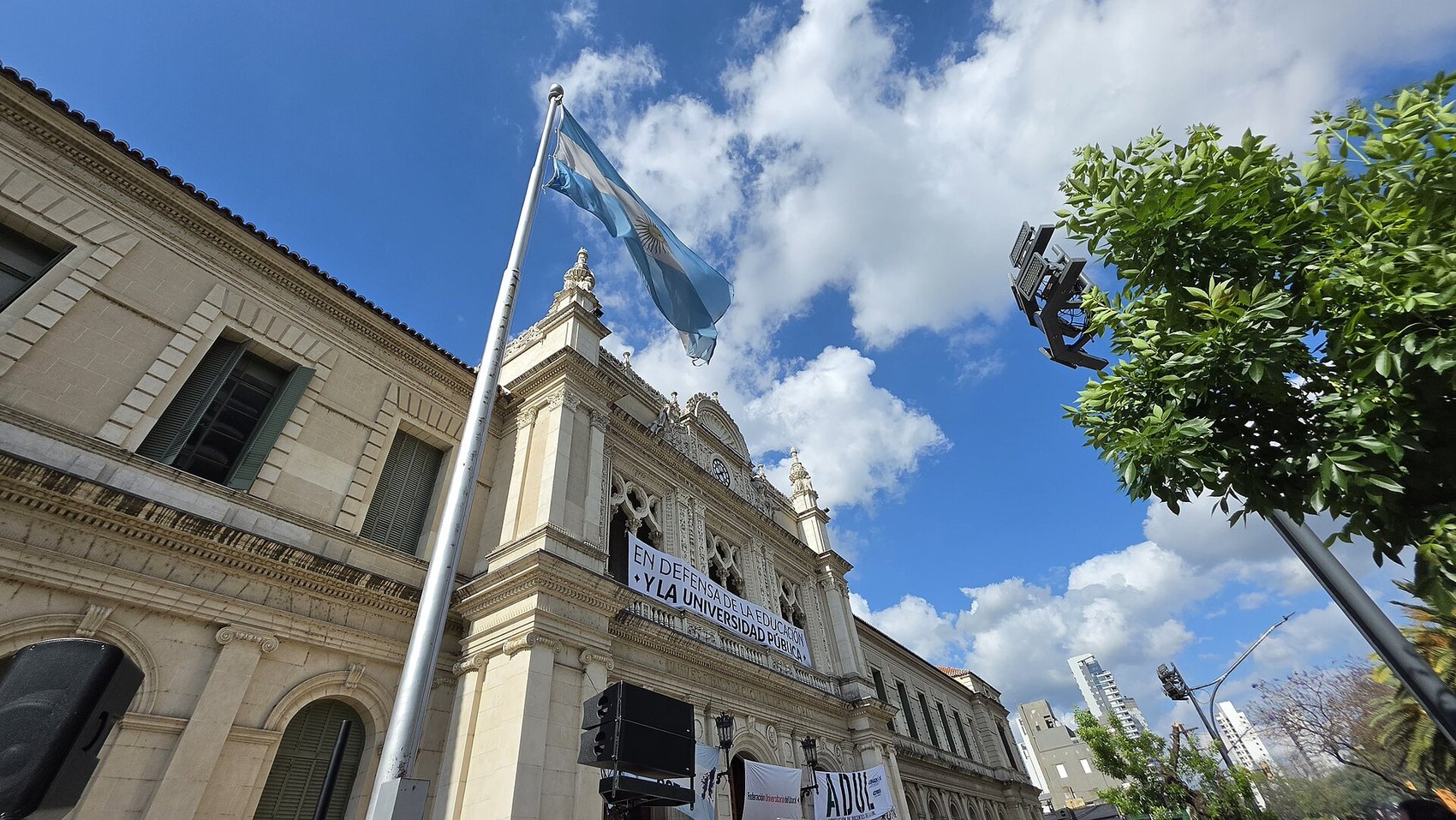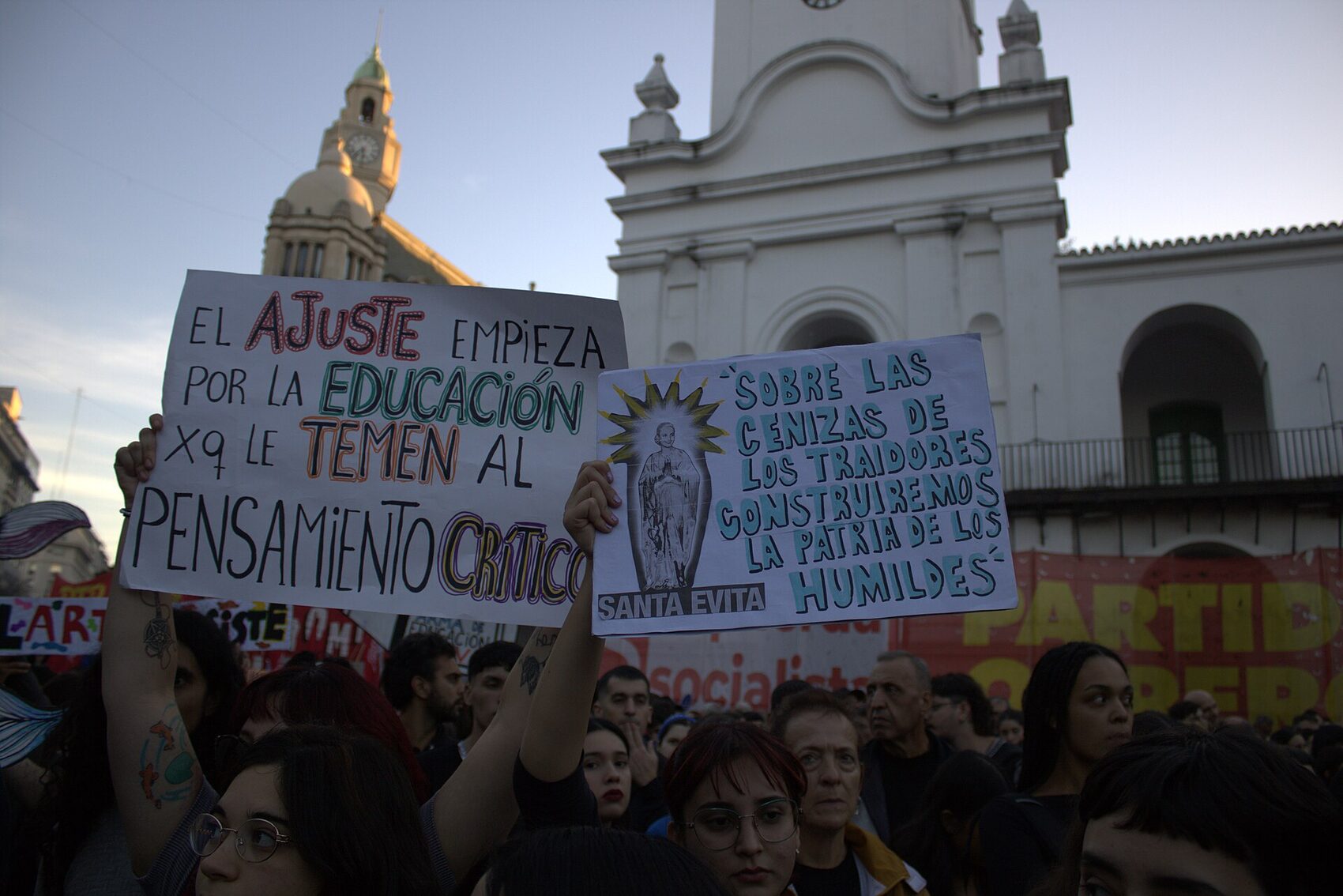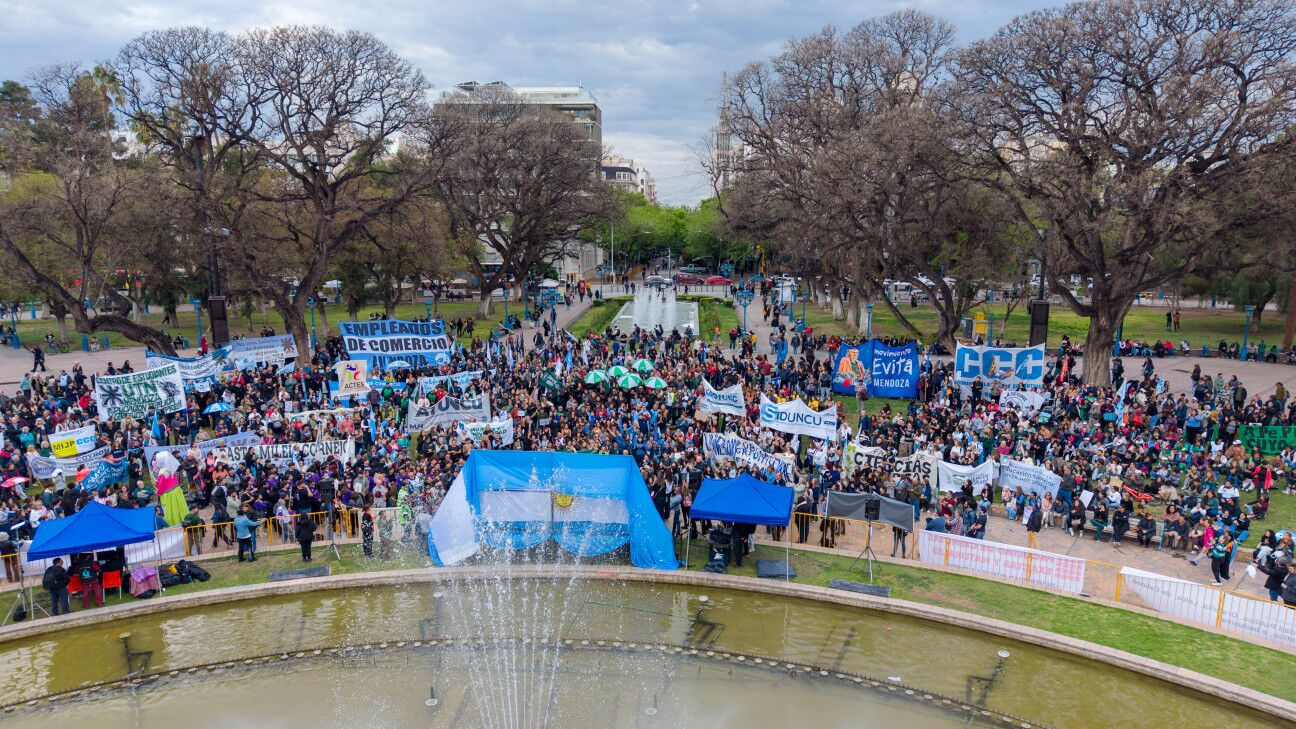
Argentina’s public universities are free, and the fight over how to pay for them has become a fight over arithmetic. Five national marches since April 2024 have all been about who pays. The answers on offer measure different things.
The government says it is complying with the University Financing Law. It cites a 21.33% pay increase for university staff, and says money sent to universities rose 42.4% in September from a year earlier.
A civil-rights group, the Association for Equality and Justice, reads the same system differently. It found that spending per student from January to September fell 30.9% after inflation, compared with 2023.
The unions say the pay they lost needs to be recovered by roughly a third. The rectors, as university presidents are called, ask for 11 trillion pesos (about US$7.2 billion) in the 2027 budget, and the government’s bill has 7.3 trillion.
None of these figures need be false. They measure different things: a year-on-year change, a comparison with 2023, total transfers, spending per student. As they stand, they cannot be compared with one another.
Even the crowds are counted two ways. In Córdoba, police and organizers gave estimates that differed by a factor of four, and in Buenos Aires the vice-rector of the University of Buenos Aires estimated hundreds of thousands, his own figure.
A budget question in the courts
Congress passed the law in August 2025. President Milei vetoed it, and both chambers overrode the veto with two-thirds majorities in September and October. He then put the law into force with a decree saying its spending rules could not apply until Congress named where the money would come from.
A federal judge, Martín Cormick, ordered the government to follow the law in December 2025, and the Supreme Court left the order standing in June. In October he struck down the decree’s condition, writing that it worked as a new veto, which is also the universities’ view. The government has appealed, and a court has paused the fines he set on the cabinet chief until the question is settled.
The government’s view is that a law that spends money needs a line in the budget, and that only Congress can say where the money comes from. Its lawyers told the court that applying the law would cost more than 1 trillion pesos. The judge’s ruling addresses that point: he wrote that the law itself provides for budget adjustments to pay for it, a reading the government contests on appeal.
This paper takes no side on who is right in court. That question is before the appeals court, and the rest of this editorial applies whichever way it rules.
Settle the cost in the budget
The 2027 budget is the place to settle the cost. Deputies are debating it, and the distance between 7.3 trillion pesos and 11 trillion is a number Congress can argue over in the open. Whatever it decides, it should say what the university line covers and what it leaves out.
Both sides should also agree how to count. The Economy Ministry, the rectors’ council and the unions could publish spending and costs on one agreed basis, in inflation-adjusted pesos per student per year, with the method stated. Then a rise or a fall means the same thing to everyone.
The Economy Ministry, the rectors' council and the unions could publish spending and costs on one agreed basis, in inflation-adjusted pesos per student per year, with the method stated.
Both sides owe numbers
The government says the law would cost more than 1 trillion pesos and that it is complying. It should publish how it reaches that figure and how its 42.4% rise compares with what the law requires, on the same basis as its other spending data.
The universities and unions need the same discipline. The rectors have priced the 2027 budget at 11 trillion pesos, about 8.4 trillion of it for pay by their estimate, but we found no costing of the unions’ wage demand on a basis comparable to the government’s figures. The unions and rectors should publish how the demand divides between pay, scholarships and running costs, and which parts they would accept first if the money comes in stages. A priced plan would show how far apart the two sides really are.
The stalemate has also meant strikes. Professors’ and staff unions have held rotating strikes since September, announced to run into late October. Priced plans with priorities from each side would give both something to negotiate other than the whole law.
Protest, and its limits
Peaceful protest is how citizens press their government, and four of the five marches passed without incident, the organizers say. Oct. 15 did not. Some protesters with covered faces threw stones at the fence around Congress, and police answered with tear gas and water cannon. Federal officers were hurt and more than 30 people were detained.
Throwing stones at officers is unacceptable. So is tear gas that drifts into a legislative building and sends a lawmaker for medical care, if it could have been avoided. Any inquiry into the clashes should cover protesters and police alike, and its findings should be published.
What to watch
A budget committee in the lower house meets again on Oct. 27. The governing party wants to sign its committee report on Oct. 28 and bring the bill to the full chamber in mid-November. Opposition lawmakers have asked Education Secretariat officials to attend and explain the university allocation.
Before that vote, the government should publish its cost estimate for the law, and the rectors theirs, on the same basis, so that deputies know what they are voting on.