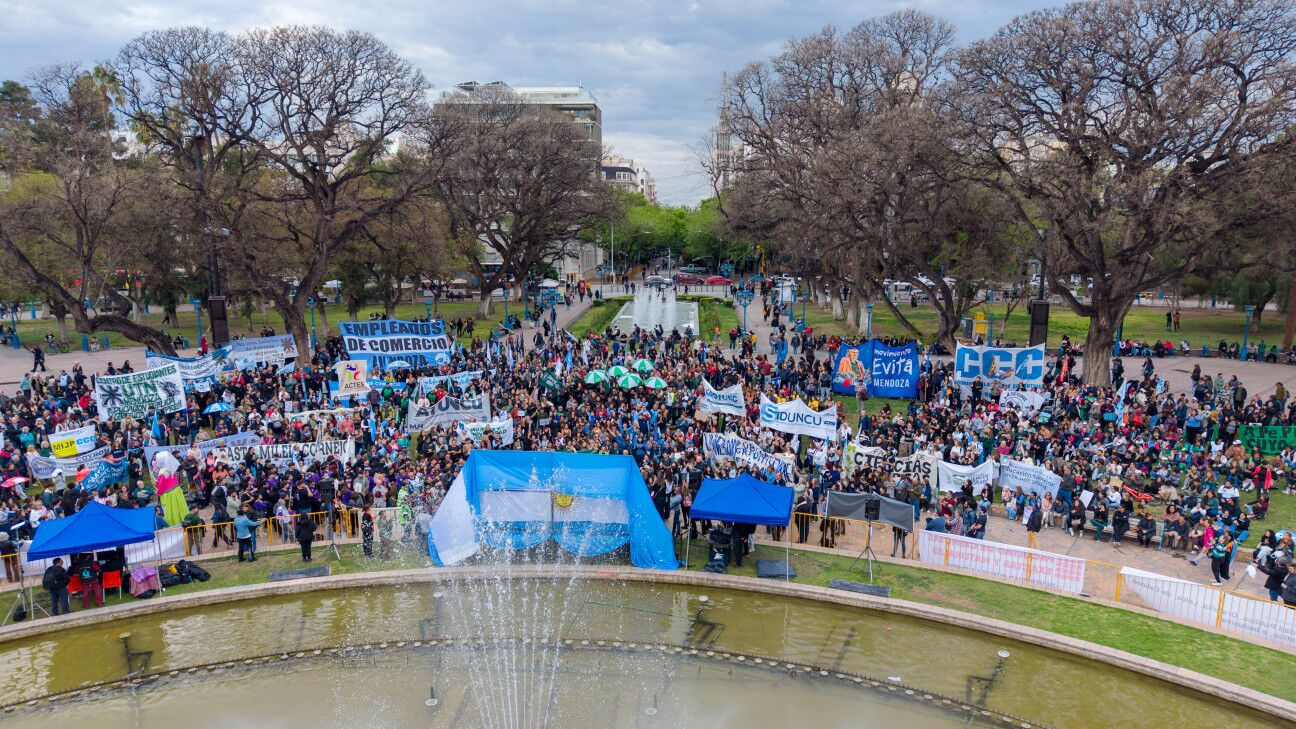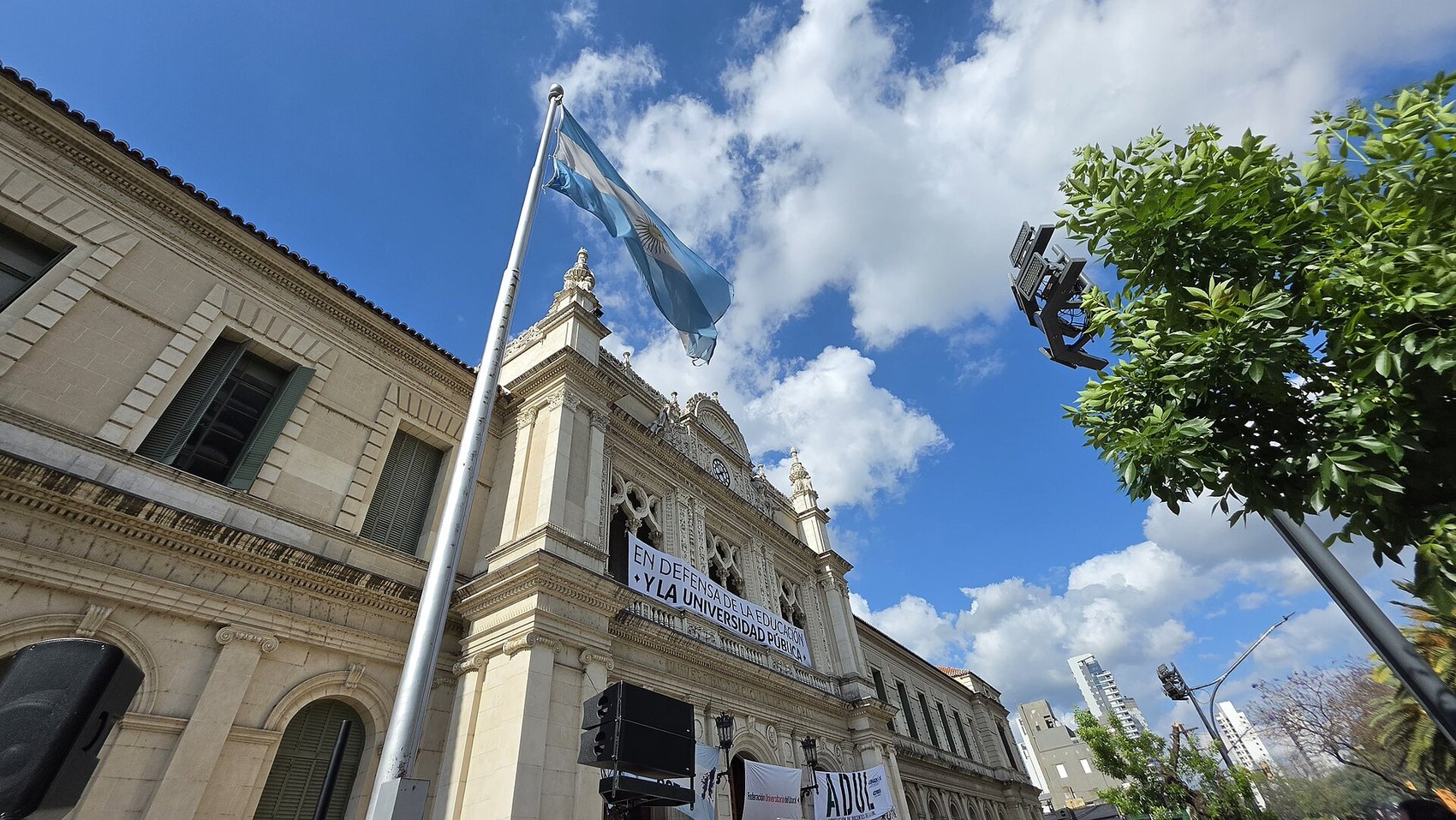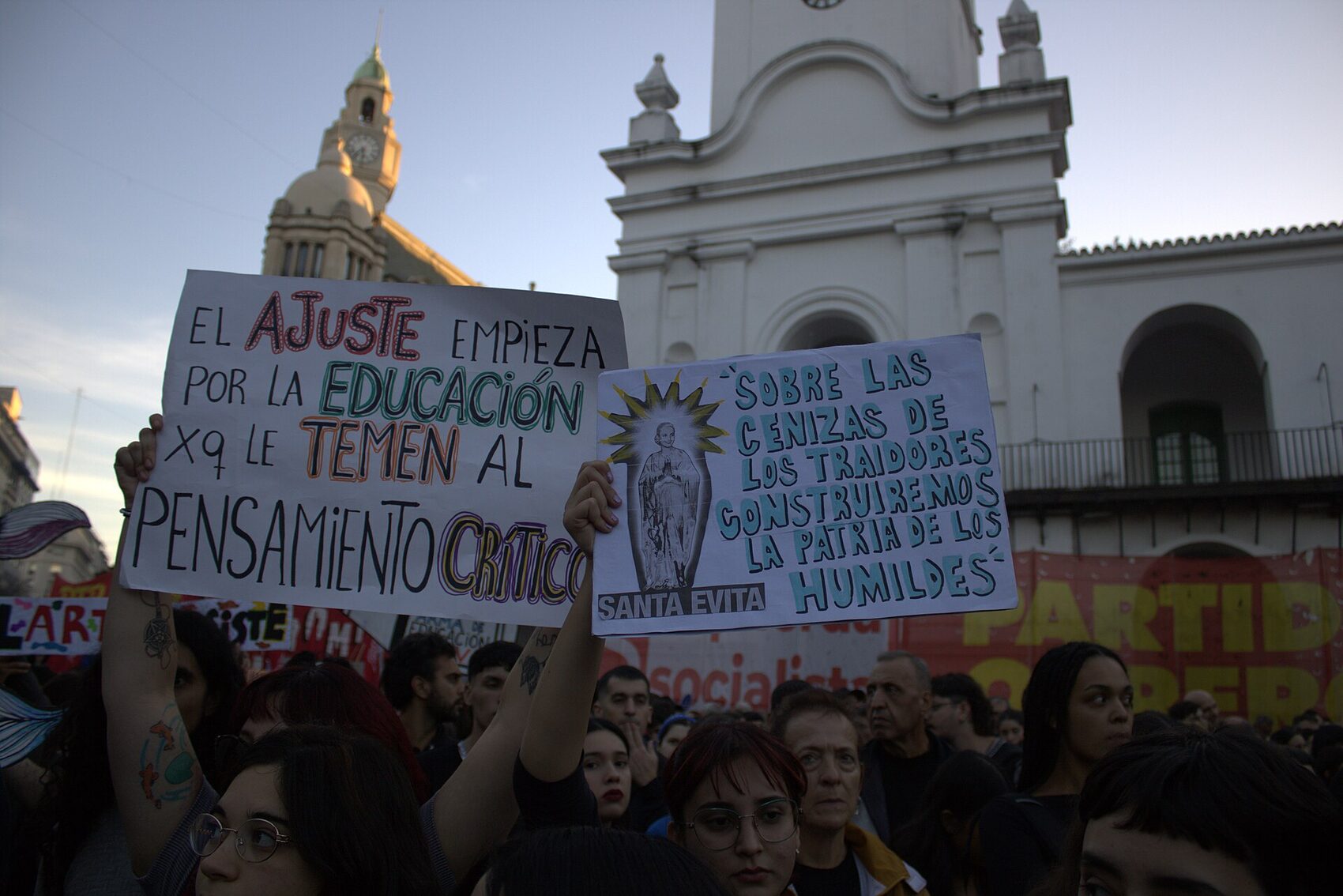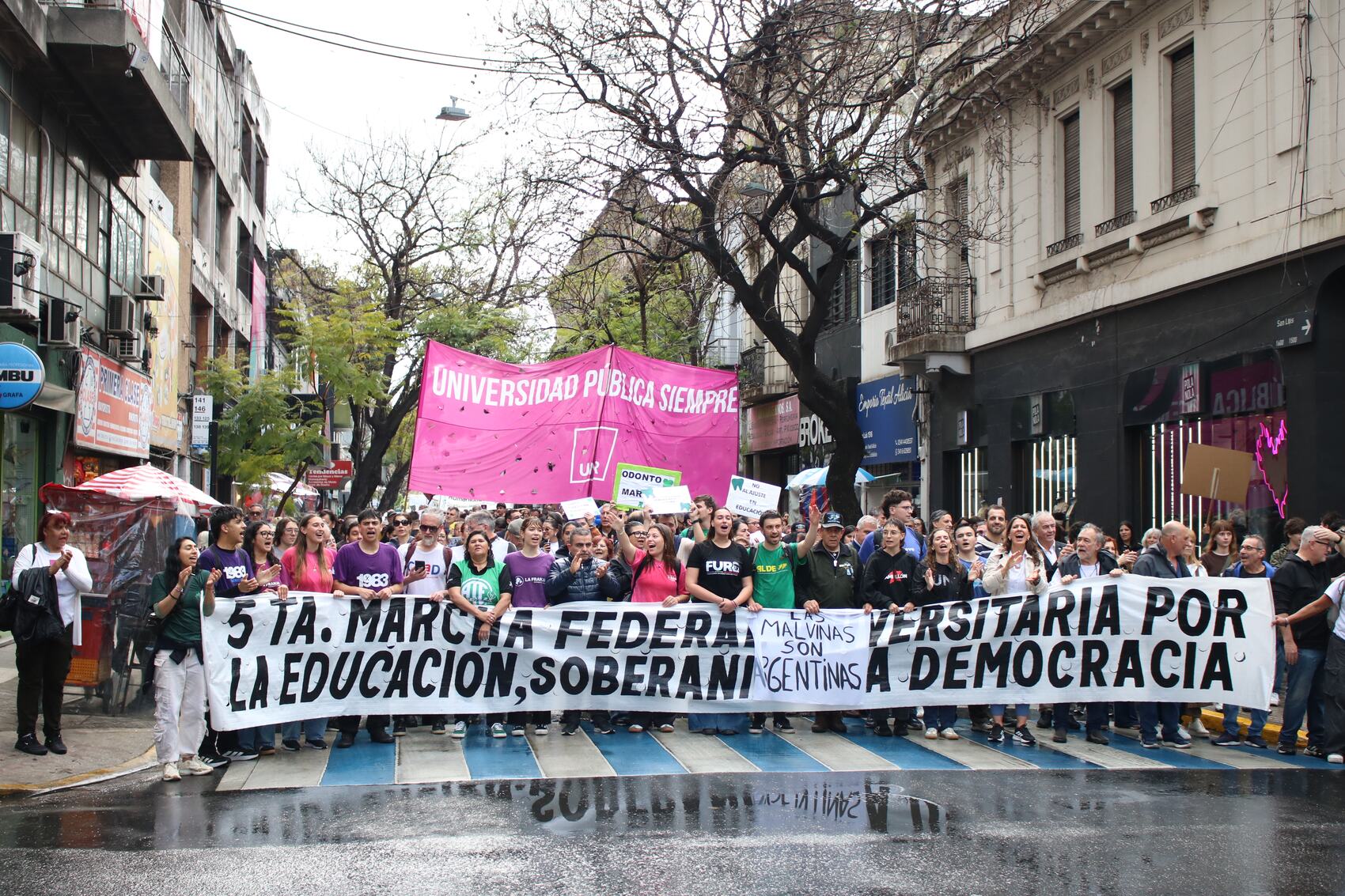
Argentines have taken to the streets five times since April 2024 over funding for the country’s public universities. The most recent march, on Thursday, Oct. 15, ended with tear gas outside Congress in Buenos Aires. Since 2025 the fight has centered on one law, and on who pays for it.
The short version
Argentina’s public universities are free. Students pay no tuition, so the schools depend on money from the national government.
In 2025, Congress passed a law that would raise that money. President Milei, who has made balancing the budget a central goal, says the government has not been given a way to pay for it.
Professors, students and university presidents (called rectors in Argentina) say the government is not following the law. That is what they have been marching about.
How the law became a fight
Congress passed the University Financing Law in August 2025. It ties professors’ pay and student scholarships to inflation, and it gives universities more money to run their buildings and labs.
Milei vetoed it, but both chambers of Congress, the Chamber of Deputies (the lower house) and the Senate, voted to override the veto in September and October 2025. He then put the law into force with a decree that said its spending rules could not apply until Congress named where the money would come from.
A federal judge, Martín Cormick, ordered the government in December 2025 to follow the law, and the Supreme Court left that order standing in June. On Oct. 6 he struck down the decree’s condition, writing that it had the effect of a new veto. The government has appealed. A court has also paused the fines Cormick set on Cabinet Chief Diego Santilli, the government’s senior cabinet official, until the underlying question is decided.
What each side says
The universities and the unions say the government is not applying the law. The unions put the pay they want recovered at roughly a third. For 2027, the rectors ask for 11 trillion pesos (about US$7.2 billion) for the universities, and the government’s budget bill has 7.3 trillion.
The government says it is already complying. It cites a 21.33% pay increase and says money sent to universities rose 42.4% in September from a year earlier. In court, its lawyers said applying the law would cost more than 1 trillion pesos (about US$660 million).
A civil-rights group, the Association for Equality and Justice, reaches a different number. It found that spending per student from January to September fell 30.9% after inflation, compared with 2023. The two figures start from different points, so they do not contradict each other directly.
The fifth march
Oct. 15 was the fifth national march, after earlier ones in April and October 2024, September 2025 and May 2026. The rectors, the national student federation and the unions called it. Government officials described it as an opposition event that became too politicized.
In Buenos Aires, columns of students and professors walked to Congress. The vice-rector of the University of Buenos Aires, Emiliano Yacobitti, estimated that hundreds of thousands of people took part.
Clashes started shortly before 4 p.m. Protesters with covered faces threw stones at the fence around Congress, and police responded with tear gas and water cannon. Eight federal officers were hurt, the Security Ministry said, and 31 people were detained. The organizers ended the rally early.
The organizers said they “strongly condemn the repression and the violence,” and noted that the four earlier marches had passed without incident.
Beyond the capital
Marches were held in cities across the country. In Córdoba, Argentina’s second-largest city, police estimated about 12,000 marchers and organizers about 50,000, all without incidents. In Mendoza, the National University of Cuyo said more than 25,000 people joined a march to Plaza Independencia.
In Rosario, local reports described a column about fifteen blocks long, also without incidents. There were more marches in Tucumán, Mar del Plata, Salta, Corrientes and Resistencia.
What it did to city life
The documented effects were mostly on the streets. Police closed intersections around Congress in Buenos Aires, and drivers were advised to avoid several major avenues, including Callao and Rivadavia. City police put the preliminary damage to the plaza outside Congress and nearby streets at 90 million pesos (about US$60,000). In Córdoba, streets near the route were also closed.
The state workers’ union, ATE, held a national strike the same day, though hospitals kept minimum staffing.
University professors’ and staff unions have also been holding rotating strikes since Sept. 21, announced to run into late October.
Where this leaves politics
The law’s cost bears on Milei’s goal of balancing the budget, which the Economy Ministry says it has met. Its September surplus report came out the day after the march.
Opposition lawmakers have raised university funding in the 2027 budget, which the Chamber of Deputies began debating on Oct. 13.
What’s next
A budget committee meets again on Oct. 27. Milei’s party wants to sign its committee report on Oct. 28 and bring the bill to the full chamber in mid-November. Opposition lawmakers have asked Education Secretariat officials to attend and explain the university allocation in the budget.