Economy Minister Luis Caputo’s offer to pay half of the provincial stamp tax if provinces give up the rest would cost them about 2 trillion pesos (US$1.3 billion) a year, on 2025 Economy Ministry data.
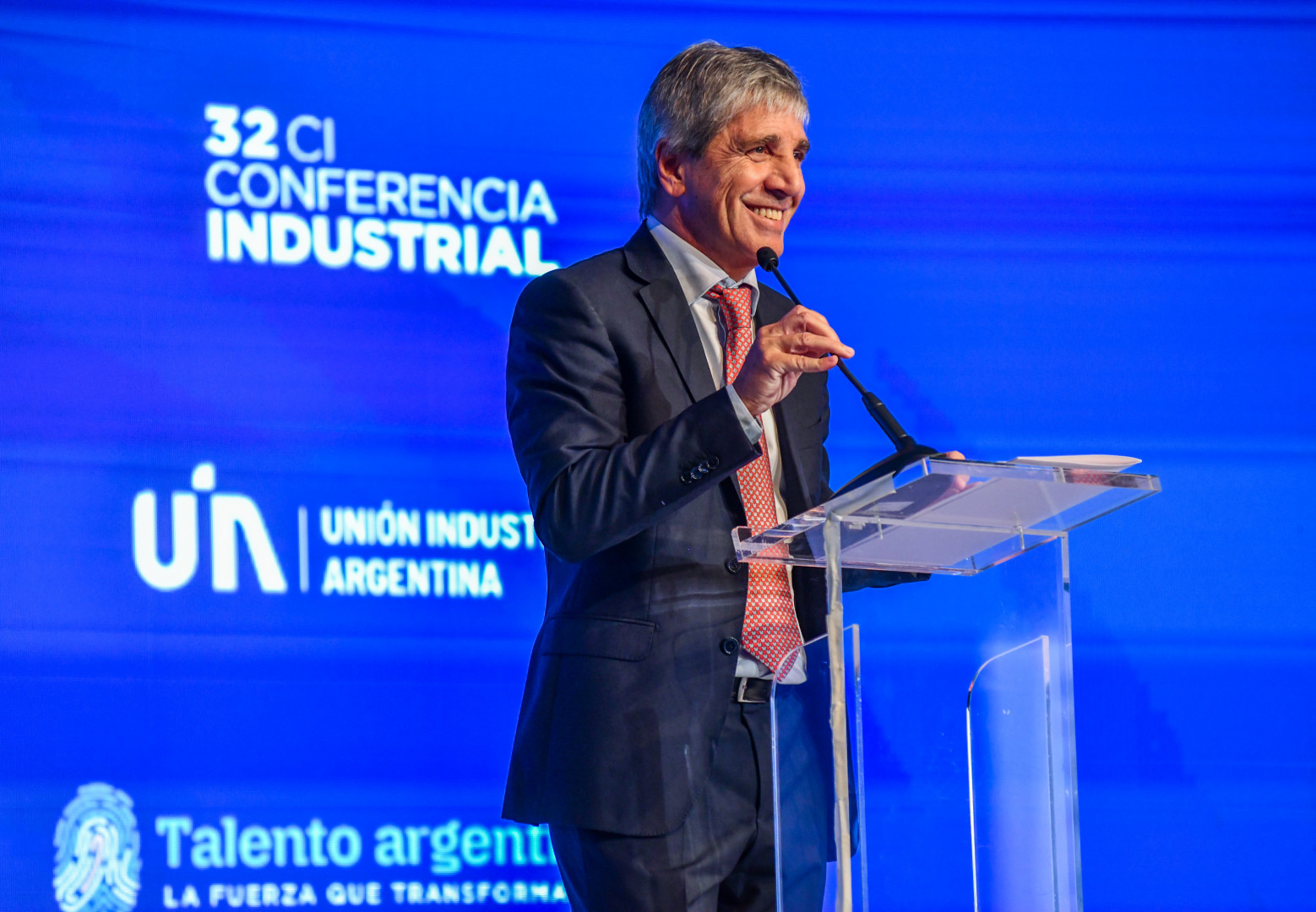
Caputo made the offer on Nov. 3 at the annual conference of the UIA, the main industry lobby, to provinces and Buenos Aires City that have joined the national investment-incentive regimes. The national government would pay the provinces the equivalent of half the tax’s revenue, and they would give up the other half. Because the tax is provincial, each would have to change its own law.
What the tax is
The stamp tax is a provincial charge on acts and contracts, such as sales of property and vehicles, leases, promissory notes and loans. Each province and the capital sets its own rates, so what buyers, renters and borrowers pay today differs across the country. In 2025 the jurisdictions that reported complete data (La Pampa did not) raised 3.96 trillion pesos from it, in current pesos. That was 9.5% of their own tax revenue and second only to the turnover tax on business sales, the ministry’s provincial series shows.
The 2017 fiscal pact, Law 27.429, in which the provinces and the capital agreed with the national government to phase the tax down, capped rates on most contracts at 0.75% from 2019 and called for scrapping it from 2022, while only freezing rates on property and vehicle transfers. The tax is still collected.
What the offer would cost
Caputo put the tax’s yield at 4–5 trillion pesos a year. The ministry’s series is consistent with that: 2025’s total sits just below the range, and by our calculation this year’s would be about 5.2 trillion pesos, assuming the second half follows last year’s pattern, since first-half receipts rose about a third from a year earlier.
Half of that is what the national government would pay and the provinces would give up: about 2 trillion pesos on 2025 figures, or 2.6 trillion at this year’s pace.
The loss would fall unevenly. On 2025 figures, Buenos Aires province would give up about 734 billion pesos a year and Buenos Aires City about 407 billion, the largest sums.
Measured against their own tax revenue, the burden is heaviest elsewhere: half of the stamp tax equals 7.3% of Chubut’s own revenue, the highest share, 5.8% of Córdoba’s and 4.1% of the capital’s.
Two ways it could go
If provinces accept, each legislature must amend its own tax law and the national government would begin paying its half. If they decline or ask for more, the tax stays and the national government pays nothing. Córdoba Governor Martín Llaryora, at the same conference, said that if the stamp tax goes, the national government should also cut the bank debit tax and the other national taxes it does not share with provinces. In Córdoba the tax is a larger share of its own tax revenue than in Buenos Aires province or the capital.
A mixed result is also possible, because the offer is aimed at provinces that have joined the national investment regimes. Caputo said the government will put the proposal to the provinces and Buenos Aires City.