

President Milei’s party on Wednesday dropped a plan to let allied parties share a presidential ticket from its bill to suspend Argentina’s 2027 primaries, a change meant to secure Senate votes.
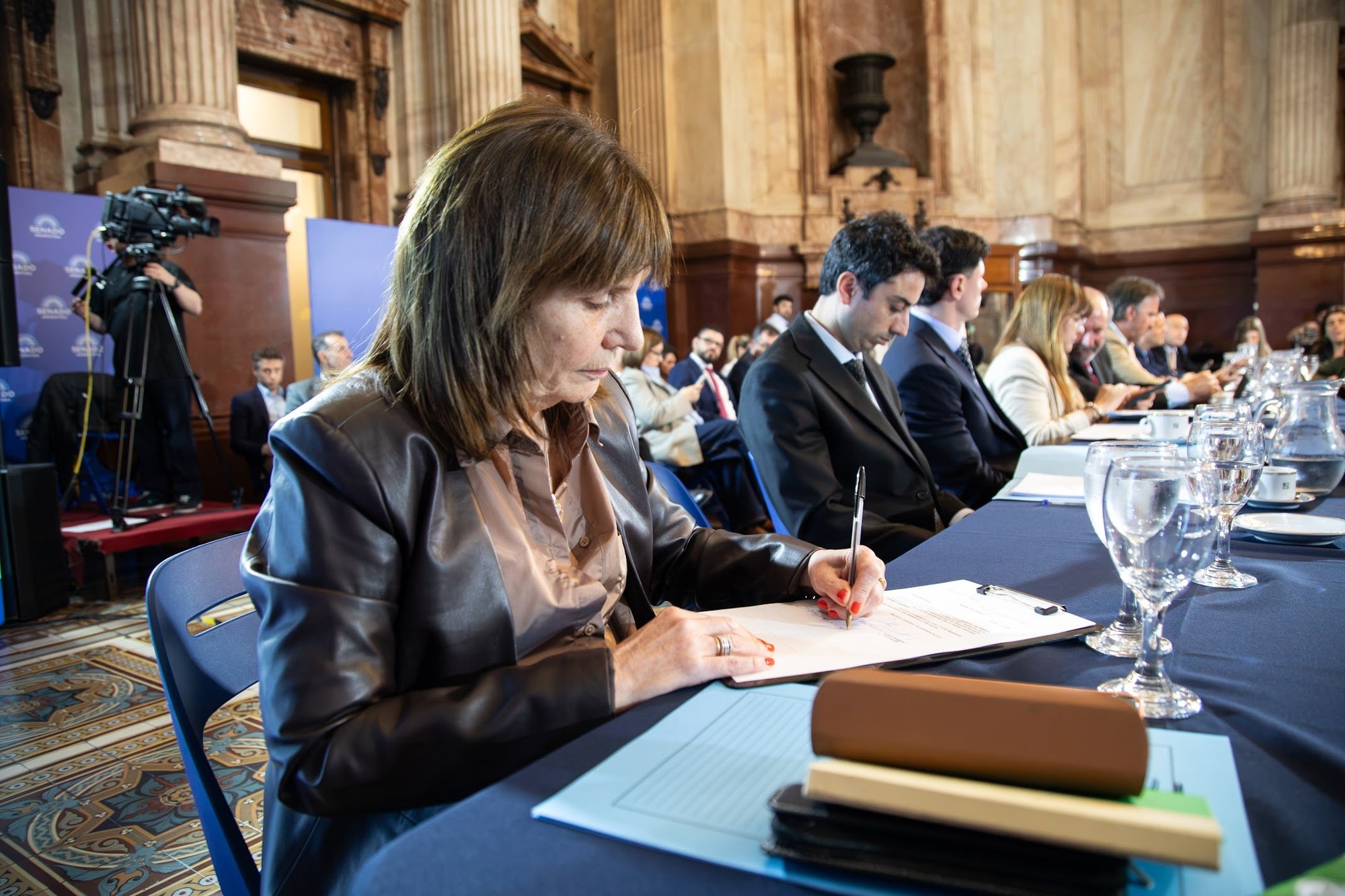
Patricia Bullrich, who leads the party’s senators, announced the change at the start of a meeting of the Senate’s Constitutional Affairs Committee. The plan, known as colectoras, would have let several parties’ lists of legislators run behind the same presidential candidate, which some governors had pressed for. Bullrich said the party was going back to the system of “one citizen, one vote”.
People close to Bullrich said the votes to suspend the primaries were not the same as the votes to keep the joint lists, which Mauricio Macri’s PRO party and some provincial senators opposed. Bullrich said she had struck a political agreement with the Radical Civic Union (UCR), whose senators would back the suspension. In October the party lacked the votes to scrap the primaries outright.
The primaries, known as the PASO, are the open, simultaneous and compulsory contests in which every party picks its candidates on the same day and every registered voter must take part. The bill suspends them for 2027 only, so parties would choose candidates under their own charters, Bullrich said. It also keeps a clean-record rule, known as Ficha Limpia, that bars convicted people from running; she said it would apply to future elections and cover people whose convictions were confirmed on appeal.
The committee has 19 members and needs 10 signatures on its report, the step before a vote of the full Senate. Milei’s party holds six of the seats. The committee recessed on Tuesday without a report, and again on Wednesday to let members read the new text. Fernando Salino, a Peronist senator, complained that the text kept changing during the meeting: “We don’t know what we’re talking about.”
The governing party wants the full Senate to vote on Thursday, Nov. 26. It needs 37 of the 72 senators, an absolute majority, for the bill as a whole and for each article. The bill would then go to the lower house, where the government plans to finish it in extraordinary sessions in December.