

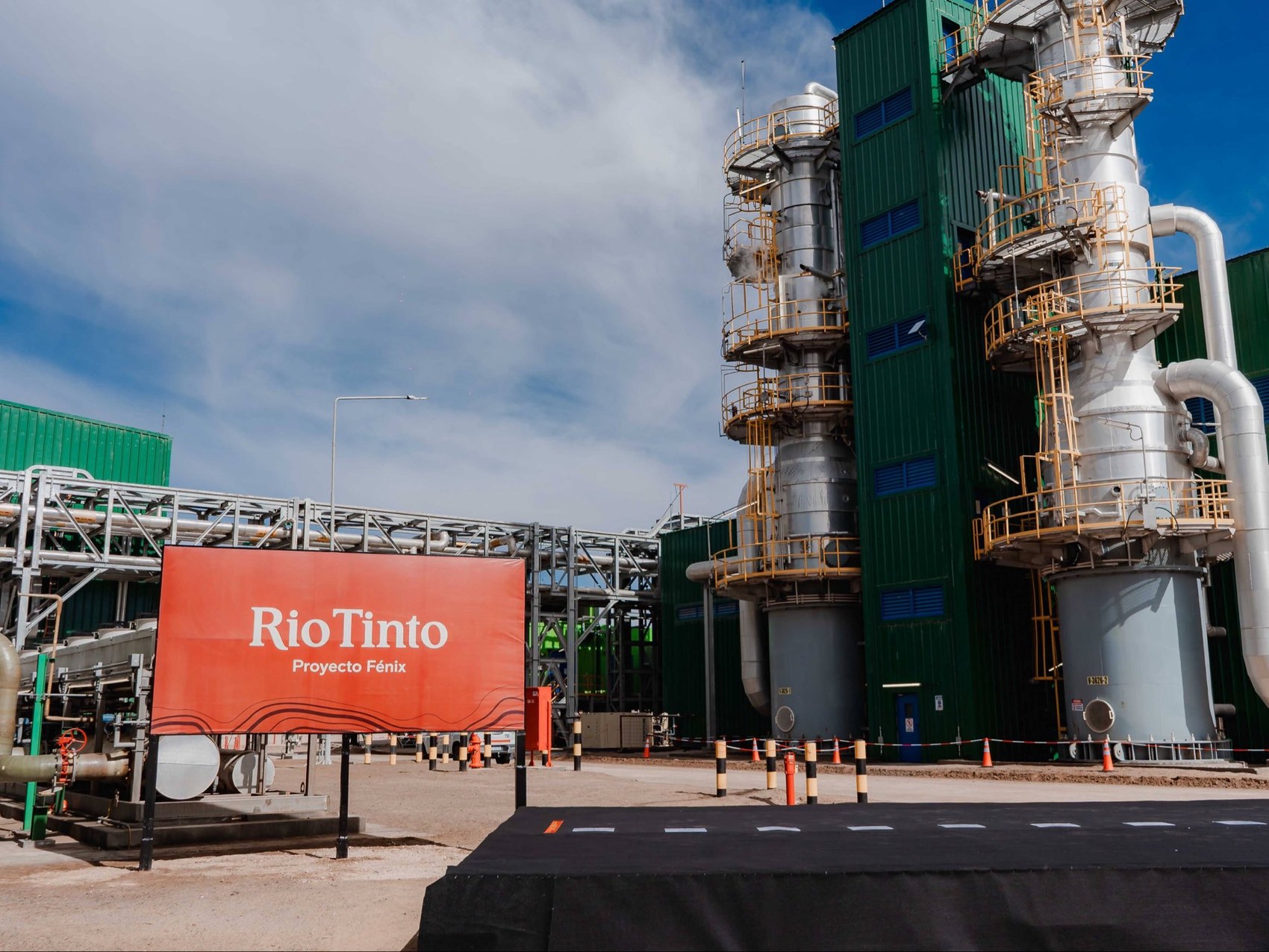
Rio Tinto, the global mining group, opened an expanded lithium plant and a new one in Catamarca province on Wednesday, after investing about US$1.4 billion to add capacity of 25,000 tonnes a year once fully ramped up.
President Milei joined Rio Tinto chief executive Simon Trott and Catamarca Governor Raúl Jalil at the Salar del Hombre Muerto, a salt flat about 4,000 meters above sea level, to open the Fénix 1B expansion and the new Sal de Vida plant, the company said. Both began producing in the second quarter, ahead of plan, and are still ramping up toward full capacity.
The capacity is measured in lithium carbonate equivalent, the standard unit for comparing lithium products. Fénix, which began operating in 1997 as Argentina’s first commercial lithium operation, grows by 10,000 tonnes a year to a target of about 40,000. Sal de Vida, a new operation in the same salt flat, has a target of 15,000 tonnes.
The Fénix expansion won approval in March under RIGI, Argentina’s tax and customs incentive regime for large investments, which covers US$531 million of the spending. Milei used the opening to defend the regime against criticism of its fiscal cost, saying it gives investors fiscal, customs, currency and legal stability. Rio Tinto said about 70% of the roughly US$4 billion it expects to invest in Argentine lithium will go to local suppliers.
Rincón, a larger lithium project in Salta province that is under construction, would lift Rio Tinto’s capacity in Argentina to about 160,000 tonnes a year once completed, the company says. Its worldwide target is 200,000 tonnes a year of lithium capacity by 2028.