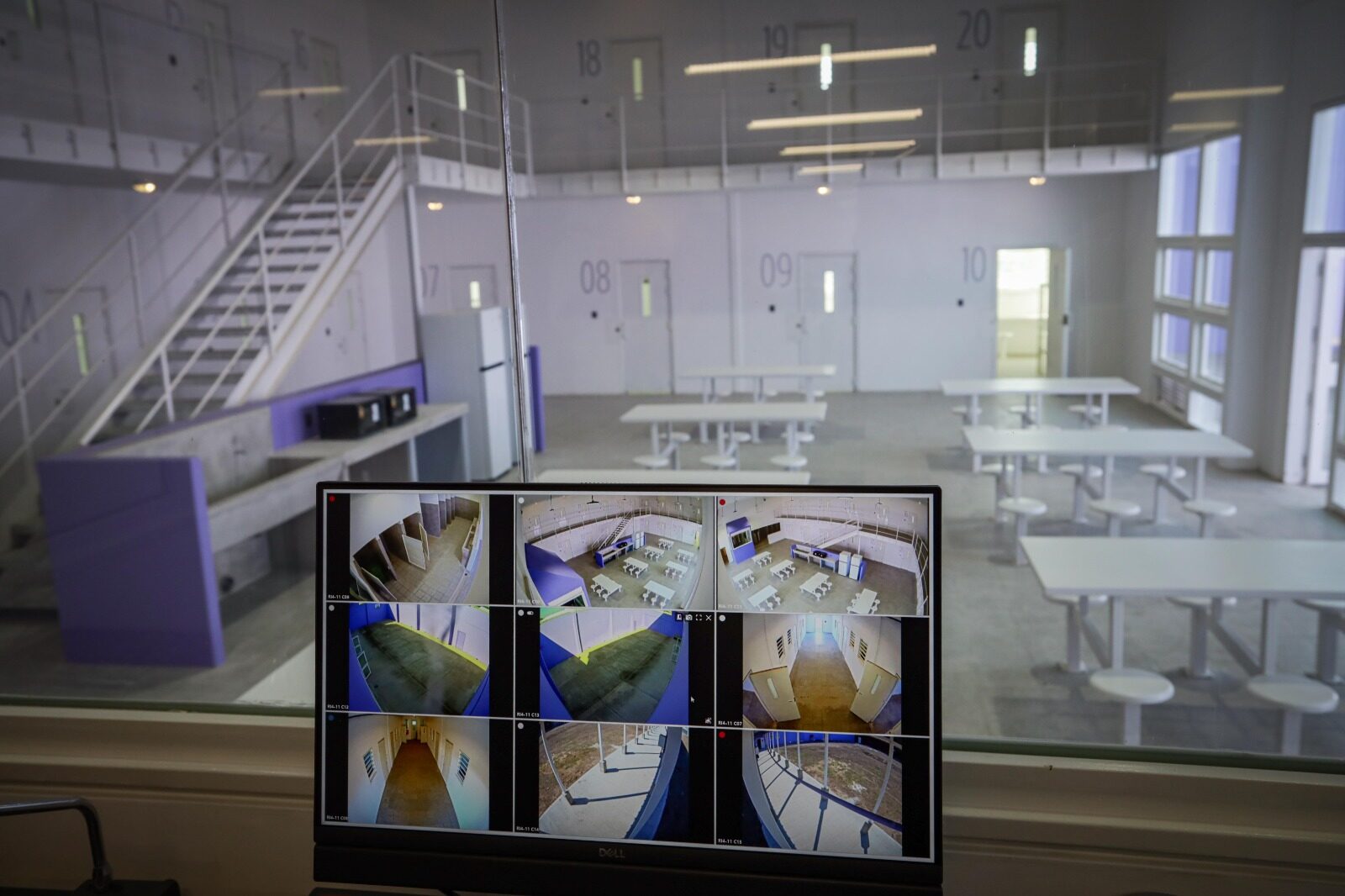
On Sunday, Oct. 11, convoys began leaving the federal prison on Bermúdez street in the Buenos Aires neighborhood of Villa Devoto, bound for a new jail in Marcos Paz, in Buenos Aires province. National Security Minister Alejandra Monteoliva said 326 inmates went on the first day. Two days later the Boletín Oficial, the national gazette, published the order behind it: Security Ministry Resolution 1042/2026, signed on Oct. 9.
The text is short and specific. It opens the Marcos Paz complex, with provisional room for 2,232 inmates, and orders every inmate and the equipment of the Devoto complex moved there. Its Article 5 strips the Devoto property of prison use under a 2018 framework agreement between the Nation, the city and the national property agency, and the ministry says the aim is the “definitive end” of Devoto as a prison. It also notes technical observations at Marcos Paz that still have to be corrected. Around 1,500 inmates are held in Devoto, plus several hundred in city police cells who are also due to go.
On Oct. 16 an appeals court upheld the rejection of a challenge by the federal prison ombudsman’s office, but told the prison service to give courts and defense lawyers 72 hours’ notice of each transfer.
A deadline of 2020
The move was meant to be done years ago. When then Buenos Aires City Chief of Government Horacio Rodríguez Larreta announced it with National Justice Minister Germán Garavano in April 2018, the transfer was to start by the end of that year and finish in 2020, with 65% of the freed land becoming green space and 35% housing. A framework agreement had been signed and the City Legislature ratified it that June. The city, which was to build the new jail, awarded the contract in December 2018 for delivery within two years.
Works stalled for years and restarted in December 2024. In October 2025 the national government said the complex was nearly built and would open in March. Officials of both governments signed the provisional handover on Oct. 8.
A block that has stood since 1927
The jail occupies one block, bounded by Bermúdez, Nogoyá, Desaguadero and Pedro Lozano streets. The city’s own account says it was installed in the neighborhood in 1927, long enough for Villa Devoto’s leafy streets to grow up around it. Jorge Macri, the city’s chief of government, called the closure “historic” and a long-standing demand of neighbors. The block also holds a darker record. In 1978, during the dictatorship, a fire in Pabellón Séptimo (Cellblock Seven) killed 65 prisoners. Last December a federal court sentenced two former prison officers, Juan Carlos Ruiz and Horacio Martín Galíndez, to 25 years each. Human rights groups want part of the site kept as a memorial, and press reports say the plan allows for one.
Three questions that decide the block
The first is who owns it. The land is still national property: “The land remains national property. The nation neither gives it back nor gives it away to the city,” official sources said. The national property agency is a party to the 2018 agreement. Resolution 1042 ends the prison use of the site and says nothing about what follows.
The second is who sets the rules. Zoning belongs to the city, and the Legislature must approve any change. The 65-35 split dates from the city’s 2018 announcement. The third is what it is worth: property brokers quoted in January said any rise in nearby prices would be gradual and depend on that zoning, with tight limits holding it down and more building capacity changing the picture.
The resolution also sets one date that can be counted. Article 6 gives the prison service 90 days from Oct. 9 to draw up an organizational structure and operating manual for Marcos Paz, which runs to early January.