Argentina’s Chamber of Deputies, the lower house of Congress, passed a permanent disability-benefits law by 237 votes to 9 early Thursday, after President Milei’s government dropped planned cuts and accepted most of the opposition’s changes.
The vote is well above the two-thirds of each chamber that Congress needs to override a veto. The law would replace the emergency regime that lawmakers forced on Milei over his veto in 2025 and that expires on December 31. It decides what people with disabilities receive in pensions and what the state pays the clinics and therapists who care for them.
It keeps the non-contributory disability pension and its inflation adjustments, and lets recipients hold a registered job with income up to two minimum wages. If the state owes providers money when the law takes effect, it must publish a payment schedule within 30 days and pay within 90. In exchange, the government won periodic audits that cross-check recipients against tax and social-security records.
The concession came on the government’s 2027 budget bill, whose disability chapter would have tied pensions to inability to work and made a pension incompatible with a formal job. That chapter was dropped. “Social sensitivity does not conflict with fiscal responsibility,” said Laura Rodríguez Machado, a deputy from Milei’s party, La Libertad Avanza. The main Peronist group, Unión por la Patria, backed it; the left abstained because the text does not update the debts owed to providers. Nine deputies voted no, among them Córdoba deputies who wanted the emergency law extended for another year instead.
Hours earlier, deputies approved the government’s Private Property Inviolability bill by 124 votes to 119. As amended in the chamber, it repeals the article of Milei’s 2023 deregulation decree that scrapped the Land Law, which caps foreign ownership of rural land at 15%. That chapter was dropped before the Senate passed the bill in August; the governing party restored it to win allies’ votes.
Five deputies loyal to Córdoba Governor Martín Llaryora and one from the center-right PRO abstained instead of voting no, which let the bill pass. The bill also gives tenants 10 days to pay overdue rent before a landlord can seek an expedited eviction, and tightens the rules for state expropriations.
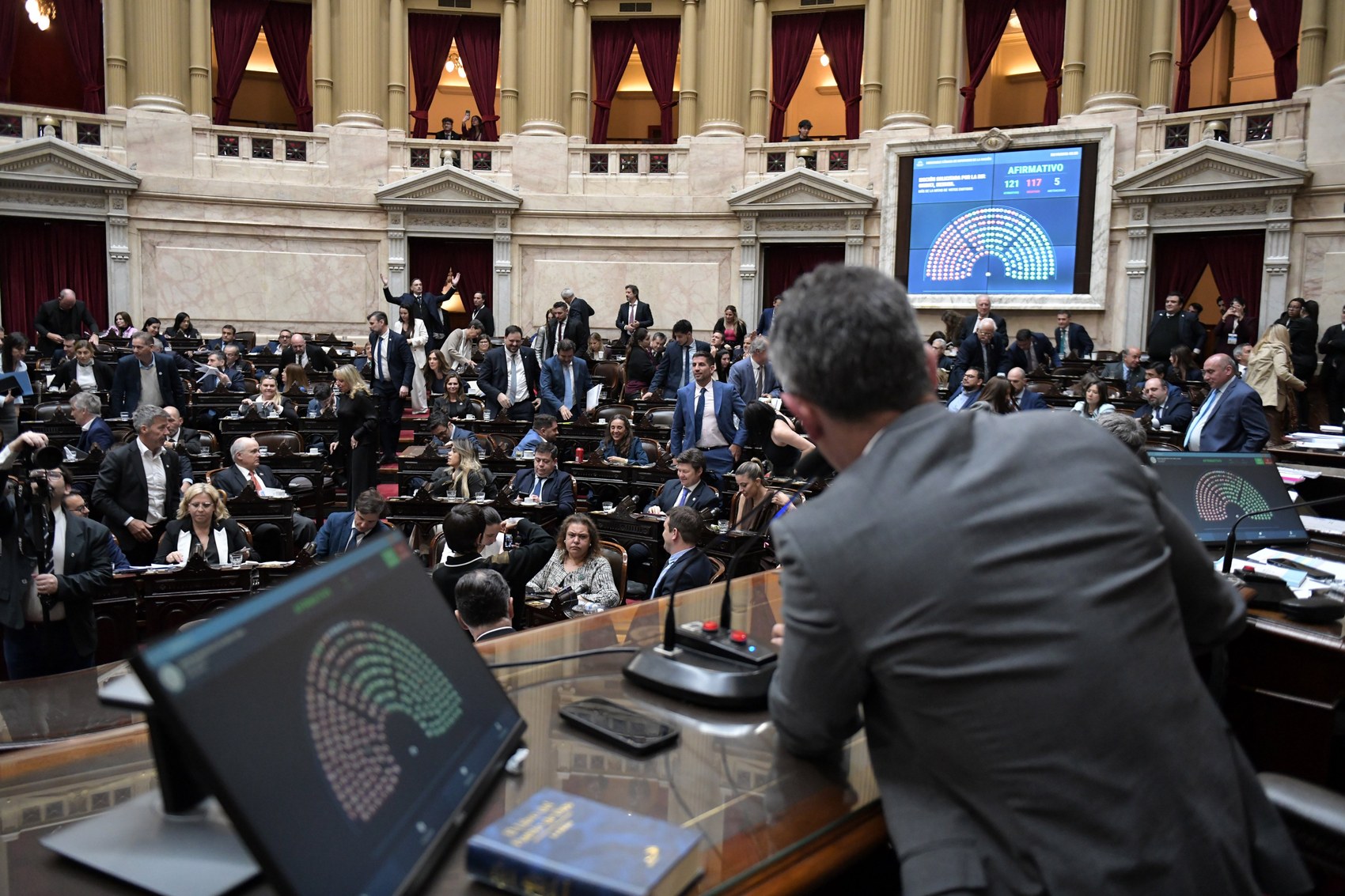
The third item, a household-debt bill, did not come to a vote on its merits. Deputies sent it back to committee 121 to 117, on a motion by Silvana Giudici that set no date for its return. The governing party’s version would give borrowers free access to their credit profile and the right to repay early, with no interest caps and no refinancing; the opposition wanted a debt emergency and refinancing of overdue debts. “It is 3 in the morning and the whole Congress is lending itself to this farce,” Deputy Pablo Juliano said.
Con 121 votos afirmativos, 117 negativos y 5 abstenciones, se aprueba la moción de la diputada Giudici, por la cual el proyecto de Ley sobre Endeudamiento Familiar vuelve a comisión
Translation: "With 121 votes in favor, 117 against and 5 abstentions, Deputy Giudici's motion is approved, sending the Family Indebtedness bill back to committee"
The property bill goes back to the Senate, which must accept or reject the deputies’ changes before it can become law. The disability bill also needs Senate approval before the emergency regime lapses at year’s end.