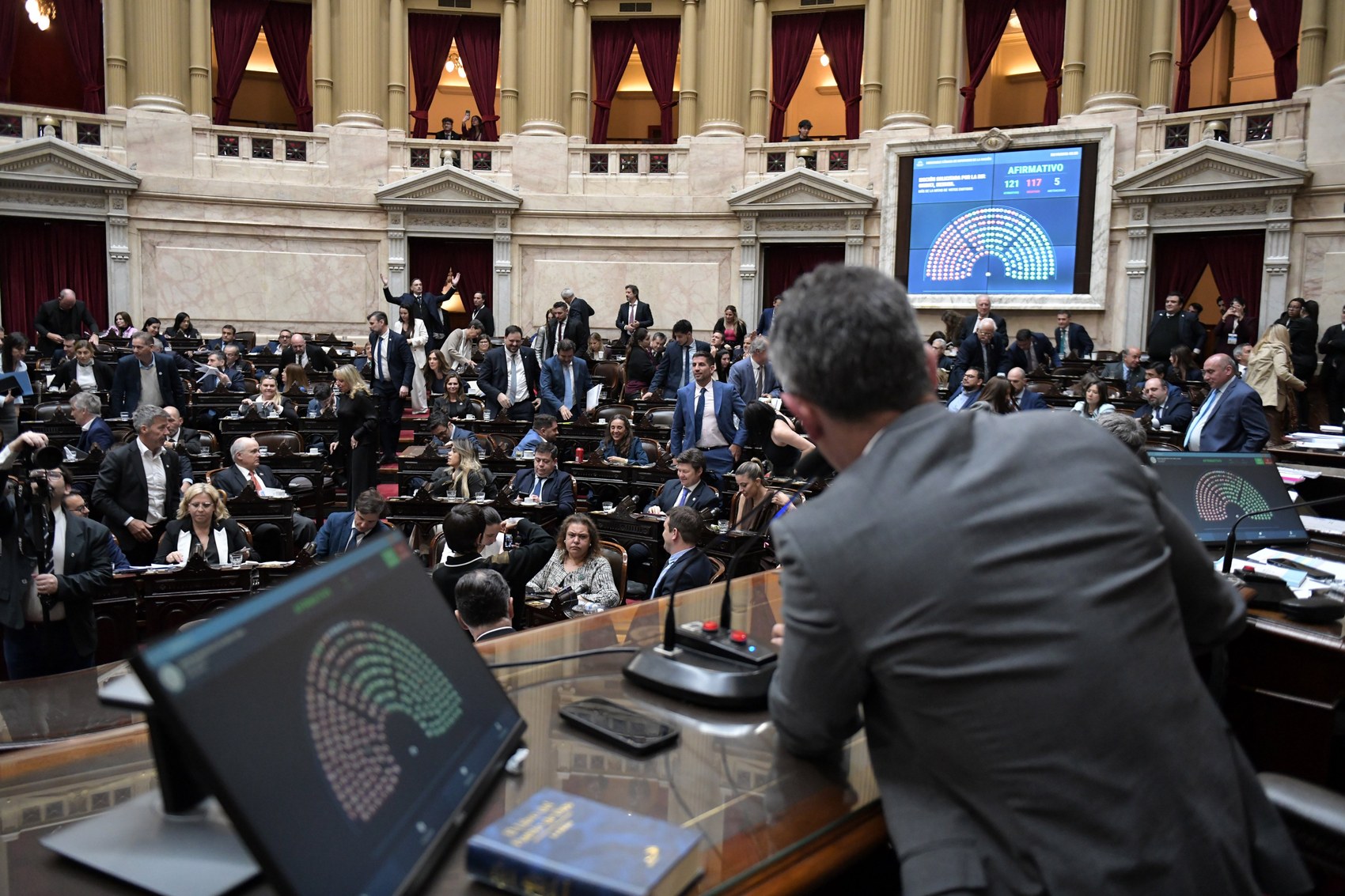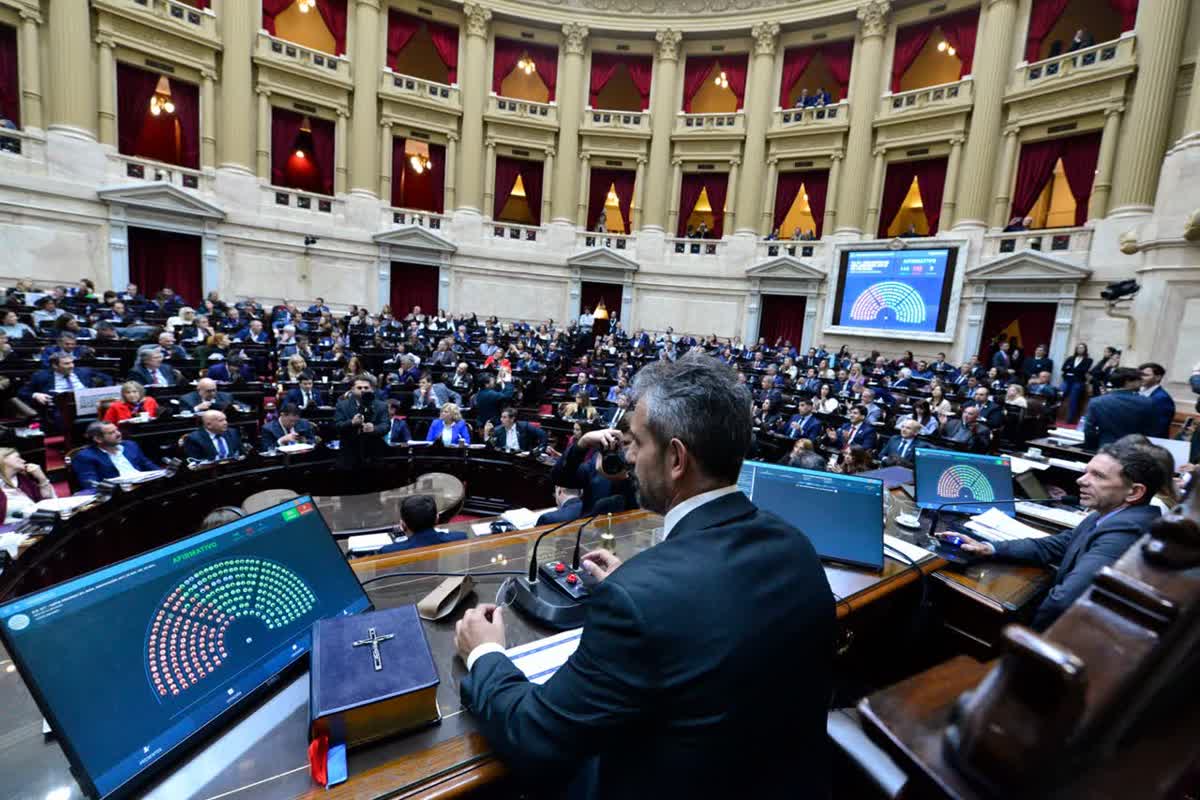
Milei’s party, La Libertad Avanza, and its allies brought 132 deputies into the Chamber of Deputies, the lower house of Congress, on Wednesday, enough to open a special session, one called outside the regular schedule. It was expected to run about 17 hours.
Hoy a las 12h, se llevará a cabo una Sesión Especial en la que se buscarán tratar la Ley de Inviolabilidad de la Propiedad Privada, modificaciones al Código Penal sobre Vandalismo Rural, la prórroga a la Emergencia Nacional en Discapacidad y el establecimiento de la Ley sobre Endeudamiento Familiar.
Translation: "Today at 12, a Special Session will be held in which the Law on the Inviolability of Private Property, changes to the Criminal Code on Rural Vandalism, the extension of the National Disability Emergency and the Law on Family Indebtedness will be taken up."
The agenda takes up three of the government’s most contested issues: a private-property bill that now also restores limits on foreign ownership of farmland, a new disability-benefits law, and measures for indebted households. The governing party called the session to put its own versions of the disability and debt bills ahead of the opposition’s, a week after the opposition’s own session failed.
The governing party, the center-right PRO, the Radical party (UCR), the small MID party and party groups tied to the governors of San Juan, Catamarca, Córdoba, Santa Fe, Misiones, Salta and Jujuy provided the numbers to open it. The main Peronist group, Unión por la Patria, the left, the Civic Coalition, the socialists and some Radical dissidents did not help open the session but joined it afterward and moved to add their own bills. Civic Coalition deputy Maximiliano Ferraro told the chamber the property debate was not about an absolute ban but about reconciling foreign ownership with national sovereignty, territorial integrity and the protection of natural resources.
The first votes went against the opposition. Its motions to add bills to the agenda, which need a special majority, all failed. They included an extension of the pediatric emergency, which lapses on Wednesday, and a bill on the statute of limitations for child sexual abuse when a suspect is a fugitive, which lost by one vote.
The first item is the Inviolability of Private Property bill, which the Senate approved in August without its chapters on foreign land purchases and fire management. It speeds up evictions, tightens the rules for state expropriations and updates the property registry.
In committee, the governing party added two articles that repeal the land-ownership article of Milei’s December 2023 deregulation decree and restore the Land Law. That law caps foreign ownership at 15% of rural land and any one nationality at 30% of that share. The reversal follows the Supreme Court’s interim order restoring the limits and the opposition’s push against the whole decree.
The disability bill is the governing party’s compromise with its allies. It makes the benefits of the emergency law permanent, keeps pensions at 70% of the minimum retirement benefit and lets recipients hold a registered job paying up to two minimum wages. At PRO’s request it requires a schedule for paying providers owed money. The state could deny pensions after a socioeconomic review and cross-check recipients against tax and social-security databases.
The opposition’s committee report, the step before a vote of the full chamber, instead extends the emergency through the end of 2027. The Church’s social ministry commission also asked for that extension. It warned that people too disabled to work could lose the right to combine a pension with a job and keep health coverage, and objected to suspending pensions on a data cross-check without hearing the person. Congress’s budget office puts the compromise’s cost at 0.04% of GDP. Chamber president Martín Menem told reporters that Milei will not veto the laws the session approves.
On debt, the governing-party bill, backed by PRO and the UCR, requires lenders to allow early repayment and give customers free access to their credit-risk profile, and adds financial education. It sets no interest caps and no refinancing for people already behind. The opposition’s version declares a 180-day emergency, cancels penalty interest and lets borrowers refinance long-overdue debts, with payments capped at 30% of income. A middle option from the Argentina Federal group would cap interest rates and create a personal-bankruptcy regime. The debate follows household delinquency at a 20-year high.
The property bill goes back to the Senate if approved, because the deputies changed the text the Senate passed. The disability debate was moved to follow it, and any disability or debt bill approved in the chamber would also need the Senate.