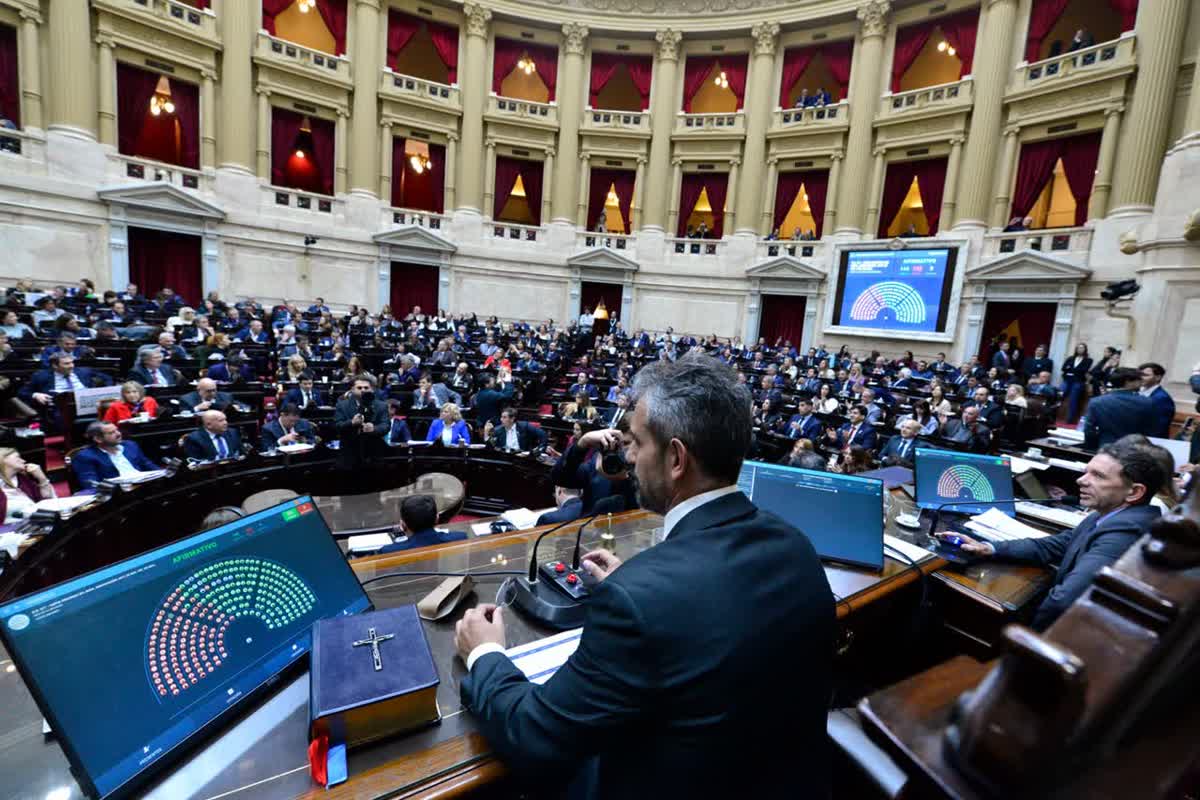
Opposition lawmakers on Thursday, October 1, called a special session of the Chamber of Deputies for October 15 to reject Decree 70/2023, the sweeping deregulation decree President Milei signed in his first weeks in office, after a Supreme Court ruling earlier this week put back in force the decree's repeal of limits on foreign ownership of rural land. The same day, the Court issued an unusual public statement saying it had ruled only on a procedural question and had taken no position on the land regime itself.
The ruling, issued on Tuesday, September 29, overturned an appeals court decision that had blocked Article 154 of the decree, which repealed the 2011 Rural Land Law and its 15% national cap on foreign-owned farmland. Justices Horacio Rosatti, Carlos Rosenkrantz and Ricardo Lorenzetti found that the Malvinas veterans' association that brought the case, CECIM La Plata, lacked standing.
In Thursday's statement, the Court said the decision "only decided a procedural aspect" about an association's standing to obtain an injunction, that it does not affect other injunction requests pending in lower courts, and that anyone who considers the land regime unconstitutional can still seek one. "The Court will rule on the legal norms known as the land law when those claims reach it, which has not happened so far," it said. It added that interest groups could go to court, which "in a democracy is more appropriate than promoting hate speech and disqualification on social media," and that "criticism is fair; disqualification and hate only erode institutions and democracy." The Court also said its ruling does not obstruct Congress's review of the decree.
That review is what the opposition now wants to finish. Under the law governing emergency decrees, a decree stays in force unless both chambers reject it, and it cannot be amended, only accepted or rejected whole. The Senate rejected Decree 70/2023 in March 2024, but the lower house never voted on it, so a rejection on October 15 would strike down the entire decree of more than 300 articles, not just the land provision. The session request was signed by Peronist Unión por la Patria lawmakers, the Provincias Unidas bloc, the Civic Coalition, Miguel Pichetto's Encuentro Federal and the left, and was delivered to Speaker Martín Menem.
Rejecting the decree would revive much of the legal framework it replaced, including the old rental law, the "Góndolas" law reserving supermarket shelf space for smaller producers and the Supply Law that let the state set reference prices, according to La Nación, Clarín and El País. Allied lawmakers have warned of the disruption; Juan Manuel López, a former Civic Coalition deputy now close to the government, said rejection would immediately revive the old rental rules and leave services such as satellite internet in limbo.
The numbers are not settled. Reaching a quorum takes 129 deputies, and rejection then needs a simple majority of those present. The signatories do not yet have the votes on their own and will depend on provincial blocs that answer to governors, Clarín reported. The opposition also added an extension of the disability emergency law and a household-debt relief bill to the agenda, issues that could help draw a quorum.
The government is looking for an exit short of losing the decree. According to Ámbito and Clarín, La Libertad Avanza is weighing adding a cap on foreign land purchases to its private-property bill, already passed by the Senate in August and stalled in the lower house, to give allies a way to restore limits without voting down the whole decree. Peronist senators Juliana Di Tullio, José Mayans and Fernando Salino filed a bill on Wednesday to repeal Article 154 alone, according to El Cronista and Ámbito.
The ruling also exposed divisions in the ruling party. Patricia Bullrich, La Libertad Avanza's leader in the Senate, said this week that pushing the land bill through Congress while the decree was still in court had been "hasty," and told La Nación on Wednesday that a rejection of the decree is "a possibility." Milei, speaking by video from Paris to the IDEA business conference on Wednesday, declined to criticize the ruling: "The Supreme Court's decision is the Supreme Court's decision; that is what republicanism is about," he said.
The October 15 session would be the lower house's first vote on Decree 70/2023, the legal foundation of Milei's deregulation program. If the opposition finds the votes, the end of the land limits would be reversed along with hundreds of other changes that businesses and tenants have operated under since December 2023.