

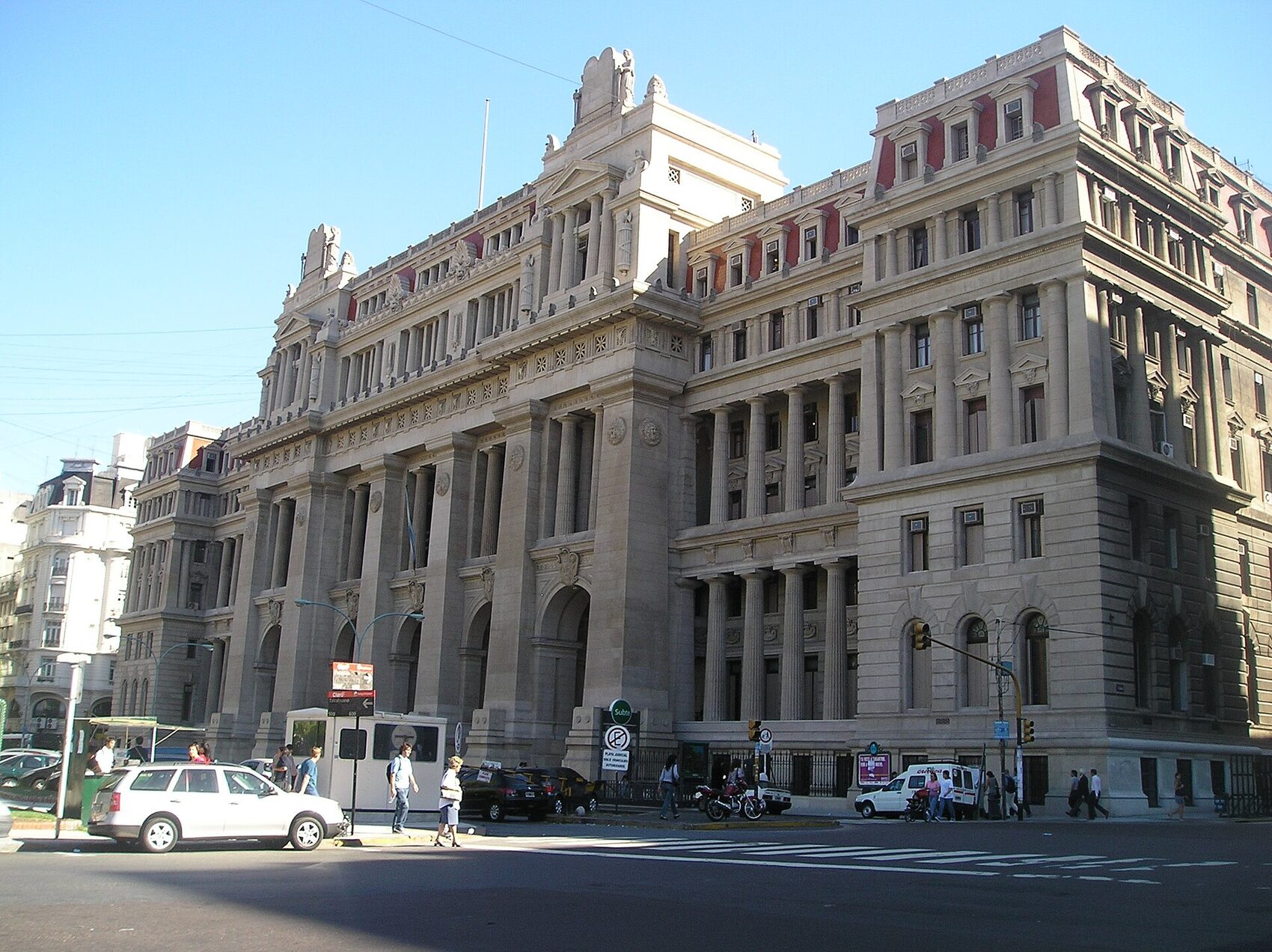
The Supreme Court cut to 24 hours the time parties have to object to two acting justices in a new Land Law case, which includes a request that could restore limits on foreign ownership of farmland.
The Court’s secretary, Sergio Nápoli, signed the order at 7:09 p.m. on Wednesday, October 7, shortening the usual 72-hour period “in view of the particular circumstances of the case,” and enabled off-hours for that purpose. The two acting justices, drawn by lottery, are Diego Barroetaveña, a judge on the federal criminal appeals court, and Juan Ignacio Pérez Curci, a judge on the federal appeals court in Mendoza.
The case was brought by the environmental group Árbol de Pie, two Indigenous communities and Río Negro legislator Magdalena Odarda, who challenged Article 154 of the deregulation decree (officially Decree 70/2023), the provision that repealed the Land Law. On October 1 they asked the Court to clarify whether its September 29 ruling, which threw out a Malvinas veterans’ group’s challenge for lack of standing, also covers theirs. They argue their standing rests on environmental and Indigenous land rights, not on sovereignty, the ground the Court rejected for the veterans. Their file includes a request for an injunction that, if granted, would put the foreign-ownership limits back in force.
The Court’s three justices have not agreed on how to proceed, and a ruling needs three votes, so it drew two acting justices. Carlos Rosenkrantz is reluctant to change the picture again, while Horacio Rosatti and Ricardo Lorenzetti are on the other side, La Nación reported, citing people familiar with the Court’s deliberations. Constitutional lawyers told the paper the Court could send the file back to federal courts in La Plata or Bariloche, or decide the injunction itself, an exceptional step.
A court in La Plata also acted on Wednesday. Judge Güendalina Sessarego ordered the national Justice Ministry to preserve 15 years of records on rural land in Buenos Aires province and to say within five days when its databases were last updated. The order came on a petition from the province’s ombudsman, Guido Lorenzino; the judge cited the risk that data gathered over almost 15 years could be lost after the repeal of the Land Law. Sessarego did not suspend the decree and sent the case to the federal court system, which will draw a judge to decide whether her order stands.
In Congress, the ruling party’s group in the Chamber of Deputies, the lower house of Congress, is weighing adding a limit on foreign land sales to its private-property bill, as allied governors press for an alternative to rejecting the decree outright. The opposition has called the October 15 special session to reject all of the deregulation decree, and its signatories acknowledge they are about ten deputies short of the 129 needed for a quorum.
The parties have until Thursday to object to the acting justices.