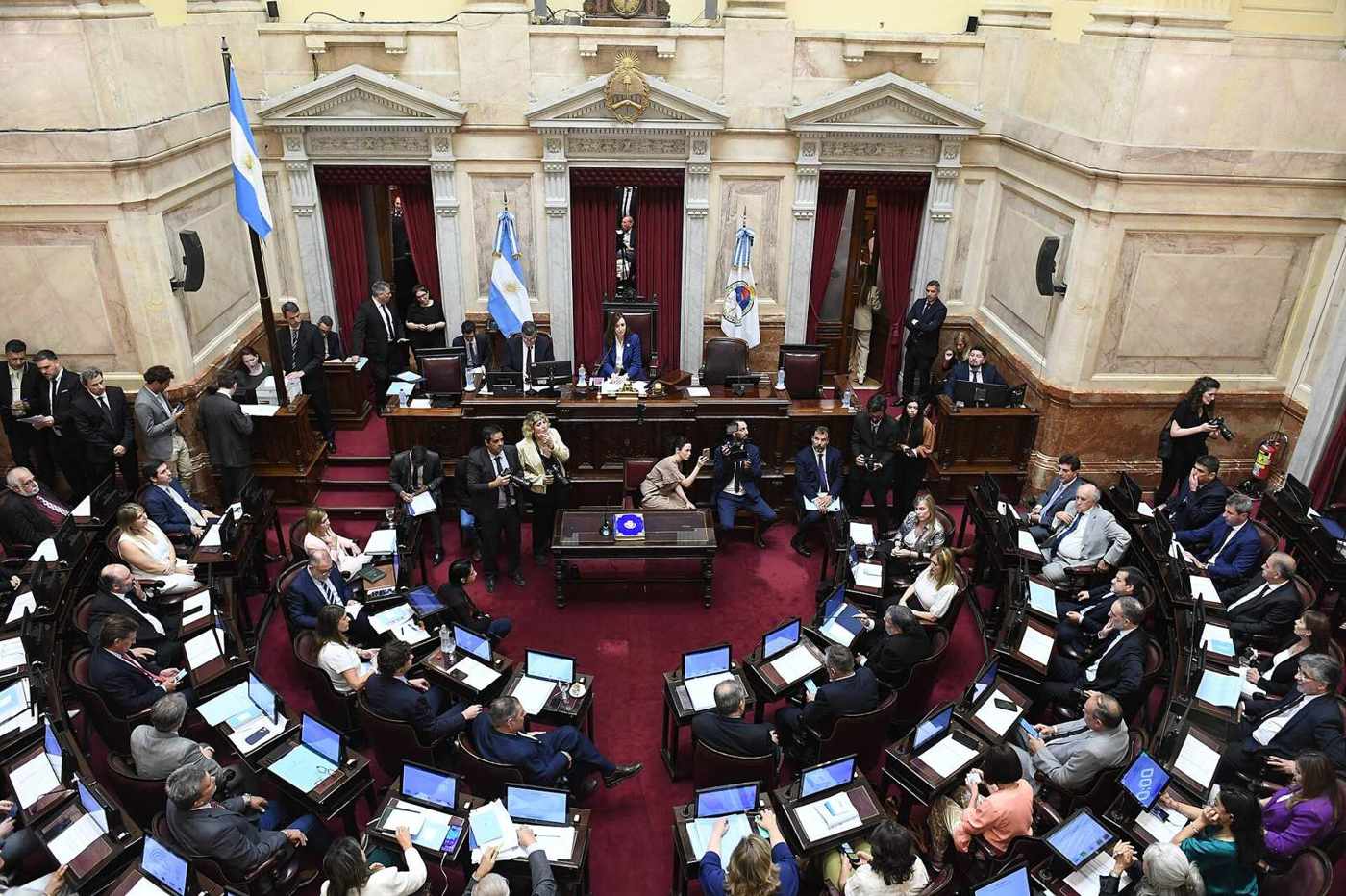
Argentina's Senate on Thursday passed a law rolling back the "Cold Zone" gas subsidy to its original 2002 footprint and approved a rewrite of the Central Bank's charter, handing President Milei two legislative victories in a single session.
Both measures go to the core of Milei's economic program. Cutting energy subsidies has been one of the main levers the government has used to keep the budget in surplus, a central commitment under its International Monetary Fund program, and the Cold Zone discount reached the winter gas bills of millions of households. The Central Bank reform writes into law an end to the practice of the bank financing the Treasury by printing money, which has long been blamed for Argentina's bouts of high inflation, and makes it harder for a future government to return to it without Congress.
The Cold Zone bill passed 38 to 8 and becomes law. It reverses a 2021 expansion that had extended discounted gas bills to cooler areas well beyond the south, and restricts the benefit to Patagonia, Malargüe in Mendoza province and the Puna highlands. Households in Buenos Aires, Córdoba, Santa Fe, San Luis, La Pampa, San Juan, La Rioja, Tucumán, Catamarca and Salta lose it.
Estimates of the scale differ sharply. The government puts the number of affected households at about 1.6 million, while the opposition says 2.5 million, according to the Buenos Aires Herald; Perfil reported that more than a million homes in 94 districts of Buenos Aires province alone will lose the discount. The government projects savings of about US$400 million a year, which it says will go toward settling debts with gas distributors. Households earning less than three basic food baskets, currently 4.8 million pesos (US$3,154) a month, can apply for aid through the Targeted Energy Subsidies system.
"We cannot keep subsidizing indiscriminately, regardless of income level and conditions," said Senator Flavia Royón, an independent. Radical senator Maximiliano Abad, who opposed the measure, asked colleagues whether they were "aware of the injustice we're about to commit."
The Central Bank charter reform passed 46 to 22. It makes preserving the value of the currency the bank's primary mandate, dropping the broader goals of financial stability, employment and equitable development added in 2012, bans temporary advances to the national Treasury and tightens limits on other financing to the government. The Senate also changed the leadership rules: the bank's president and directors would serve six-year terms, and both appointment and removal would require the approval of an absolute majority of the Senate alone, replacing a lower-house version that required two-thirds of both chambers. The debate followed committee testimony by Central Bank chief Santiago Bausili earlier this month.
"The Central Bank must stop being the cash box that financed governments that asked for money without backing," said Patricia Bullrich, who leads La Libertad Avanza in the Senate. Peronist bloc leader José Mayans countered: "Didn't Milei say he would destroy the Central Bank? Now he wants to keep it."
Because the Senate amended the charter bill, it returns to the Chamber of Deputies for a final vote. The Cold Zone rollback, by contrast, is already law: households across 10 provinces lose the discounted gas rate unless they qualify for targeted aid.