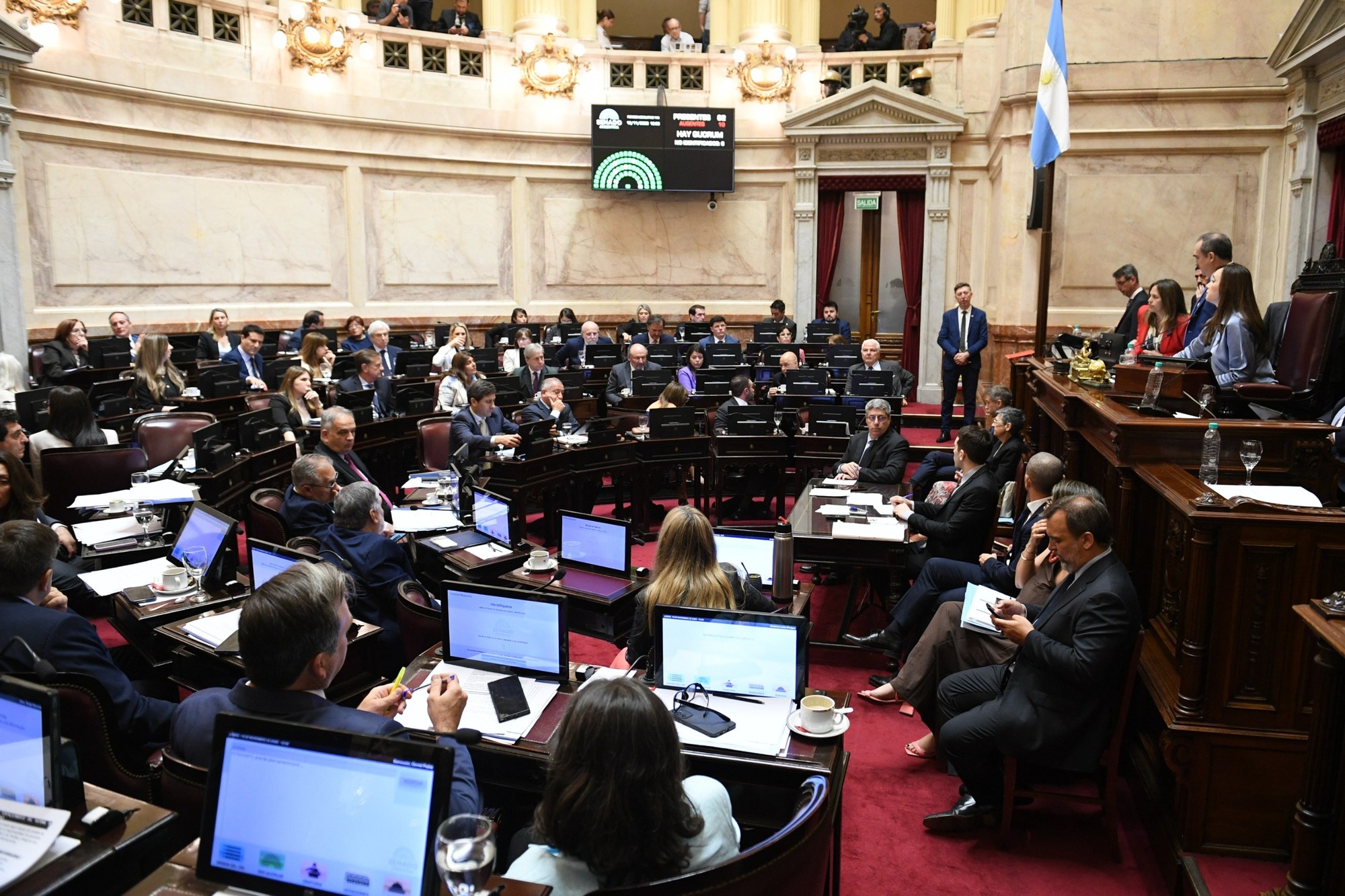
Argentina’s Senate gave final approval on Thursday to a private-property law, 42 to 26, that restores the limits on foreign ownership of rural land and creates a faster process to evict tenants and occupants. The bill now goes to President Milei to promulgate.
The law restores the Land Law of 2011, which Milei’s December 2023 deregulation decree had repealed. Under that law, foreigners may hold no more than 15% of the country’s rural land, no single nationality may hold more than 30% of that share, and one foreign owner is limited to 1,000 hectares in the core farming zone or an equivalent area elsewhere.
The ruling party withdrew the land chapter from the bill in August to win the Senate’s first vote. It then added two articles in the lower house, which approved the bill in October: one repeals the decree’s article scrapping the Land Law, and the other restores the law in full. That reverses part of Milei’s own decree and the original bill by Deregulation Minister Federico Sturzenegger, which would have removed most of the limits.
The restored limits come after the Supreme Court suspended its own ruling that had left the repeal standing, until a federal judge in Bariloche decides the case.
On evictions, the law sends claims against tenants, subtenants and occupants through a shorter court procedure, with five days to answer the claim and shorter deadlines at later stages. The 10-calendar-day notice to pay overdue rent before a landlord can sue stays, and where children, elderly people or people with disabilities are involved the law guarantees 10 days to offer a housing solution. The procedure applies in the national courts in Buenos Aires city; provinces keep their own procedural codes.
Bibiana Varela Guijarro, a lawyer and director of CAPRA, a property owners’ chamber, said eviction cases that now take up to two years could be cut to three to five months. Peronist Senate leader José Mayans criticized the scheme, saying it does not give even a month’s notice to people who lost their jobs and cannot pay rent. Expropriations now need a specific declaration of public utility and compensation paid in advance at market value.
Most of the votes against came from Peronist senators, with senators from the ruling parties of Neuquén and Santa Cruz provinces also voting no. The president has 10 working days to promulgate or veto the law; once promulgated, it takes effect when published in the Boletín Oficial, the government’s official gazette.