Washington is pressing Argentina to keep U.S. companies out of the reach of its Malvinas (Falkland Islands) sanctions bill, Clarín reported on Oct. 17, as President Milei’s party reworks the text.
Clarín said the U.S. government has raised the matter with Milei’s government in high-level contacts. Officials in Washington, whom the paper did not name, were quoted as saying: “We see that the law will affect companies from the United States, we are in contact with them and they have received notifications. Our interest is that they not be affected.” Some warned it “can create a barrier to the market in trade and investment.”
The worry is the bill’s reach. Its penalties would extend to firms operating around the islands, their subsidiaries, financial intermediaries, shareholders and suppliers, so a New York investment fund holding shares in a company active in the South Atlantic could face multimillion-dollar fines, in Clarín’s example. Several companies of U.S. origin have also sent the Chamber of Deputies a paper calling the text too vague and asking for a narrower definition of who can be punished, La Nación reported.
Washington has put two options to the government, the report said: freeze the bill so it never becomes law, which it prefers, or amend it to exempt U.S. companies, which would carry a political cost for a government that has made Malvinas a central cause. The issue has split the cabinet between those who want to change the text now to send a message to President Trump and those who warn of the cost of changing it. Deputy Secretary of State Christopher Landau and Juan Pablo Segura, the State Department’s top official for the Western Hemisphere, are due in Buenos Aires in the coming days, and the report said the bill is likely to be on their agenda.
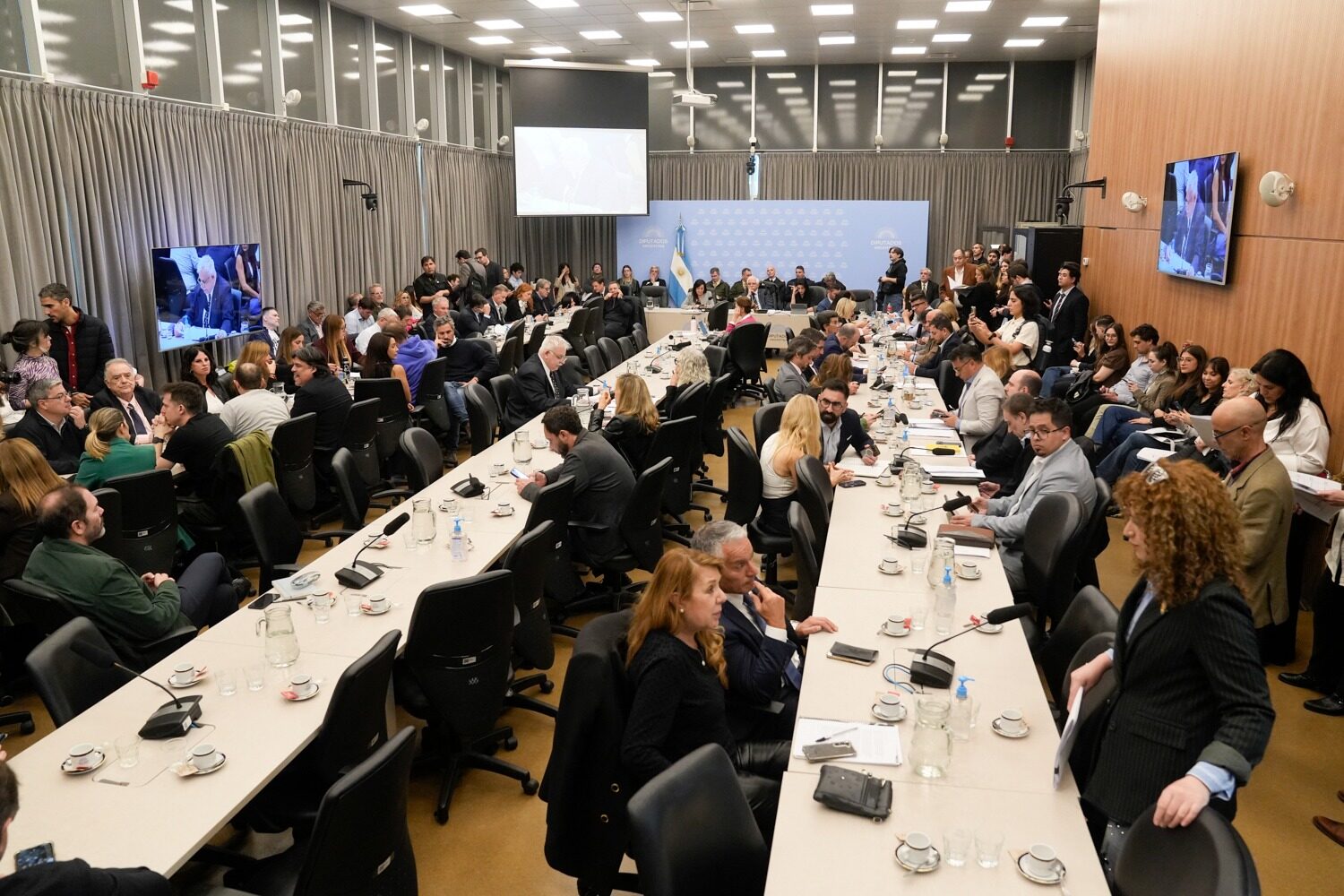
The bill has been through four joint meetings of the Chamber of Deputies’ defense, foreign affairs and criminal legislation committees without a committee report, the signed text that must exist before the chamber can vote. Milei’s party had wanted to sign it last week, but the Supreme Court’s rulings on land sales to foreigners and the opposition’s failed attempt to repeal Milei’s deregulation decree pushed it back. The party is now conceding changes to win over allies.
The most contested is article 111, which sets prison terms of 5 to 12 years for coordinated disinformation campaigns, run for a foreign state or group, that try to interfere in elections. The center-right PRO party and the Radical Civic Union say they reject it as written, and the journalists’ groups ADEPA and FOPEA warned of effects on free speech. Milei’s party has committed to reword it. Legal and Technical Secretary María Ibarzabal Murphy has said the text will add a joint commission of senators and deputies to oversee the new security council, and the articles letting the state audit or take over critical infrastructure are to change.
The Peronist opposition wants to split the bill and has said it could back the first 40 articles, which toughen penalties for exploiting resources around the islands without permission. Milei’s party rejects the split.
London has already answered with its own measures. On Oct. 13 the UK government said Business and Trade Secretary Jonathan Reynolds will introduce rules under its Protection of Trading Interests legislation, which bars UK companies from complying with specific foreign sanctions, and said the government “will act where Argentina seeks to impede lawful UK commercial activity.” London aims to have them in force before the end of 2026 and says they do not restrict lawful trade with Argentina. The announcement came as Argentina asked the international Law of the Sea tribunal to halt Sea Lion.
The bill was not on the agenda of the Chamber’s Oct. 21 floor session as first called. Milei’s party is aiming to sign the committee report on Tuesday, Oct. 20, and take the bill to the floor the next day, alongside bills on disability and household debt. Even then it would have to pass the Senate.