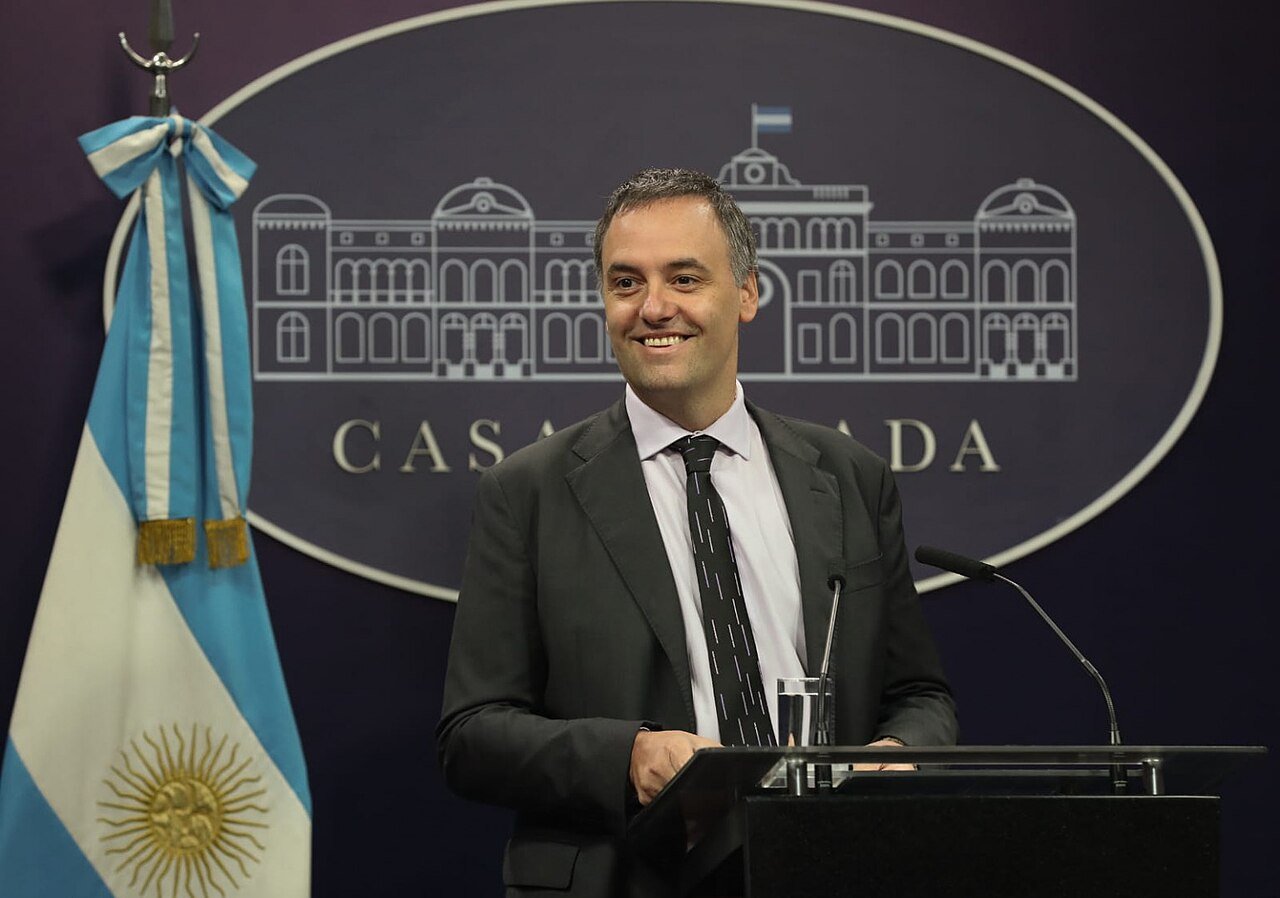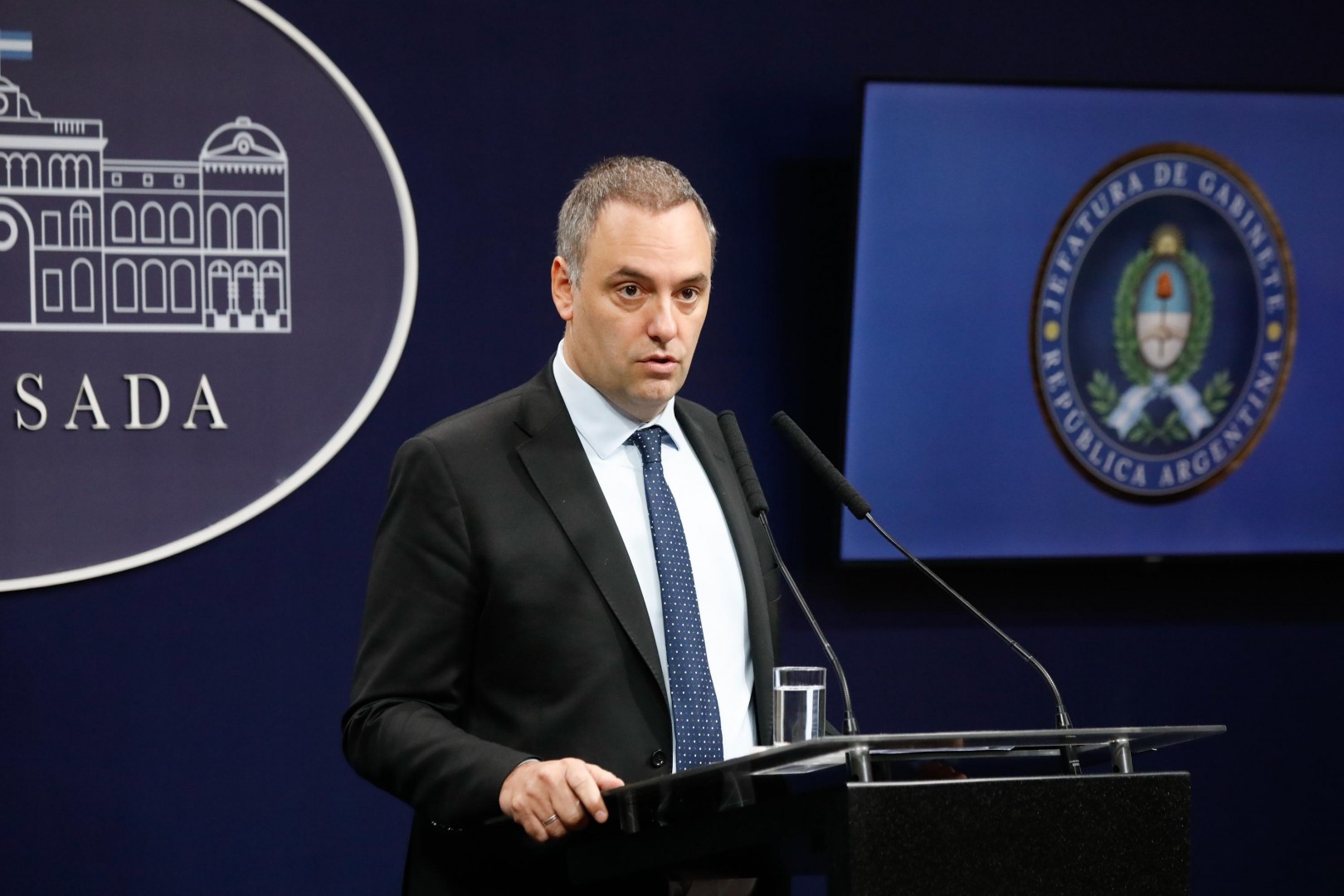
A federal prosecutor said Friday he has no proof that Manuel Adorni, President Milei’s former cabinet chief, illegally enriched himself in office, and asked to move the case to a tax-crimes court.
The prosecutor, Gerardo Pollicita, did not clear Adorni. His written opinion, filed with federal judge Ariel Lijo, says Adorni may still have to answer for keeping money hidden from the tax agency, ARCA. Lijo decides whether to accept the request. If he does, the file goes to the National Criminal-Economic Court, which handles tax crimes, and a judge there, assigned by lot, would examine possible tax evasion instead.
The distinction matters because illicit enrichment, a crime in which an official cannot justify a significant rise in wealth, covers only wealth gained from the day he takes office until two years after he leaves. Adorni says the money behind his spending was already his before he joined the government.
At issue, the prosecutor’s opinion says, is about US$565,000 in cash that Adorni listed in amended asset declarations as held at the start of 2023, before he joined the government in December of that year. He filed them with the tax agency and the Anti-Corruption Office in June, after the investigation was under way. His lawyer said in a September filing that it came from bitcoin trades between 2014 and 2018, which turned about US$200,000 in savings into roughly US$591,000 that the couple kept in cash at home.
The prosecutor’s office had counted about US$403,000 in dollar spending during Adorni’s time in government, nearly all of it in cash, on items including a lot in a gated community, renovations and travel. Pollicita wrote that Adorni now controls the eight bitcoin addresses involved, which were active from 2014 to 2018, but that the evidence cannot show who controlled them then, and that federal police experts found it technically consistent that he did. He added that the couple’s earnings made a US$200,000 purchase possible.
Pollicita wrote that Adorni’s conduct in the case file and his public statements about his wealth had been inconsistent and erratic, and that his explanation was new and, until then, hard to believe, so his office ordered checks on it. The evidence gathered, he wrote, could not rule out that the capital was built before Adorni took office, and did not tie the money to an official act or an illicit source.
By Adorni’s own account, the savings stayed undeclared to the tax agency from 2014 until he disclosed them this year, which Pollicita wrote points to a possible tax crime, to be worked out tax by tax and year by year. Finding no illicit enrichment, he wrote, “does not mean that he should not answer for unlawful conduct of another nature.”
Adorni was Milei’s spokesman before he became chief of cabinet, the president’s top minister. He resigned at the end of June, and Diego Santilli replaced him. The case began with a complaint from lawmaker Marcela Pagano. Gregorio Dalbón, a lawyer who is one of the complainants, asked Lijo to hold off on any decision about jurisdiction until the prosecution service’s administrative-investigations unit weighs in, Ámbito reported. Lijo will now rule on the prosecutor’s request.